OpenAI pressures an NYU mathematician: 25 Fields medalists sound the alarm over AI's race for proofs

🕒 Published on Zendoric: September 12, 2026 · 13:31
✨ AI-generated · how it's made
Twenty-five mathematicians holding the Fields Medal, the highest honor in their field, have signed a letter against AI labs' race to solve famous problems before anyone else. Behind it lie an NYU professor's complaint against OpenAI and the withdrawal of a sponsorship at Caltech: the price of winning the headline may be verification and attribution.
📚 Go deeper

THE AI textbook: used by 1,500+ universities.
As an Amazon Associate, Zendoric earns from qualifying purchases; the price does not change for you. · all our recommended books →
By Zendoric · September 12, 2026.
Twenty-five mathematicians, all of them Fields Medal winners —mathematics' most prestigious award, the equivalent of a Nobel in the discipline— signed an open letter this week accusing the major artificial intelligence labs of putting the integrity of their field at risk. As TechCrunch reports, the immediate trigger is an allegation by Tristan Buckmaster, a professor at New York University (NYU): he says OpenAI pressured him not to credit a collaborator who works at Anthropic after they jointly solved a significant mathematical problem, and he wonders whether the company used that work, via its Codex coding model, to produce its own proof in a weekend-long inference marathon. That OpenAI proof, TechCrunch notes, remains unverified.
On Thursday, OpenAI withdrew its sponsorship of a mathematics event at Caltech after researchers at the university itself criticized the company, according to the same article. These are two episodes of a single tension: AI labs, the article points out, can spend tens of millions of dollars using language models to beat the original researchers to the solution of an open problem, a dynamic that, according to the source, encourages secrecy.
The underlying argument is not that AI should not solve mathematical problems —the source itself concedes that such a capability could be a benefit for humanity— but that this benefit only materializes if the solutions can be understood, verified and passed on by the mathematical community. Their complaint is about process: "often these solutions are announced in haste, without time for proper write-up, for isolating the new methods and ideas, or for citing relevant prior work," they write, which raises "serious questions of attribution and plagiarism," as in any creative profession. And the article points to a second-order effect: mathematicians who now question whether their own use of tools like Codex has been repurposed to train the models competing with them, pushing the community toward secrecy precisely when its traditional culture depends on open publication.
This letter does not come out of nowhere: it follows the Leiden Declaration, published in June by a working group of mathematicians that already proposed recommendations for mathematicians, institutions and policymakers regarding proofs generated by language models. Two documents in three months, plus a public accusation naming names, plus a withdrawn sponsorship: the escalation in TechCrunch's headline is not rhetoric, it is a pattern that is building up.
Our reading is that this episode —seemingly a guild matter within a niche discipline— is in fact an early case study of a problem that will repeat in any field where prestige is measured by being first to publish. The signatories themselves say it bluntly: "the problems facing the mathematical community now... point to problems all of humanity could face." Swap "mathematical proof" for "biomedical paper," "patent" or "clinical diagnosis" and the dynamic is identical: if a lab can spend compute to beat a human researcher to the finish line, the incentive stops being to share work in progress and becomes hiding it until it can be claimed. It is exactly the opposite of the open ecosystem that has allowed science to accumulate knowledge for centuries.
Here it is worth separating two things: a model's ability to produce a valid mathematical proof —something that, if confirmed and verified, would be a remarkable step toward the underlying thesis we defend at Zendoric: an AI capable of accelerating human knowledge to the point of helping solve problems that today take generations— and the use of that capability as a competitive weapon between labs, without submitting it to the scrutiny that would make it reliable. The first is progress; the second, if proven, is the corruption of the very process that makes that progress real and not just a headline. TechCrunch underlines it: OpenAI's proof "remains unverified," which is the worst possible combination: a public claim without peer confirmation.
In the short term, the risk these 25 Fields medalists describe is concrete and should not be downplayed: erosion of academic attribution, incentives toward secrecy, and the possibility —raised as an open question, not a proven fact— that human researchers' work is feeding, without their clear consent, the very models that later compete with them. It is an academic version of the same problem already faced by programmers, writers and designers: AI as tool and rival at the same time. In the long term, if the mathematical community gets what it is asking for —time to verify, attribution norms, careful integration of AI-generated ideas into the "canon" of human knowledge— the result could be exactly the one we defend as our horizon: machines that help solve problems stuck for decades, freeing mathematicians to do what the article calls "the work around the work": training the next generation, asking the right questions, making sense of what is discovered. That balance will not arrive on its own; it depends on labs like OpenAI accepting the rules of verification and credit that the letter itself demands, instead of treating every proof as a PR trophy.
📚 Go deeper
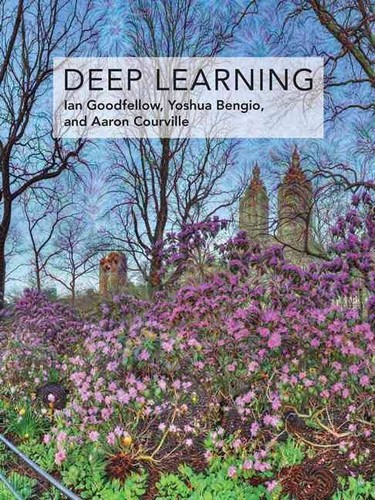
The academic "bible" of deep learning, with a Turing Award winner among its authors, and legally free on the web.

The definitive piece of investigative journalism on OpenAI: 260+ interviews, the clash between safety and speed, and the attempted firing of Sam Altma
As an Amazon Associate, Zendoric earns from qualifying purchases; the price does not change for you. · all our recommended books →
🔗 Related on Zendoric
- OpenAI releases 722 machine-generated proofs, and nearly 900 mathematicians sign a letter of protest · 2026-10-12
- Credit dispute between OpenAI and an NYU mathematician after a historic Navier-Stokes proof · 2026-09-10
- OpenAI's 722 machine-made proofs put a profession on edge, and the real question is verification · 2026-10-13