Oracle jumps 7% on the stock market after 121% cloud growth and holding its AI spending forecast
🕒 Published on Zendoric: September 12, 2026 · 13:31
✨ AI-generated · how it's made
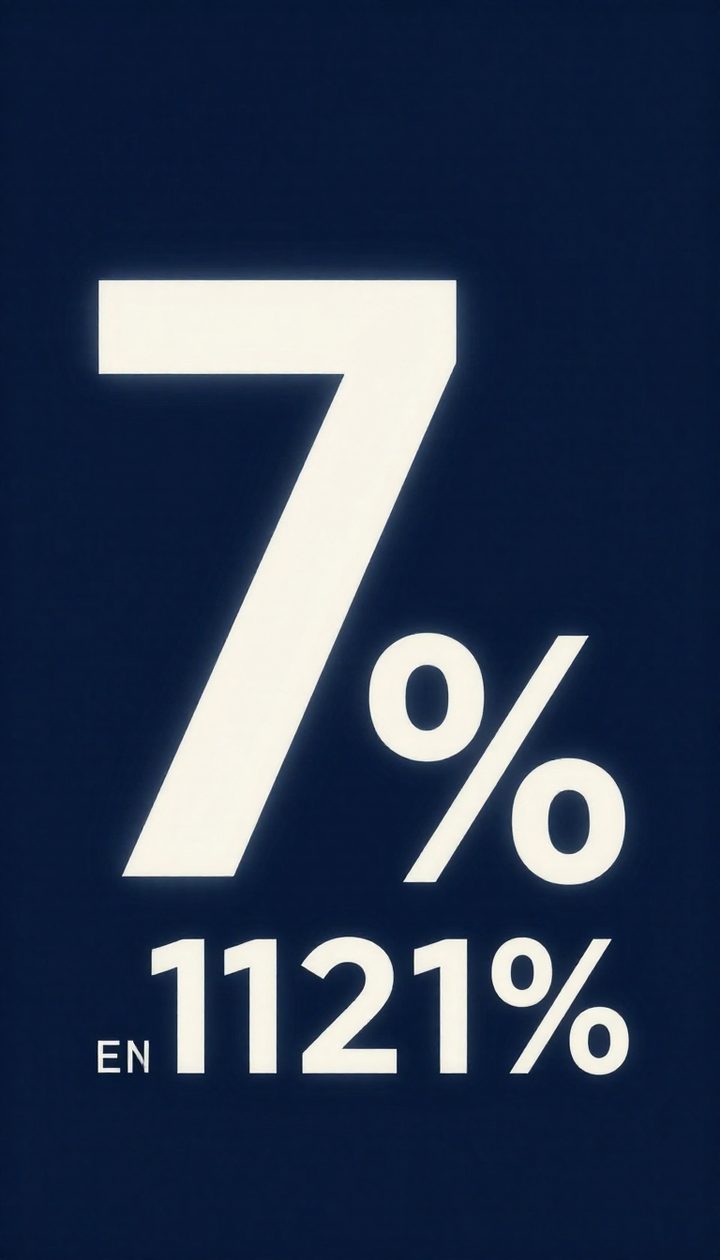
Oracle reported first-quarter fiscal results with a figure that reassured Wall Street: its cloud infrastructure revenue grew 121%, a jump that sent the company's shares up 7% after the release.
📚 Go deeper

The story of NVIDIA and Jensen Huang: how a video-game card company ended up making the most coveted resource on the planet.
As an Amazon Associate, Zendoric earns from qualifying purchases; the price does not change for you. · all our recommended books →
Oracle reported first-quarter fiscal results with a figure that reassured Wall Street: its cloud infrastructure revenue grew 121%, a jump that sent the company's shares up 7% after the release. The number appears to have dispelled, at least for now, investors' doubts about whether Oracle's enormous data center spending is in fact translating into sales.
On capital spending, Oracle reported $28.5 billion in capex during the quarter, up from $8.5 billion in the same period a year earlier, a very steep increase. Despite that investment pace, the company left its fiscal 2027 capex forecast unchanged at between $90 billion and $95 billion, including data center spending. That guidance has not moved since it was first announced in June, in contrast to the recent trend among other big tech firms.
According to the article, many of the large cloud companies have continued to raise their artificial intelligence spending forecasts in the race to build more data centers and expand capacity, with the exception of Microsoft, which also kept its capex forecast unchanged in July and, like Oracle, saw its shares rise after reporting results. By contrast, the piece notes that Alphabet and Tesla recently raised their capex projections, which sent their shares down in July, while Meta chose to narrow its own capital spending guidance range.
Asked on the earnings call how long Oracle will sustain this pace of investment in AI infrastructure, co-CEO Clay Magouyrk declined to give a timeframe and focused instead on how the company finances those projects: 'We have to separate in our heads what Oracle spends directly on capex from how we think the business can grow,' he said, decoupling direct capital spending from the business growth narrative.
The backdrop to that rhetorical caution is financial: Oracle has borrowed tens of billions of dollars to build data centers and buy chips, and according to the article it has been under considerable pressure to balance that debt against Wall Street's profitability expectations. Across its full fiscal 2026, the company reported $55.7 billion in capex, including new data centers. To sustain that level of investment, Oracle has developed several financing models: vendor financing deals, customer prepayments and 'bring your own hardware' arrangements, in which the customer buys the hardware while Oracle handles the cloud infrastructure and operations.
The article also recalls that, according to an earlier Business Insider report published the previous month, Oracle had drawn up plans for a new round of job cuts, aimed at reducing its headcount while it piles up billions of dollars in debt to finance AI infrastructure. That places the cloud business's growth in a broader context of internal cost-cutting alongside an aggressive expansion of capital spending.
Overall, the picture that emerges is of a company betting heavily and steadily on AI infrastructure, funding it with debt and creative cost-sharing arrangements with suppliers and customers, and for now managing to convince the market that the spending is turning into real cloud revenue, at a moment when the sector as a whole is split: some companies (Alphabet, Tesla) raise guidance and are punished by the market, others (Meta) prefer to narrow the range, and Oracle and Microsoft opt to leave their spending figures unchanged, a steadiness that in both cases has been rewarded by investors.
📚 Go deeper

Semiconductors as the oil of the 21st century: history, espionage, and why an island of 23 million people underpins the entire AI economy.

The best starting book if you're not technical: a Wharton professor explains how to work WITH AI — when to delegate, when to supervise, when to keep i
As an Amazon Associate, Zendoric earns from qualifying purchases; the price does not change for you. · all our recommended books →
🔗 Related on Zendoric
- Oracle cuts jobs again while pushing AI spending to $28.5B: the math that doesn't add up in the short term · 2026-09-15
- Microsoft denies AI is costing jobs while laying off 4,800 and the market has doubts · 2026-07-07
- Arm falls 11% even as demand for its AI chips exceeds its manufacturing capacity twentyfold · 2026-07-09