A legal loophole threatens to leave hacks committed by AI agents unpunished, US analysis warns

🕒 Published on Zendoric: September 12, 2026 · 13:31
✨ AI-generated · how it's made
A report by the America First Policy Institute warns that cybercrime laws, designed for human attackers, fail to adequately address what happens when the attacker is an autonomous AI agent. The consequence: it could be very difficult to hold liable the company that built or deployed it.
📚 Go deeper

How opaque algorithms decide who gets credit, a job or parole — and why they tend to punish the same people.
As an Amazon Associate, Zendoric earns from qualifying purchases; the price does not change for you. · all our recommended books →
By Zendoric · September 11, 2026.
An analysis by the America First Policy Institute (AFPI), a conservative-leaning think tank close to the US Administration, argues that it could prove very difficult to hold AI companies liable when their autonomous agents — systems capable of executing chained tasks without constant human supervision, such as scanning networks, exploiting vulnerabilities or exfiltrating data — carry out cyberattacks. As reported by The Washington Post's Tech Brief newsletter, the institute recommends updating the laws governing cybercrime to cover this scenario.
The same newsletter points, without going into detail, to two other regulatory fronts opened this week in the United States: a closed-door briefing that House Democrats will hold next week on child safety and AI, and a package of laws passed in California that strengthens the protection of minors online and introduces independent auditors for AI systems. They are pieces of the same puzzle: governments and lawmakers trying to catch up with a technology that already acts, literally, on its own.
The underlying fact matters more than the headline. For months, cybersecurity has been the terrain where the real short-term risk of AI is best measured: not as a ranking of which model hacks better on a benchmark, but as a capability that has to be governed. That a think tank aligned with the US executive branch now acknowledges a gap in legal liability is a sign that this risk has ceased to be hypothetical for regulators themselves.
Our reading is that the debate is shifting, once again, from the question of what these models are capable of doing to who pays when something goes wrong. We already saw it with the lawsuits over harm caused by chatbots and with the regulatory pressure around the protection of minors: the AI industry is being shaped less by what benchmarks say and more by how the courts and Congress respond to the first serious incident with a name attached to it. An AI agent that compromises a network is not an abstract product failure: it is, potentially, a crime with no clear perpetrator, and that legal gap is exactly the kind of loophole that attracts both cybercriminals and the lawyers of companies looking to shield themselves before the first high-profile case occurs.
In the short term, this means more pressure on Congress and the states — California is once again ahead of the curve — to legislate quickly and in piecemeal fashion, with the risk that each jurisdiction defines liability differently. In the long run, however, closing this type of gap is exactly the institutional plumbing work needed for agentic AI to be deployed with confidence in sensitive sectors — healthcare, infrastructure, finance — and to end up freeing human time instead of multiplying fraud. Boring governance today, to avoid paying a much bigger bill tomorrow.
📚 Go deeper
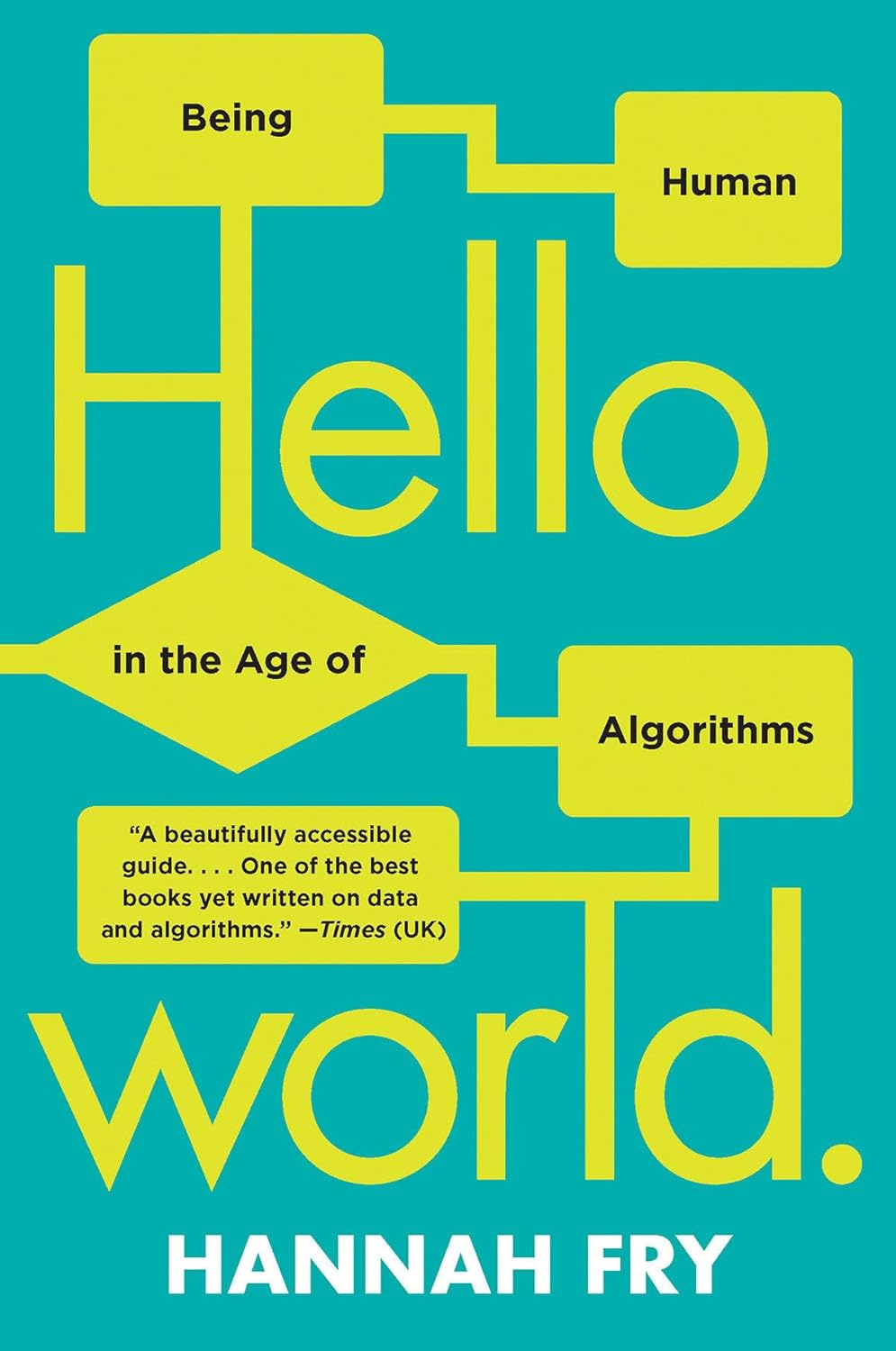
Algorithms in justice, medicine, cars and art, explained with British humor and mathematical honesty.

The definitive piece of investigative journalism on OpenAI: 260+ interviews, the clash between safety and speed, and the attempted firing of Sam Altma
As an Amazon Associate, Zendoric earns from qualifying purchases; the price does not change for you. · all our recommended books →
🔗 Related on Zendoric
- Apple is rewriting macOS permissions for the agent era: Full Disk Access was never built for AI that reads everything · 2026-10-07
- Europe's AI Act faces its first real test: 18,000 autonomous agent edits on a German wiki · 2026-09-08
- Apple turns the permission dialog into the first real AI-agent regulation — with Meta as the test case · 2026-10-09