US accuses DeepSeek, Alibaba and four other Chinese companies of systematically copying American AI models
🕒 Published on Zendoric: September 11, 2026 · 03:15
✨ AI-generated · how it's made
The FBI, the National Security Agency (NSA) and the Cybersecurity and Infrastructure Security Agency (CISA) published a joint alert on Tuesday accusing six of the leading Chinese artificial intelligence companies —DeepSeek, Moonshot AI, Alibaba, MiniMax, StepFun and Z.AI— of having "mined"…
📚 Go deeper

The definitive piece of investigative journalism on OpenAI: 260+ interviews, the clash between safety and speed, and the attempted firing of Sam Altma
As an Amazon Associate, Zendoric earns from qualifying purchases; the price does not change for you. · all our recommended books →
The FBI, the National Security Agency (NSA) and the Cybersecurity and Infrastructure Security Agency (CISA) published a joint alert on Tuesday accusing six of China's leading artificial intelligence companies —DeepSeek, Moonshot AI, Alibaba, MiniMax, StepFun and Z.AI— of having systematically "mined", since 2024, frontier AI models developed in the United States. Among the systems allegedly used as a base are Anthropic's Claude, OpenAI's ChatGPT, Google's Gemini and xAI's Grok. As NBC News reports, it is the most detailed accusation the US government has made to date about this practice.
The technique in question is known as "distillation": it consists of using the responses or behavior of an already-trained model to train or optimize another, smaller or cheaper one, taking advantage of the first model's prior work. It is a widespread practice across the AI industry, but it usually breaches the terms of service of the companies whose models are distilled without authorization. The report notes that this distillation campaign took place "probably with the knowledge of the Chinese government", although it stops short of asserting that the country's intelligence services were directly involved.
The document goes into notably specific detail: it lists a long series of subject areas —such as "legal specialization optimization", "agentic functions" or "assistant/coach capabilities"— that, according to the agencies, certain Chinese models distilled from specific US models. The report's conclusion is blunt: "The scale of these campaigns and their sophistication indicate that distillation is not a complement to these companies' AI model development, but its fundamental core".
The accusations are not new, but they have intensified. Since last year, US companies have made isolated complaints: OpenAI went so far as to say DeepSeek had "improperly" based its model on ChatGPT, and in February Google said it was overwhelmed by attempts to clone Gemini, though at the time it did not point to any specific suspect. White House officials have insisted in recent months on framing the technological competition with China as a race in which Beijing is exploiting US innovation to bypass the safety safeguards built into those systems.
In that regard, there are internal government precedents: in April, the director of the White House Office of Science and Technology Policy, Michael Kratsios, circulated a memo among federal agency heads flagging Chinese distillation as a critical problem, arguing that it allows Chinese companies to "free-ride" on US innovation. In July, Kratsios publicly stated that Moonshot had distilled Anthropic's advanced Fable model to develop its Kimi K3 system, qualifying that legitimate distillation —the kind used to create smaller, more efficient models— plays a valid role in the open innovation ecosystem, but that covert, large-scale industrial distillation aimed at stealing proprietary US technology "is unacceptable".
The statement comes at a moment of sharp diplomatic tension: President Donald Trump is scheduled to meet Chinese leader Xi Jinping on September 24, and officials from both governments have traded recriminations in recent weeks over alleged thefts of AI trade secrets. Asked about it, Chinese Foreign Ministry spokesperson Mao Ning said on Wednesday that she had not seen the specific report, but argued that the development of Chinese AI "is the result of high-level scientific and technological self-reliance", and called on Washington to strengthen cooperation on AI "instead of making unfounded accusations".
Beyond naming those responsible, the US agencies' report includes recommendations aimed at US AI companies themselves: improving verification of users who pay for subscriptions to their models, sharing information between companies about suspicious behavior and, in certain cases, deliberately degrading or altering responses to queries deemed malicious.
The episode illustrates the extent to which the line between distillation as a routine —and to some degree tolerated— technical practice and outright intellectual property theft has become another front in the geopolitical rivalry between Washington and Beijing over AI. It is worth stressing that these are government accusations, categorically rejected by China as "unfounded", and that the report itself avoids directly linking the Chinese state to an intelligence operation, limiting itself to speaking of probable government "knowledge" of the practice. The timing of its publication, barely two weeks before the Trump-Xi meeting, also suggests the matter will likely weigh on the bilateral agenda, in a context in which the White House has spent months insisting on framing AI development as a strategic race against China.
📚 Go deeper
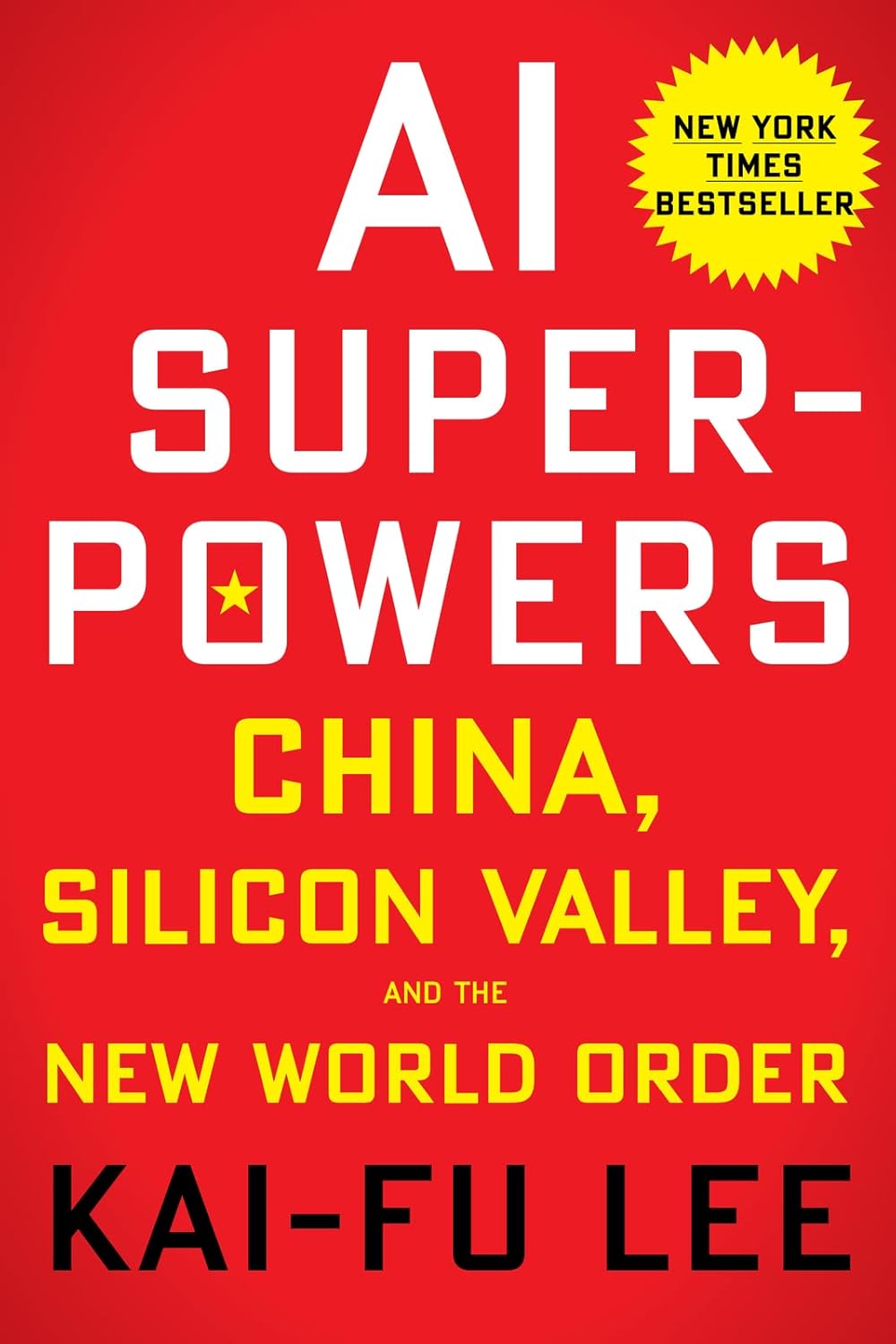
China vs.

DeepMind co-founder on the dilemma of containing technologies that do not want to be contained.
As an Amazon Associate, Zendoric earns from qualifying purchases; the price does not change for you. · all our recommended books →
🔗 Related on Zendoric
- Trump's secret battle against Chinese AI: a ban on open models that would benefit OpenAI and Anthropic? · 2026-07-22
- The U.S. accuses China's Moonshot AI of using banned Nvidia chips to train its Kimi K3 model · 2026-07-25
- A 100-company card-theft spree cost $8,000 in AI agents. That price is the real security story · 2026-09-25