ESHNR brings AI for detecting cavities and abscesses to Budapest: real promise, but still at the research stage
🕒 Published on Zendoric: September 10, 2026 · 00:31
✨ AI-generated · how it's made
The European head and neck radiology congress meets in Budapest (10-12 September) to discuss AI tools for detecting cavities, planning surgery and locating cervical abscesses on MRI. Most are preliminary studies, not yet tools ready for the clinic.
📚 Go deeper

The only novel on the list, by a Nobel laureate: an artificial friend observes humans with a blend of lucidity and innocence no essay achieves.
As an Amazon Associate, Zendoric earns from qualifying purchases; the price does not change for you. · all our recommended books →
By Zendoric · September 10, 2026.
The European Society of Head and Neck Radiology (ESHNR) is holding its 38th annual meeting in Budapest from September 10 to 12, at the Várkert Bazár and chaired by Adrienn Dobai and Bence Tamas Szabo, according to the program published by AuntMinnieEurope. The congress brings together radiologists specializing in head and neck tumors, dental imaging and the skull base, and devotes several sessions to artificial intelligence (AI).
Friday concentrates the AI agenda: tools to detect dental caries, systems to support surgical planning, and a comparison between dental magnetic resonance imaging (MRI) and cone-beam CT (a CT variant that uses a cone-shaped beam to reconstruct 3D volumes of the jaw and teeth with less radiation than a conventional CT) for assessing periapical lesions and periodontitis. The scientific presentations also include a deep learning model to detect cervical abscesses on MRI, and studies with photon-counting CT (a technology that counts individual X-ray photons instead of measuring accumulated energy, which improves resolution and reduces dose) applied to otosclerosis and parathyroid adenomas.
The rest of the program focuses on classic oncology: distinguishing expected treatment-related changes from actual complications, the ninth edition of the AJCC classification (American Joint Committee on Cancer, the standard tumor staging system), extranodal extension, diffusion imaging and post-immunotherapy findings, along with training sessions on the skull base, thyroid, parathyroid and pediatric emergencies.
This agenda should be read carefully, because the program itself makes it clear: much of what relates to AI consists of "research presentations" — that is, studies presented so that radiologists can assess where they might prove useful, not tools already validated or deployed in daily clinical practice. The material contains no sensitivity or specificity figures, nor multicenter studies backing routine use; what it does contain is a clinical community beginning to put on the table where AI fits in a field — teeth, jaw, neck — far less high-profile than breast or lung cancer.
Our reading: the arrival of diagnostic AI in subspecialties as specific as dental radiology or the detection of cervical abscesses is a sign of technological maturity, not a one-off disruptive breakthrough. The same types of model — detection and segmentation trained on large volumes of medical images — are being adapted to ever narrower anatomical domains as labeled data accumulates and available computing power improves. It is the usual pattern for this technology: first it conquers the fields with the highest study volumes (mammography, chest X-ray, stroke) and then it spreads to smaller but clinically relevant niches.
And head and neck cancer matters especially here: it remains a group of tumors frequently diagnosed late, with a worse prognosis the longer detection takes. If these tools supporting surgical planning and the early detection of lesions — dental, nodal, bone — end up being validated with large series and prospective trials, they fit squarely into the underlying promise of AI applied to medicine: not to replace the radiologist, but to help them find sooner what today is found late. That is the long horizon that matters; what this congress makes clear is that, in 2026, much of that work is still being played out at the stage of presentation and discussion among specialists, not in the clinic.
📚 Go deeper

An MIT computer scientist connects AI, quantum physics and video games to take an uncomfortable question seriously: what if we live in a simulation? M
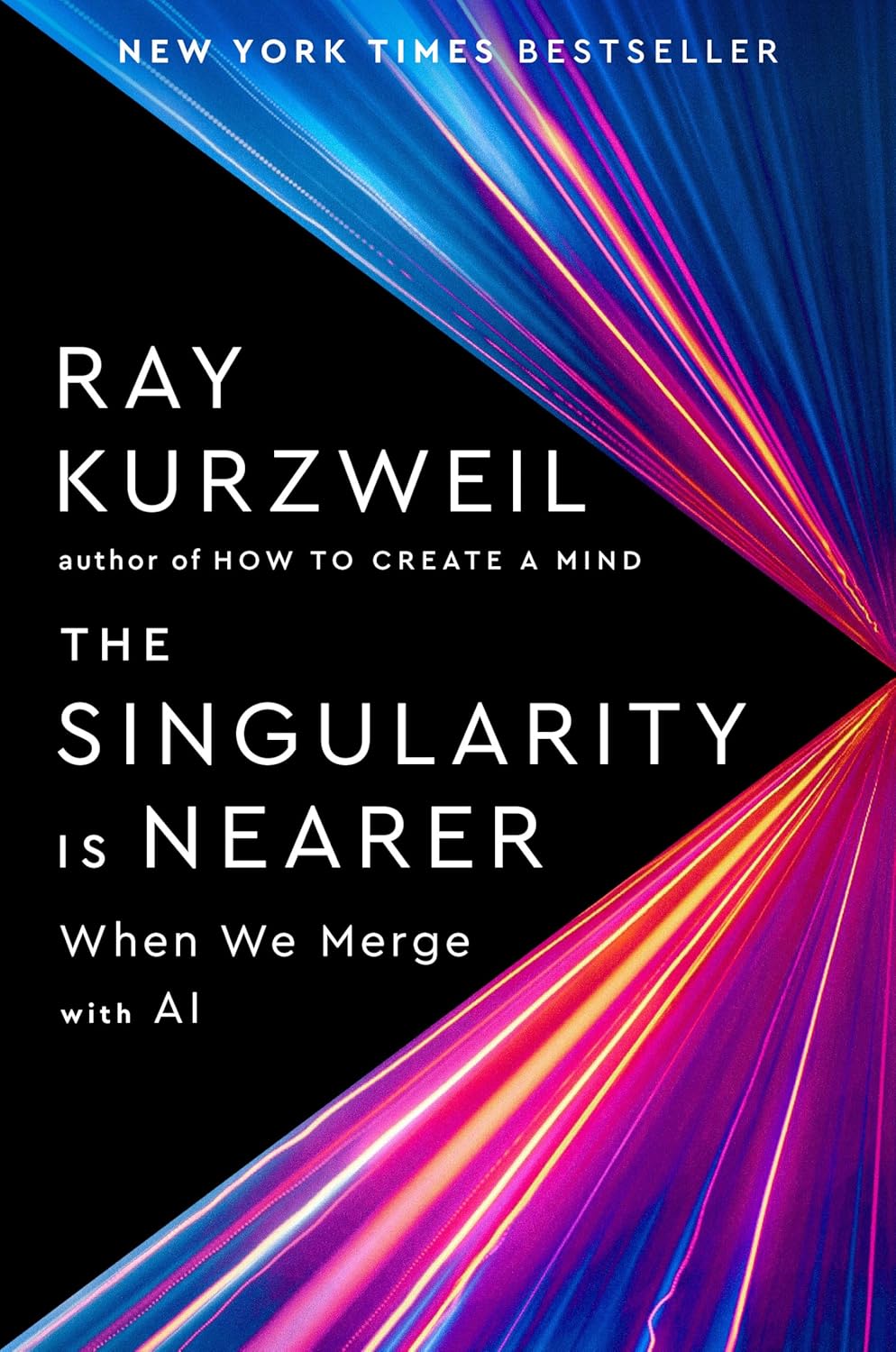
Twenty years after "The Singularity Is Near", Kurzweil revisits his predictions and keeps the date: human-AI merger around 2045.
As an Amazon Associate, Zendoric earns from qualifying purchases; the price does not change for you. · all our recommended books →
🔗 Related on Zendoric
- Claude Sonnet 5: Anthropic collapses the pricing pyramid and brings autonomous agency to the mainstream model · 2026-07-01
- Claude Science: Anthropic turns its model into a lab for researchers and takes direct aim at AI's most ambitious promise · 2026-07-01
- 95% of students already use AI in class, but only 1 in 4 teachers feels ready to guide them · 2026-09-29