Health psychology stopped banning AI in science without settling whether it is reliable
🕒 Published on Zendoric: September 9, 2026 · 00:20
✨ AI-generated · how it's made
In 2023, journals demanded that AI never sign a study; in 2026, a scientific congress is building its entire programme around 'harnessing' it. In between, nobody settled whether that makes the literature less reliable: there are more abstracts bearing AI's fingerprints and more fabricated references.
📚 Go deeper

The only novel on the list, by a Nobel laureate: an artificial friend observes humans with a blend of lucidity and innocence no essay achieves.
As an Amazon Associate, Zendoric earns from qualifying purchases; the price does not change for you. · all our recommended books →
By ScienceBlog.com · September 8, 2026. In 2023, the Committee on Publication Ethics (COPE), the publishing group Nature Portfolio and the International Committee of Medical Journal Editors (ICMJE) separately reached the same conclusion: an AI cannot be listed as the author of a scientific study because it cannot take responsibility for what it publishes. Three years later, the 40th congress of the European Health Psychology Society (EHPS), held in Paphos (Cyprus) from September 1 to 4, has built its entire program around the motto 'Digital innovations in health: harnessing the power of technology and AI'. The previous year, in Groningen, the motto had been the neutral 'Putting health psychology to work'. The change of verb —from preventing to harnessing— is not a rhetorical detail: researcher Nato Lagidze, who attended the congress, recalls that a motto is decided a year and a half in advance, has to survive review by the organizing committee itself, and commits an entire scientific society to programming a full year of symposia, talks and posters around that word. Nobody puts 'AI' in the title of their annual congress if they think the word will still be uncomfortable by the time the attendees arrive.
As industry context, this sequence —protective rules in 2023, followed by a practical adoption that gradually hollowed them out— is not exclusive to health psychology: the ground shifted before the rules did across almost all peer-reviewed science. Two surveys by the publisher Wiley, a year apart, put the use of AI tools among researchers at 57% in the first and 84% in the second; they are not the same sample nor a longitudinal follow-up, so they do not speak precisely to a growth rate, but they do portray an adoption that is already the majority. In the second wave, 57% of respondents pointed to the lack of guidelines and training as the main obstacle, and 73% asked publishers to set clear guidance. They did not have it: an audit published in the journal BMJ in January 2024 found that only 24% of the hundred largest academic publishers —which together publish some 28,000 journals— had issued any policy on generative AI, compared with 87% among the hundred most prestigious journals. The gap is not one of time, it is one of reputational exposure: those with the most to lose wrote the rule; the bulk of the scientific literature carried on without one.
Meanwhile, the question the 2023 rules were trying to settle —whether the reliability of the literature can withstand the use of AI— remained open, and the evidence that has emerged is not reassuring. A team from the universities of Tübingen and Northwestern, publishing in Science Advances in July 2025, applied to PubMed abstracts the 'excess vocabulary' method previously used to estimate uncounted pandemic mortality, and found that at least 13.5% of biomedical abstracts from 2024 bear the stylistic fingerprint of a language model, with peaks above 40% in some subdisciplines and countries; the authors themselves warn that this measures style, not verified use, and that it is a floor, not a final figure. Separately, Retraction Watch —the reference site that documents scientific retractions— reported an analysis that found fabricated references in roughly 1 in every 277 articles indexed in PubMed at the start of 2026, compared with 1 in every 2,828 in 2023; according to the source, the figure comes from an open-access subset and from AI-assisted detection, so it is a warning sign, not a settled rate. With those caveats, both indications point in the same direction.
What interests us about this case, beyond health psychology, is the mechanism: a scientific institution did not change its mind about AI because someone won the argument over reliability, but because practice overwhelmed it and, at some point, it stopped being embarrassing to name it in the title of a congress. The 2023 ban was not repealed; it was overtaken by use. It is the same pattern we have already seen in the institutional adoption of AI in the classroom —from a ban to mandatory teaching without any formal discussion of what is lost along the way— and it is reasonable to expect it to repeat in more professions governed by slow committees facing tools that are adopted instantly.
This is not an argument against AI in science: used well, it already produces useful work, including Lagidze's own research on the objective measurement of affect. And health is precisely the terrain where we have the most at stake on this journey: AI's long-term promise —accelerating biomedical discovery, bringing us closer to eradicating diseases, gaining years of healthy life— depends on a scientific literature that can be trusted. If the pace at which AI enters research outstrips the pace at which what it produces is verified, the short-term risk is not philosophical: it is invented references slipping into the bibliographies of real studies, all the harder to detect the more widespread their use becomes. The honest reading of Paphos is not that science has decided AI is safe. It is that, at some point over these three years, it stopped asking the question.
📚 Go deeper
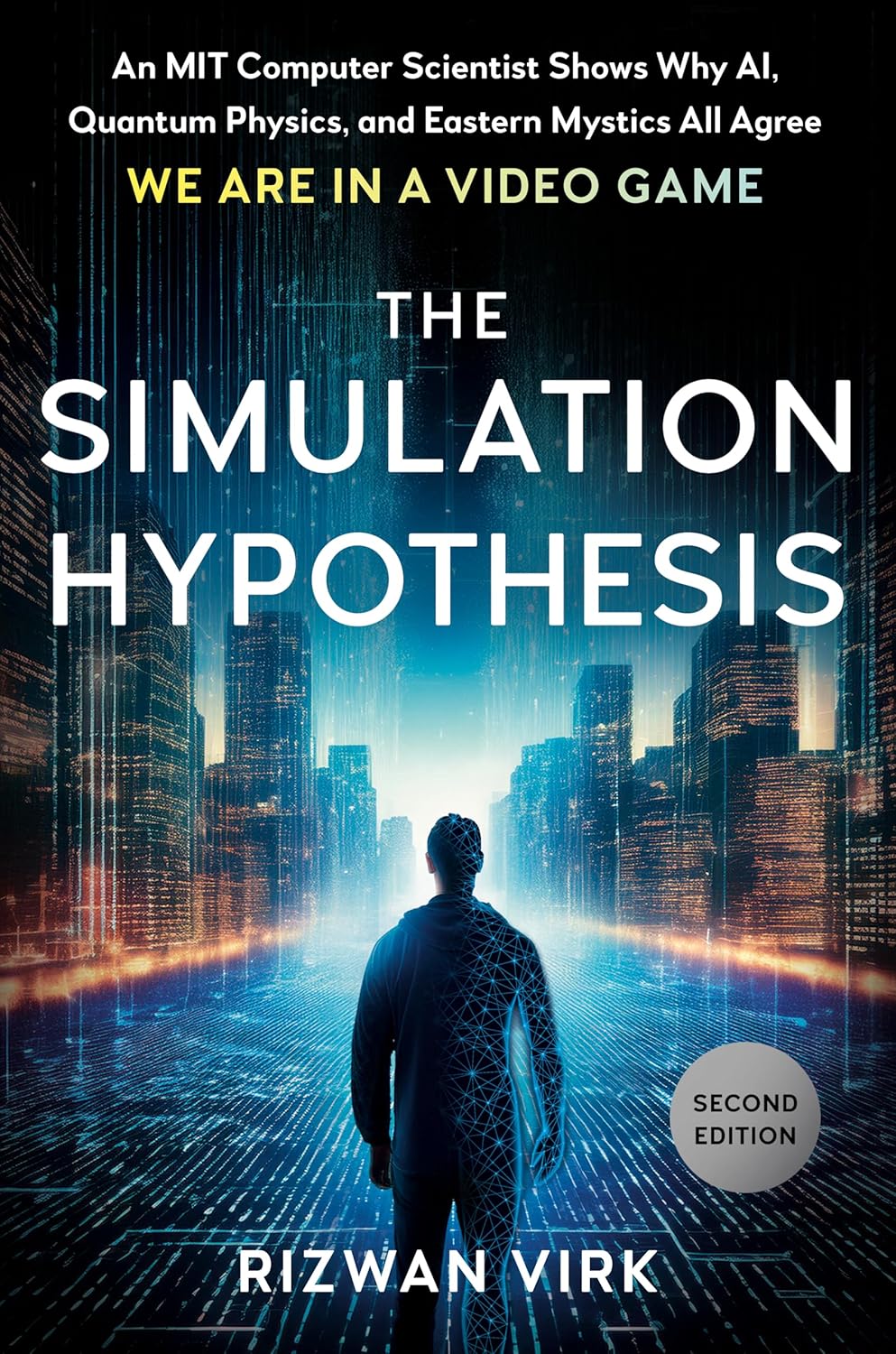
An MIT computer scientist connects AI, quantum physics and video games to take an uncomfortable question seriously: what if we live in a simulation? M

AI as an extractive industry: the lithium, the energy, the underpaid data-labeling work and the bodies behind the cloud.
As an Amazon Associate, Zendoric earns from qualifying purchases; the price does not change for you. · all our recommended books →
🔗 Related on Zendoric
- Breast cancer leaves traces six years earlier: AI can already see them, and that forces a rethink of the entire screening process · 2026-06-28
- Claude Science: Anthropic steps into the lab, where AI can change more lives but the obstacles are radically different · 2026-07-01
- Claude Science: Anthropic takes aim at the heart of science and health with a dedicated product · 2026-07-01