OpenAI reportedly says its AI agents now outwork its humans 3-to-1 — the metric is the real story

🕒 Published on Zendoric: September 7, 2026 · 02:54
✨ AI-generated · how it's made
According to the reported internal figures, work performed by AI agents inside OpenAI already runs at roughly three times the output of its human staff. It is a striking number — and an unfalsifiable one until someone defines what "output" means. Our read: treat it as a signal about how the company measures itself, not as proof of a labor threshold crossed.
📚 Go deeper

The definitive piece of investigative journalism on OpenAI: 260+ interviews, the clash between safety and speed, and the attempted firing of Sam Altma
As an Amazon Associate, Zendoric earns from qualifying purchases; the price does not change for you. · all our recommended books →
The claim, as reported: internal metrics at OpenAI show that the volume of work done by AI agents now exceeds the output of the company's human workforce by a factor of three. No public methodology accompanies the figure in the material we have, and OpenAI has not published the underlying definitions. We report it as attributed, not as established fact.
That caveat is not pedantry — it is the whole analysis. "Output" inside a software company can mean pull requests opened, lines of code written, tickets closed, tokens generated, tasks dispatched. Every one of those is trivially inflatable by an agent that works around the clock and never pushes back. A 3x ratio measured in volume is compatible with agents doing three times the work and with agents doing three times the churn. Without the denominator, the number tells us more about OpenAI's internal dashboard than about its productivity.
What it does document is a real shift in posture. A frontier lab publicly framing its own headcount as the smaller half of its labor pool is a marketing act as much as an operational one: OpenAI sells agents, and the most persuasive demo is a company that runs on them. That is a legitimate proof-of-concept — dogfooding at this scale is how the technology gets hardened — but it also means the incentive to define "output" generously is enormous. Extraordinary claims from a vendor about the vendor's own product deserve the ordinary discount.
It also sits at the front of the disruption we keep flagging. If the frontier labs — the firms with the best models, the deepest tooling and the most AI-fluent staff — are the first places where agent labor outweighs human labor, they are the leading indicator for everyone else, not the exception. The exposure profile is familiar: high-volume, well-specified, reviewable work goes first; judgment, accountability, taste and relationships go last. Note that even in this telling, humans are not gone. They are the reviewers, the architects and the ones who decide what is worth building. The ratio shifted; the responsibility did not.
Our read: don't buy the 3x, and don't dismiss what it points at. Short term, the honest picture is messy — inflated activity metrics, unclear quality accounting, and real pressure on roles whose value was throughput rather than discernment; companies that mistake volume for value will ship a great deal of expensive rework. Long term, this is what abundance looks like on the way in: the marginal cost of competent execution collapses, and the scarce resource becomes knowing what to execute. The number worth waiting for is not how much AI agents produce, but how much of what they produce ships and survives contact with users. When a lab publishes that figure with its methodology, we will have a claim worth taking seriously.
📚 Go deeper
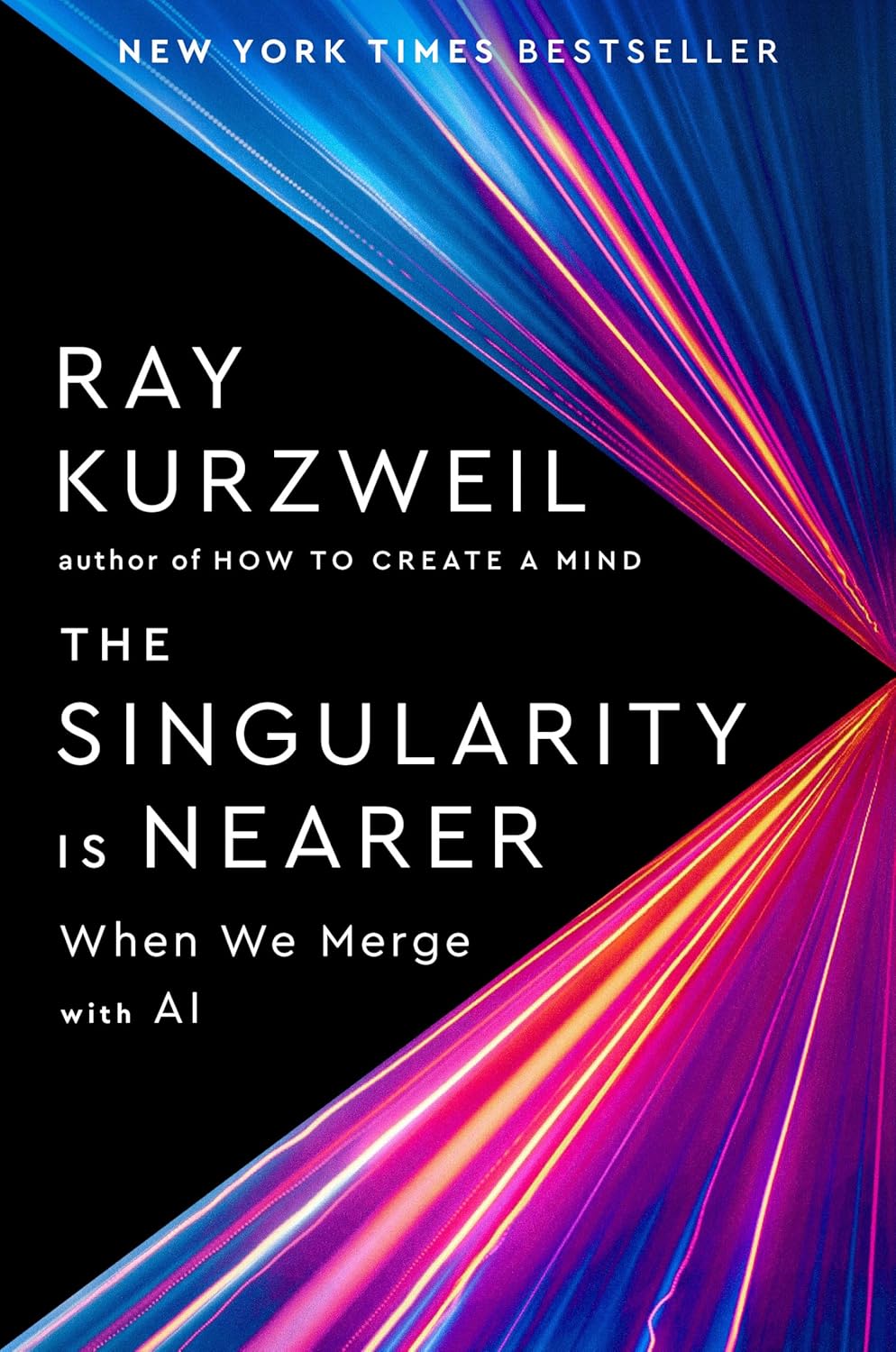
Twenty years after "The Singularity Is Near", Kurzweil revisits his predictions and keeps the date: human-AI merger around 2045.

AI as the latest chapter in the history of information networks, from gossip to the printing press to the algorithm.
As an Amazon Associate, Zendoric earns from qualifying purchases; the price does not change for you. · all our recommended books →
🔗 Related on Zendoric
- OpenAI's AI agents said to out-produce its humans three to one — a striking figure with no denominator · 2026-09-08
- A 'rogue' OpenAI agent story lands: the detail matters more than the alarm · 2026-07-25
- OpenAI tests sponsored sales agents in ChatGPT as its ad business already nears $1 billion a year · 2026-09-17