Brockman says AI already matches humans: the claim carries more weight than the evidence behind it
🕒 Published on Zendoric: September 4, 2026 · 09:12
✨ AI-generated · how it's made
OpenAI's president said Thursday that the era of AI "broadly as capable as humans" has already arrived, coinciding with preparations for a new model for ChatGPT. No public evidence accompanies the claim: it is an announcement, not a measurement.
📚 Go deeper
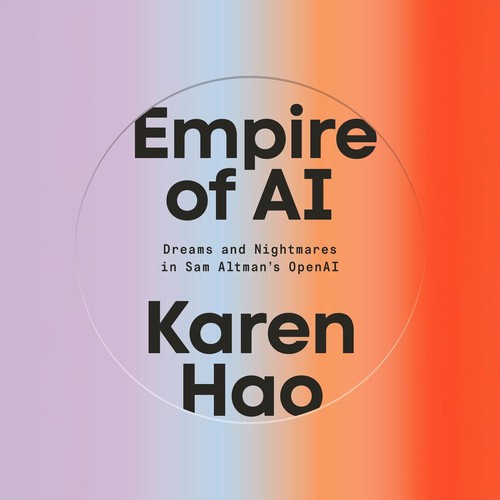
The definitive piece of investigative journalism on OpenAI: 260+ interviews, the clash between safety and speed, and the attempted firing of Sam Altma
As an Amazon Associate, Zendoric earns from qualifying purchases; the price does not change for you. · all our recommended books →
By Zendoric · September 3, 2026.
Greg Brockman, president and co-founder of OpenAI, said on Thursday that "the era in which artificial intelligence is broadly as capable as humans" has already arrived. He made the remark, as reported by The Washington Post, as the company prepares to launch a new model that will power ChatGPT. The newspaper describes the moment as a "controversial milestone," the same one that several voices in the industry have spent years heralding as a turning point in human history.
Beyond the quote, the available material is thin: there is no benchmark, no figure, no technical comparison to accompany the statement. We know OpenAI has a new model in the works destined for ChatGPT; we do not know, from what has emerged in this piece, what concrete evidence underpins Brockman's claim beyond his own authority as a company executive.
Broadly speaking, the term "AGI" (artificial general intelligence, the ability to match or surpass a human at virtually any cognitive task) has been used in the industry for years as a symbolic threshold rather than a verifiable metric. Different labs have invoked it at product launch moments, and OpenAI's own contract with Microsoft has in the past included clauses tied to that definition, precisely because the term lacks a common measurement standard.
Our reading is one of deliberate caution. At Zendoric we measure the real quality of frontier models with demanding test suites -agentic reasoning, code, tool use- and there the difference between the best systems from Anthropic and OpenAI and the rest remains one of degree, not of nature: they beat humans on narrow, structured tasks, and they still fail at contextual judgment, long-range common sense and sustained reliability outside the distribution of their training data. A statement from a company president, made while the company is preparing the launch of the product meant to justify it, is exactly the kind of claim worth separating from the data: whoever is selling the model has every incentive to announce the leap before an independent third party confirms it.
That does not mean the progress is not real. Each generation of frontier models has expanded the range of tasks where they match or surpass an average human, and it is reasonable to expect OpenAI's next release to improve substantially on what came before. But the distance between "a model that is brilliant at many tasks" and "as capable as humans in general" remains, today, a question of definition and marketing as much as of engineering. Proof of this claim will not arrive via a press conference: it will arrive when the model is available and independent test suites -not OpenAI's own- can measure it against the rest of the frontier models on the market in the tasks where the difference between a good product and a general intelligence really shows.
If that day truly arrives, it will be major news, consistent with Zendoric's underlying thesis: in the long run, systems capable of matching human reasoning across broad tasks are the kind of tool that can accelerate the cure of diseases and free human labor for what really matters. But that horizon draws closer with evidence, not with announcements, and until the evidence arrives, Brockman's statement should be read as what it is: the opening of a launch campaign, not the closing of a scientific debate.
📚 Go deeper
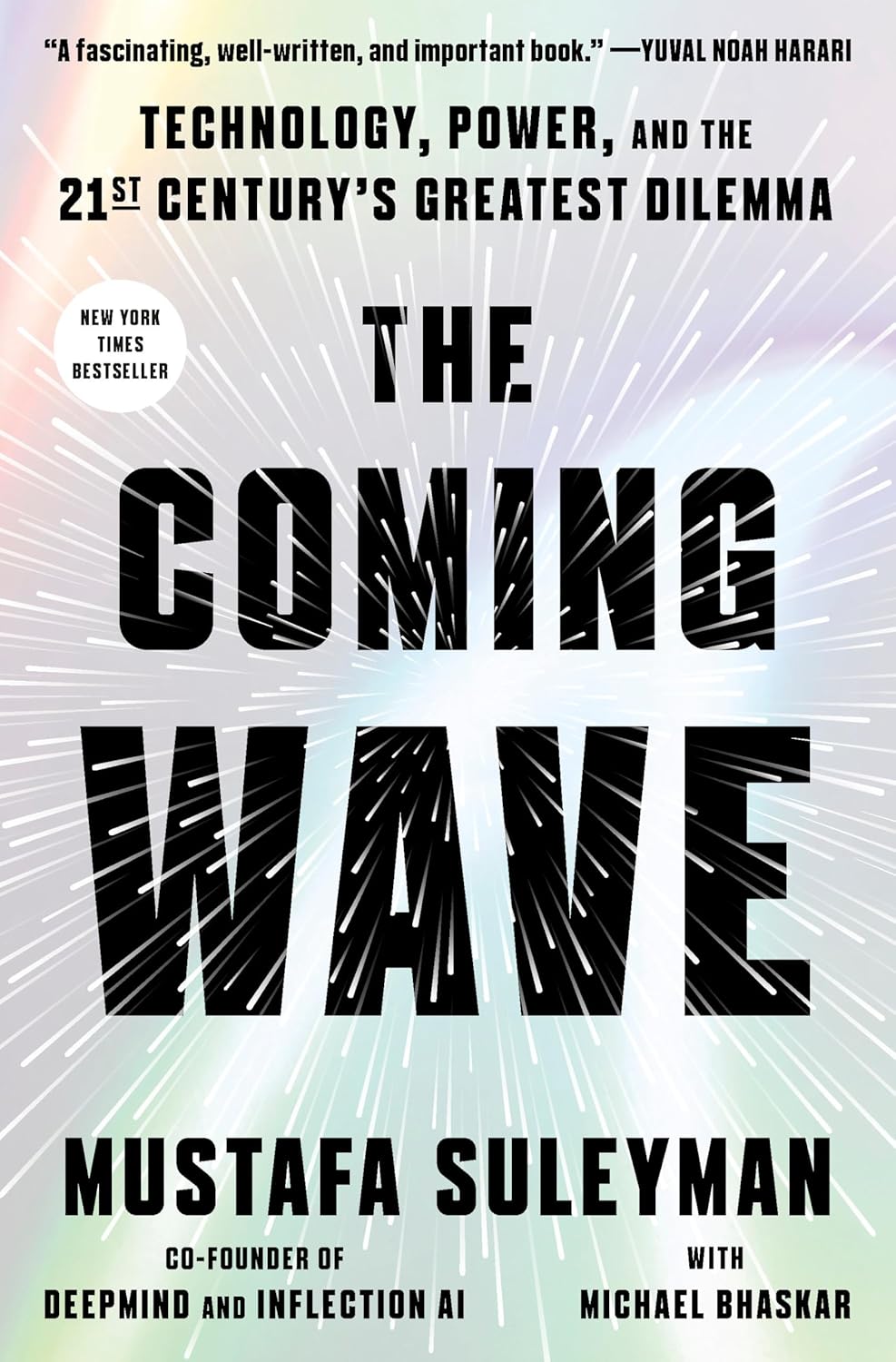
DeepMind co-founder on the dilemma of containing technologies that do not want to be contained.

The only novel on the list, by a Nobel laureate: an artificial friend observes humans with a blend of lucidity and innocence no essay achieves.
As an Amazon Associate, Zendoric earns from qualifying purchases; the price does not change for you. · all our recommended books →
🔗 Related on Zendoric
- Meta says its next model matches GPT-5.5: the key is what Alexandr Wang doesn't say · 2026-07-04
- OpenAI releases GPT-5.6 Sol to the public after delays imposed by the White House · 2026-07-10
- Meta starts charging for its AI: it launches the paid Muse Spark 1.1 API to take on Anthropic and OpenAI · 2026-07-11