Meta drops Google Chat for Slack so its employees can use AI agents, even its rivals'
🕒 Published on Zendoric: September 4, 2026 · 09:12
✨ AI-generated · how it's made
An internal memo attributed to Alexandr Wang, Meta's head of AI, orders a migration from Google Chat to Slack in September. The reason isn't chat: it's that Slack already connects to agents such as Claude Code, Devin, Copilot and ChatGPT — with no official confirmation from Meta.
📚 Go deeper
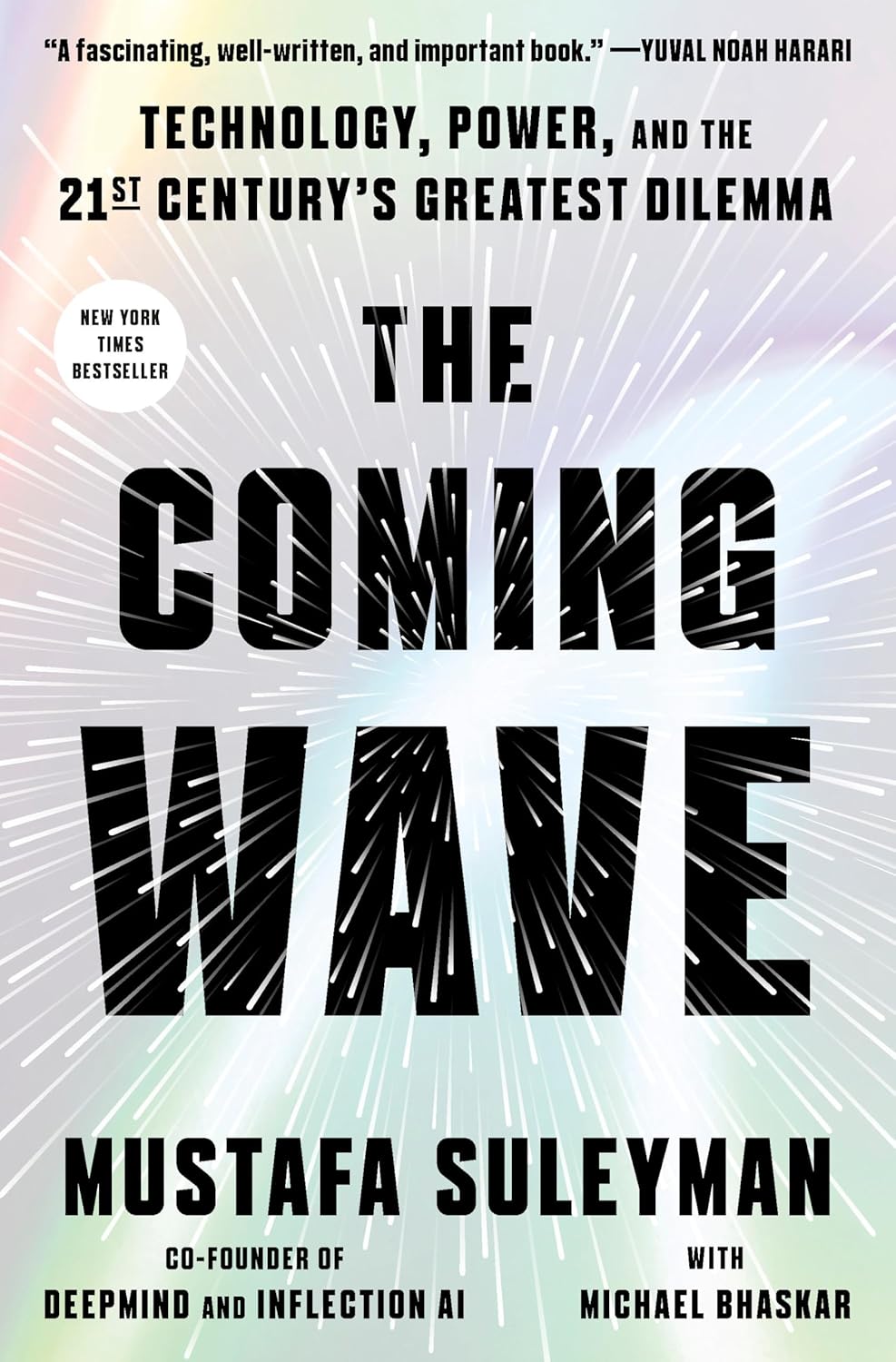
DeepMind co-founder on the dilemma of containing technologies that do not want to be contained.
As an Amazon Associate, Zendoric earns from qualifying purchases; the price does not change for you. · all our recommended books →
By Zendoric · September 3, 2026.
Meta will replace Google Chat with Slack as its internal communication tool starting this month. The order, according to an internal memo attributed to Alexandr Wang —the company's head of artificial intelligence and the person in charge of Meta Superintelligence Labs—, is not about better messaging: it is about agents. Business Insider and The Information have reviewed and reported it; Meta has not officially confirmed it.
The memo is explicit: it describes Slack as "the strongest platform available today for agents" and gives three reasons —a conversational interface designed for interacting with bots, mature developer tools and an already-built network of third-party integrations (abbreviated as 3P). Business Insider adds the nuance that matters: the value lies not in what Slack does on its own, but in the number of external agents that already connect to it without friction.
The document itself acknowledges that not everyone at Meta is building AI agents today. Even so, it argues that the entire organization will benefit from having a robust agent ecosystem by default. It is an infrastructure bet, not the whim of one particular team.
The change of criteria is the most revealing part of the case. According to The Information, the first time Meta compared Google Chat and Slack, both offered similar features and Google Chat won. In the second comparison, the tiebreaker was not messaging: it was the ecosystem of pluggable agents. Slack has gained ground not by being a better chat, but by being a better gateway for third-party artificial intelligence.
That role has been reinforced this summer. On August 20, 2026, Salesforce launched Slack Code, a space inside the chat where human teams and coding agents —Anthropic's Claude Code, Cognition's Devin, GitHub Copilot, ChatGPT and Vercel agents— collaborate on the same task, available on all plans with no subscription-tier restriction. In parallel, Slack already works as a command center for developers: per-project channels connected to GitHub, GitLab, Jira or Jenkins, automatic deployment and error alerts, and ChatOps commands to deploy code, check metrics or approve changes without leaving the chat.
The most striking part is who Meta is letting into its own house. The company competes directly to build the best model through Meta Superintelligence Labs, the lab Wang himself runs. And yet the memo bearing his signature picks a platform whose greatest appeal is that it connects, among others, to Anthropic's coding agent and to ChatGPT. It is a separation of layers that will shape the coming years: who wins the race for the most capable model is one thing, and who controls the orchestration layer through which that model reaches the employee is quite another. Winning the first does not guarantee winning the second, and Meta appears to have accepted that internally before saying so publicly.
This also leaves Google looking bad. Workspace has tried to sell Gemini as the native agent of corporate email and chat, but here it loses out to a rival that does not even build a frontier model of its own: Salesforce prevails not through AI capability, but through openness and accumulated integrations. Broadly, it is the same pattern that keeps repeating in the competition over agent standards: value shifts toward whoever controls the plumbing —permissions, connectors, workflows— rather than toward whoever has the smartest model in the lab.
In the short term this solves none of the hard problems: there is still no clear governance over what an agent connected to Jira or to a deployment pipeline can do without supervision, nor over who answers when that agent fails in production. The memo itself admits that not everyone inside Meta is building agents yet; the migration is a bet on what is coming, not a description of something that already works at scale. But the direction of the move fits the underlying thesis: if agents manage to integrate into real workflows —and not just demos— the next wave of productivity will not come from a better model, but from infrastructure like this, which lets the best available agent, whoever owns it, absorb the routine and free up human time for what genuinely requires judgment.
📚 Go deeper
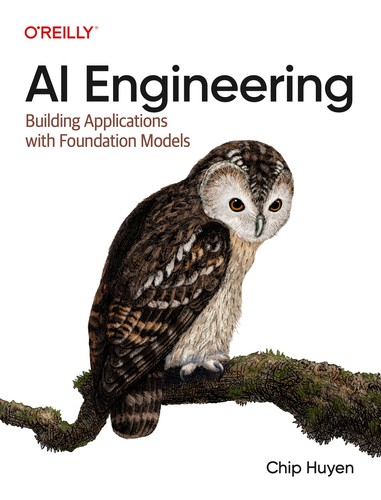
The reference manual for building products on top of AI models: prompts, RAG, fine-tuning, agents, evaluation and deployment.
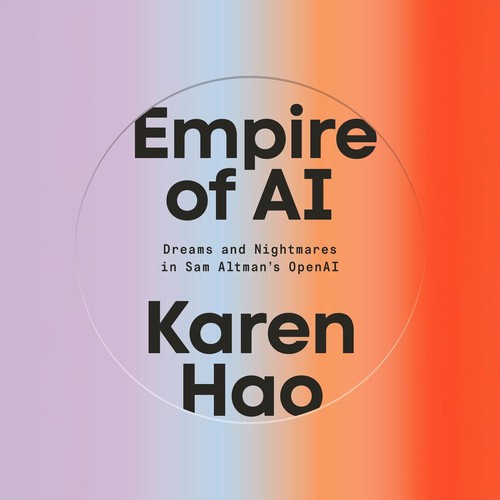
The definitive piece of investigative journalism on OpenAI: 260+ interviews, the clash between safety and speed, and the attempted firing of Sam Altma
As an Amazon Associate, Zendoric earns from qualifying purchases; the price does not change for you. · all our recommended books →
🔗 Related on Zendoric
- From standalone features to an operational layer: Streamline's bet on coordinated AI agents · 2026-06-27
- Dorsey unveils Buzz, an open-source Slack with native AI: the fight is over where agents will live · 2026-07-22
- A single ChatGPT link was enough to slip in an infiltrated AI agent with your employee permissions · 2026-07-25