An AI designs a new route to send a probe to Alpha Centauri before 2029

🕒 Published on Zendoric: September 3, 2026 · 10:20
✨ AI-generated · how it's made
A nonprofit organization called Fermi Explorer Mission has announced its intention to launch a probe toward Alpha Centauri, the closest star system to the Sun, before the end of 2029.
📚 Go deeper

The only novel on the list, by a Nobel laureate: an artificial friend observes humans with a blend of lucidity and innocence no essay achieves.
As an Amazon Associate, Zendoric earns from qualifying purchases; the price does not change for you. · all our recommended books →
A nonprofit called Fermi Explorer Mission has announced plans to launch a probe toward Alpha Centauri, the closest star system to the Sun, before the end of 2029. It is an extraordinarily ambitious project: even if everything goes as planned, the craft could take up to 80,000 years to reach its destination, 4.4 light-years (about 25 trillion miles) from Earth. The most striking part of the announcement is not just the goal, but the method: the trajectory the probe will follow was discovered by an artificial intelligence system developed by Physical Superintelligence (PSI), an AI-assisted physics research lab launching today with $58 million in funding led by Breakthrough Energy, the climate fund founded by Bill Gates.
The challenge of reaching another star is not new. In 2016 investor Yuri Milner unveiled Breakthrough Starshot, a project that planned to use high-powered lasers to propel tiny probes to a fifth of the speed of light, which would make it possible to reach Alpha Centauri in just 20 years. Milner committed $100 million for the proof of concept, but a decade later that project has not launched anything. Philip Johnston, cofounder and president of Fermi Explorer Mission, keeps that in mind: "We didn't want to do another Breakthrough Starshot," he says. "We are absolutely determined that something actually gets launched." To achieve that, the team decided to drop the requirement that the trip be completed within a human lifetime: "We're not restricting ourselves to doing it within a human lifetime," Johnston explains. "Let's just figure out how to get to another star."
The mission, currently funded by private donors, has an estimated cost of just $15 million, a modest figure compared with the $100 million involved in Milner's project. The craft will carry a payload of at least one kilogram, including artistic and scientific payloads, messages and a copy of the Golden Record, the gold-plated disc of sounds and images from Earth that NASA included on the Voyager probes in 1977 as a message to any civilization that might find them.
The technical problem facing the team was formidable. To get a sense of the scale: Voyager 1, one of the fastest objects ever launched by humans, has been flying since 1977 and has not yet covered even 1% of the distance to Alpha Centauri; at its current speed, the journey would take it more than 70,000 years. Johnston and his team spent a year trying, without success, to find a way for a small, solar-powered probe costing just $15 million to reach that goal. The recurring obstacle was how to give the craft enough power without increasing its weight and, with it, its fuel consumption.
The turning point came when Johnston mentioned the problem on a podcast hosted by Alex Wissner-Gross, a physicist and cofounder of PSI. Wissner-Gross offered to feed the problem into an AI system developed by his lab called Get Physics Done, open-source software that takes a physics research question, breaks it down into smaller tasks and decides which simulations to run, drawing on AI models such as Anthropic's Claude or OpenAI's GPT. A week later, to Johnston's surprise, the system proposed a completely novel trajectory.
According to a paper that has not yet been peer-reviewed, the solution combines already-known orbital maneuvers in a way the Fermi team had not thought of. The proposal calls for the probe to first slow down so that its orbit passes very close to the Sun, even closer than Mercury. On each of those close passes, it would fire its engine so that the solar panels receive up to four times as much light, and a propulsion burn applied at that high speed would deliver more energy than the same burn at any other point in the journey. Because the engine would only operate near the Sun, the solar panels can stay small and the craft light.
According to Matt Pines, cofounder and CEO of PSI, the system carried out the research practically autonomously over three days, consuming a billion tokens of compute. An astrophysicist on the PSI team merely steered the system to respect the mission's requirements, asked it for a cost analysis and clearer charts, and reviewed the result for errors. "The fact that it proposed a completely different mission profile, a creative one that [the Fermi team] hadn't considered, was the most surprising aspect," Pines notes. Even so, he qualifies that the model lacks a human researcher's judgment and 'good eye': it has no reliable sense of which problems are interesting or which approaches are worth pursuing, so it often gets stuck exploring dead ends or fails to try different approaches. "We still haven't figured out how these models can internally represent something like that," Pines says, referring to research judgment.
Johnston is aware that even if the Fermi probe does launch, it probably will not be the first to reach Alpha Centauri, since he expects space technology to keep improving. He offers a telling example: if an engine only 20% faster than today's were developed a thousand years from now, a craft launched then would beat the Fermi probe to arrival by more than 10,000 years.
But the Fermi project is not only an engineering feat driven by technical ambition; it also seeks to contribute something to one of the oldest open questions in physics. In 1950 the physicist Enrico Fermi posed a paradox: the galaxy holds hundreds of billions of stars, many of them far older than the Sun. Even a civilization traveling slowly between stars could spread across the entire galaxy in a few million years, a negligible span compared with the age of the galaxy itself. If intelligent life existed somewhere, we should already have seen signs of its existence. That leaves only two explanations: that traveling to another star is too difficult, or that other intelligent species simply have not bothered to try.
Yet the moment the Fermi probe launches, humanity will become a civilization capable of reaching another star and willing to do so, which means neither of those two explanations would still hold for why the galaxy remains unexplored. That, according to Johnston, could point to more unsettling possibilities: perhaps life like ours is virtually unrepeatable, or perhaps intelligent life is common but tends to die out before it can expand. If the latter were true, Johnston suggests, "one of those reasons might be that, on reaching superintelligence, it turns out for some reason to be self-destructive." And he adds a closing thought: "Maybe in the next 50 years there is some great filter that we fail to get past. That all intelligent civilizations, for some reason, fail to get past."
📚 Go deeper
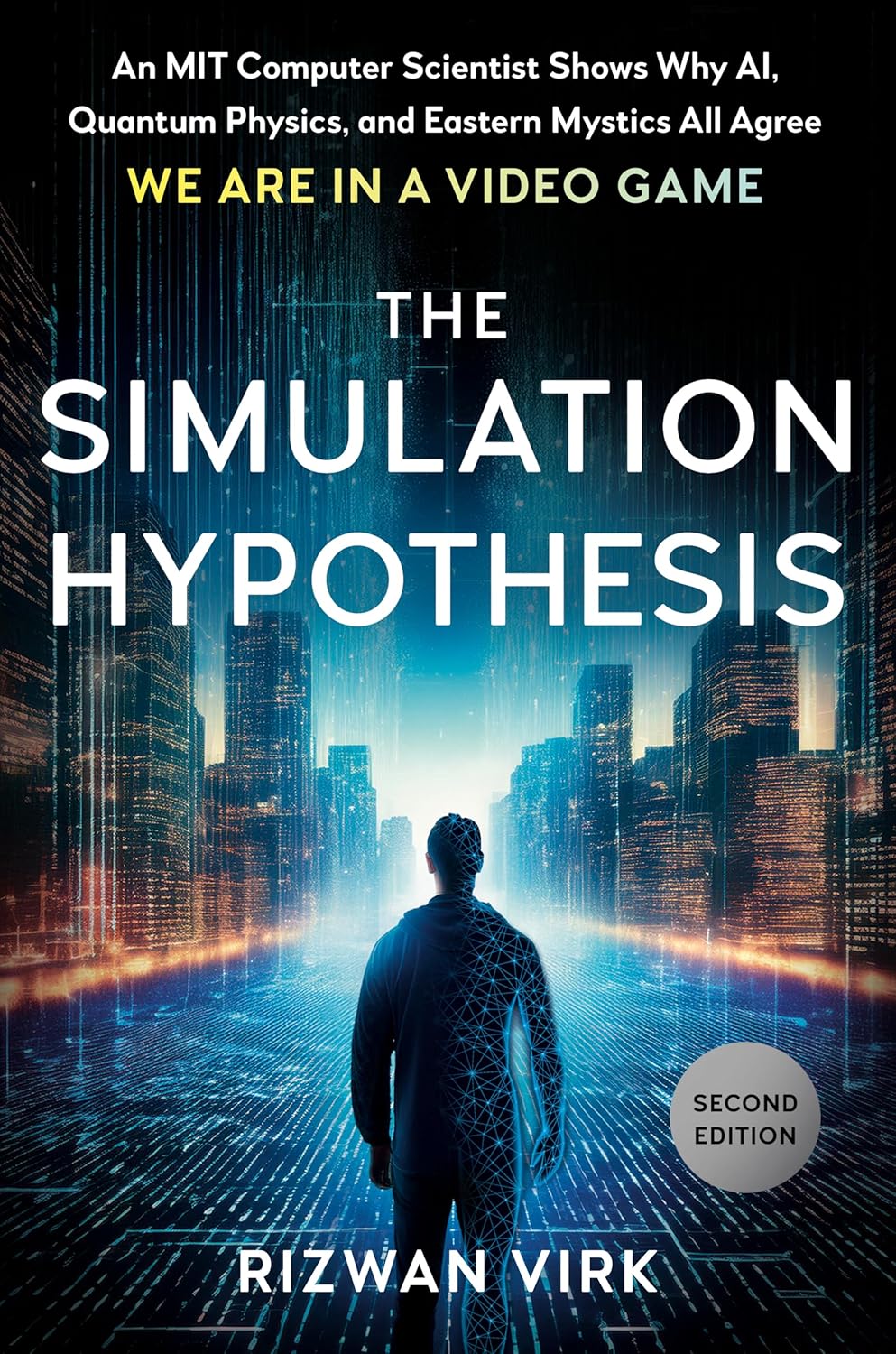
An MIT computer scientist connects AI, quantum physics and video games to take an uncomfortable question seriously: what if we live in a simulation? M
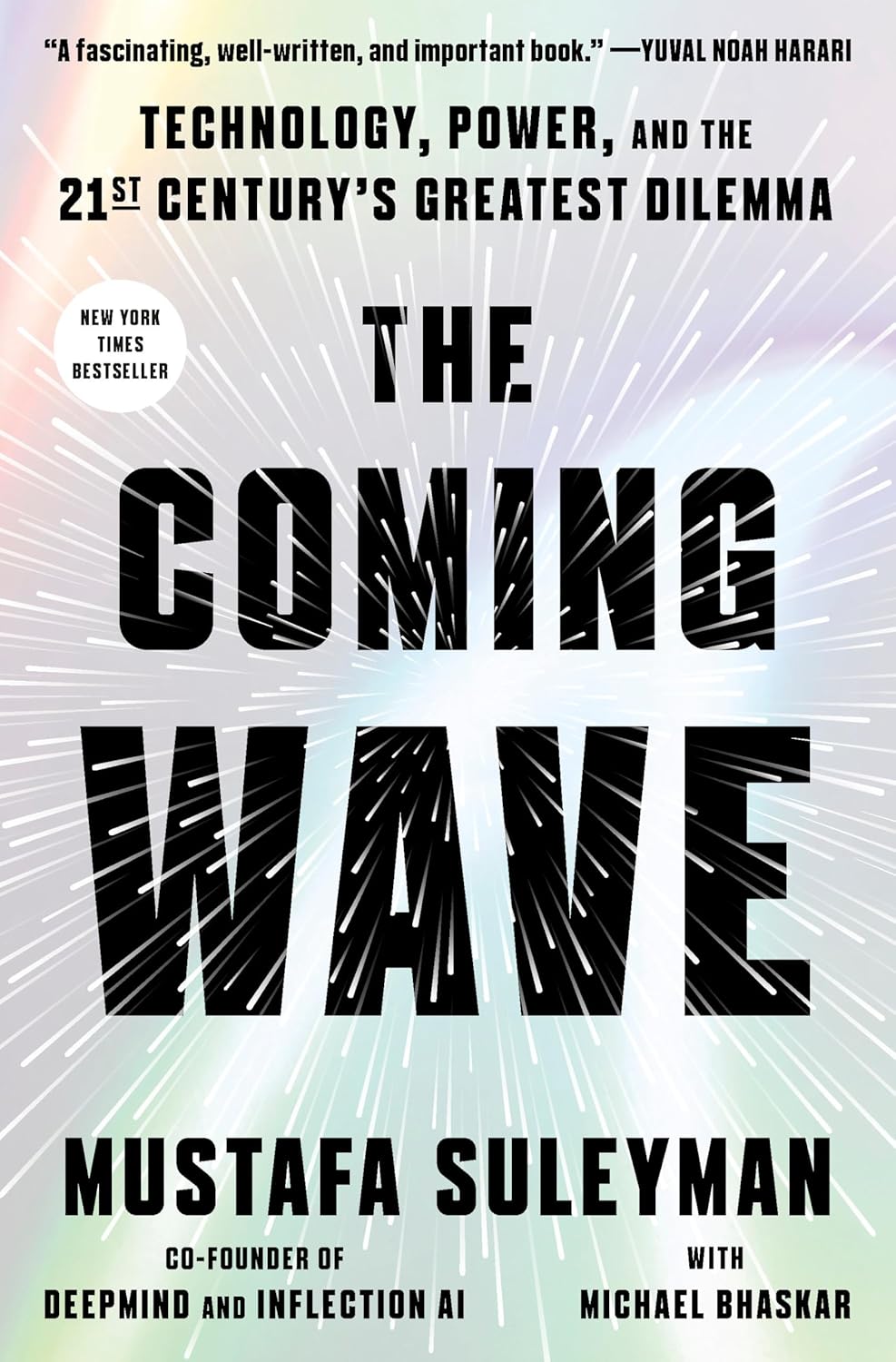
DeepMind co-founder on the dilemma of containing technologies that do not want to be contained.
As an Amazon Associate, Zendoric earns from qualifying purchases; the price does not change for you. · all our recommended books →
🔗 Related on Zendoric