Anthropic launches Claude Fable 5.1 and Mythos 5.1: more performance, lower cost and first scientific advances
🕒 Published on Zendoric: September 3, 2026 · 10:20
✨ AI-generated · how it's made
Anthropic has unveiled two twin models: Claude Fable 5.1 and Claude Mythos 5.1. According to the company, they are «the world's most advanced models» for programming and knowledge work, and their research capabilities offer, in Anthropic's words, «a first glimpse» of how AI will be able to contribute to…
📚 Go deeper
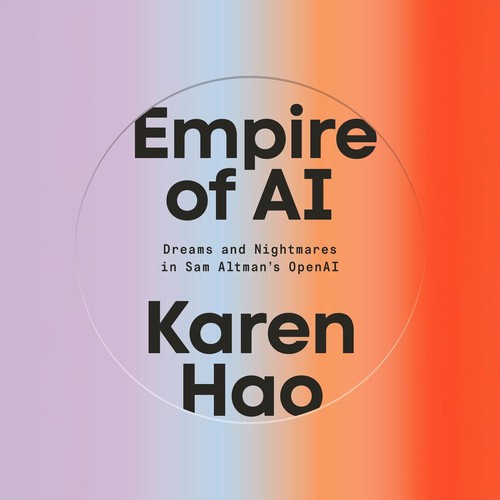
The definitive piece of investigative journalism on OpenAI: 260+ interviews, the clash between safety and speed, and the attempted firing of Sam Altma
As an Amazon Associate, Zendoric earns from qualifying purchases; the price does not change for you. · all our recommended books →
Anthropic has unveiled two twin models: Claude Fable 5.1 and Claude Mythos 5.1. According to the company, they are "the world's most advanced models" for coding and knowledge work, and their research capabilities offer, in Anthropic's words, "a first glimpse" of how AI will be able to contribute to scientific progress. Technically they are the same underlying model, but with different levels of safeguards: Fable 5.1 is generally available, while Mythos 5.1 is offered only through trusted access programs, with safeguards designed specifically for cybersecurity and life sciences work.
Beyond the leap in capabilities, Anthropic presents this version as a direct response to its customers' most frequent complaints: price, data retention and overly restrictive safeguards. On price, Fable 5.1 will cost 25% less than Fable 5 for typical token-billed workloads, thanks to a reduction in the cost of cache reads (when the model reuses inputs it has already processed). For highly agentic work — long tasks with many tool calls — the savings can reach roughly 45%.
As for data retention, Anthropic is introducing a new system called Enterprise Frontier Safeguards (EFS), which promises complete privacy — equivalent to a zero-retention policy — without giving up detection of adversarial use. The mechanism consists of storing data in cloud infrastructure controlled entirely by the customer, not by Anthropic. EFS will be rolled out in phases among enterprise customers starting this fall; until it is available, eligible customers will be able to use Fable 5.1 with zero data retention.
On safeguards, the company says it has reduced false positives — cases in which the system blocks harmless content. In cybersecurity, the new safeguards generate 60% fewer false positives than before, in part because Fable 5.1 can now be used to discover software vulnerabilities, though not to develop exploits that take advantage of them. In biology, Anthropic has created, in collaboration with the United States government, an access program to enable Mythos 5.1's advanced biological capabilities, with enrollment for scientists opening "soon".
On performance, Anthropic places Fable 5.1 well above Fable 5 in coding, knowledge work and long-running problem-solving tasks, and notes that at low or medium effort it matches or exceeds Fable 5's results at a much lower cost (Fable 5.1 defaults to "high" effort in Claude Code and "medium" in Claude Cowork and claude.ai). The published benchmark data include: on Terminal-Bench-Science 0.1 (agentic scientific research), Fable 5.1 scores 52.6% versus 24.7% for Fable 5, 29.0% for Opus 5 and 22.4% for GPT-5.6 Sol. On Terminal-Bench 4.0 (agentic coding), Fable 5.1 records 55.8% and Mythos 5.1 60.9% — the difference between the two, according to Anthropic, reflects tasks in which the cybersecurity safeguards, now more precise, previously intervened more often — versus 42.0% for Fable 5, 52.3% for Opus 5 and 37.3% for GPT-5.6 Sol.
In knowledge work (GDPval-AA v2), Fable 5.1 achieves 1,853 points versus 1,723 for Fable 5, 1,824 for Opus 5 and 1,711 for GPT-5.6 Sol. In computer use (OSWorld 2.0), Fable 5.1 reaches 77.9% in partial mode and 41.7% in strict mode, above Fable 5 (72.9%/36.1%) and Opus 5 (75.4%/39.6%); GPT-5.6 Sol has no data on this test. In multidisciplinary reasoning (Humanity's Last Exam), Fable 5.1 obtains 60.9% without tools and 65.0% with tools, above Fable 5 (57.8%/63.8%) and Opus 5 (56.6%/63.6%). In enterprise workflows (AutomationBench) it records 31.4% versus 17.1% for Fable 5, 26.9% for Opus 5 and 19.6% for GPT-5.6 Sol; and in agentic coding (CursorBench 3.2.0) it achieves 73.4% versus 70.5%, 70.0% and 67.2% respectively. Anthropic warns that these figures were obtained with production safeguards enabled, which probably penalizes Fable 5.1 and Fable 5's results on some tests, since on tasks where the safeguards intervened the models received zero points, or those specific tasks were completed by Claude Opus 4.8 (cybersecurity) or Opus 5 (biology) instead.
As a qualitative example, Anthropic highlights the case of investment firm Millennium, where Fable 5.1 found the cause of an extremely rare failure (roughly one in a million runs) in its internal systems, a problem that neither its engineers nor any other model had managed to explain over several years of attempts.
The article also gathers some twenty testimonials from early access customers, which point in a similar direction: improvements in code quality, consistency on long tasks and cost savings. Jane Street notes that Fable 5.1 solves more internal coding problems than Fable 5 or Opus 5 and achieves state of the art in "trading intuition", remaining legible even on long, multi-step tasks. Cognition, the company behind Devin, announces that it will shift its Opus 5 traffic to Fable 5.1 from launch, since it matches or exceeds Fable 5 at a lower cost per task, making it economically viable to use in workflows — such as code review — previously reserved for Opus. MongoDB reports that the model built a complex prototype in about three days, first researching on its own through the code and documentation of its services and then running for hours without supervision with strong verification loops. Every describes Fable 5.1 as twice as fast as Opus 5 and using half the tokens in its tests, summing it up as "Fable intelligence, Opus price, Sonnet speed". Ramp says that an unsupervised 38-hour run on a machine learning problem diagnosed a labeling artifact in a previous result, corrected it, launched six experiments in parallel overnight and came back with results and next steps. Rakuten explains that the model reviewed a clinical research project for Rakuten Medical that three other frontier models had already approved, found a gap none had detected and proposed a new hypothesis from a dataset they had already discarded. Browserbase, for its part, measured 82% of tasks completed on its most demanding browser-agent benchmark, versus 74% for Opus 5 and 57% for Fable 5, while using fewer tokens than both.
In the field of scientific research, Anthropic details three concrete examples. The first is molecular design: giving Mythos 5.1 access to open-source protein design and folding tools, and sending its designs to two outside organizations for experimental validation, the model managed to design very high-affinity binders. On three specific targets, its binding affinity was ten times higher than the best designs submitted to Adaptyv Bio's protein design competitions, and its hit rate — designs that turned out to be viable binders — reached almost 50% across 12 different targets, versus the 10-15% Anthropic describes as typical in protein design today.
The second example is computational modeling: Fable 5.1 trained a neural network to create a new high-resolution elevation map of a third of Venus's surface, from radar images taken more than 30 years ago by NASA's Magellan mission and a pre-existing map covering only a fifth of the planet. The new map distinguishes details of 2-3 km, compared with 10-20 km previously, and improves height accuracy by up to 25%. Anthropic is publishing it under a Creative Commons license ahead of the future VERITAS (NASA) and EnVision (ESA) missions, in the hope that it will help decide which geological formations to observe.
The third example is computational biology: since machine learning models specific to this discipline usually run on GPUs and their speed limits the pace of research, Mythos 5.1 wrote custom GPU kernels and cached intermediate results to speed up seven open-source deep learning models by up to 2.5 times, while keeping results identical. Anthropic notes that these speed gains add up quickly in experiments where biologists run these models thousands of times.
It should be noted that the material retrieved from the source cuts off before developing in detail the sections the article's own index announces on safety, security and alignment, as well as on specific cost and availability beyond what has already been mentioned about pricing and data retention; it is therefore not possible to offer here further verified details of those sections without risking inventing information not present in the available text.
Overall, the launch of Fable 5.1 and Mythos 5.1 confirms an Anthropic strategy centered on three axes: making intensive use of its models cheaper (especially in long-running agentic workflows), differentiating access according to risk level through adjustable safeguards while reducing the false positives that annoyed legitimate developers, and positioning its most advanced models as tools capable of making tangible contributions to scientific research, from drug design to planetary cartography.
📚 Go deeper
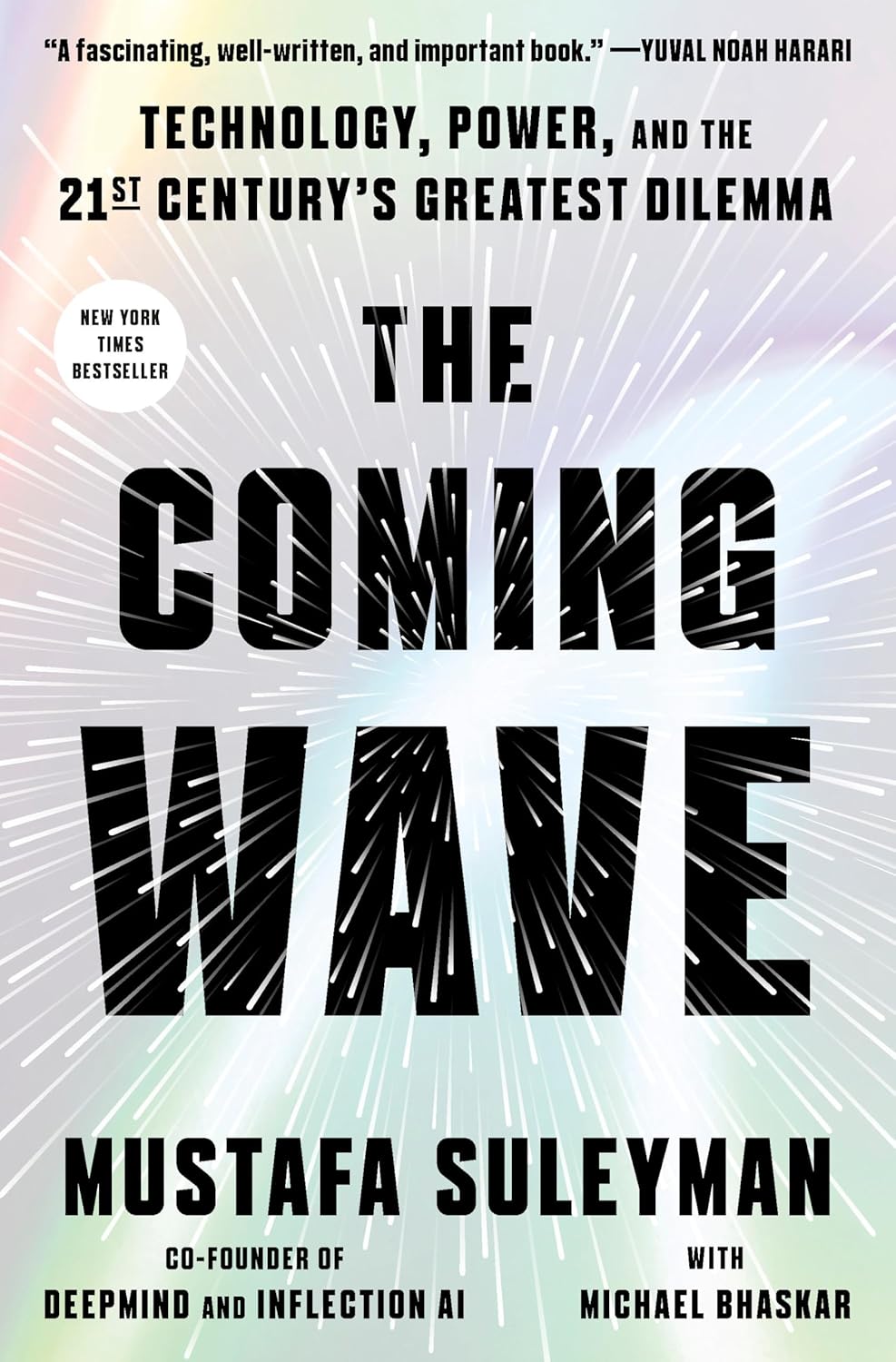
DeepMind co-founder on the dilemma of containing technologies that do not want to be contained.
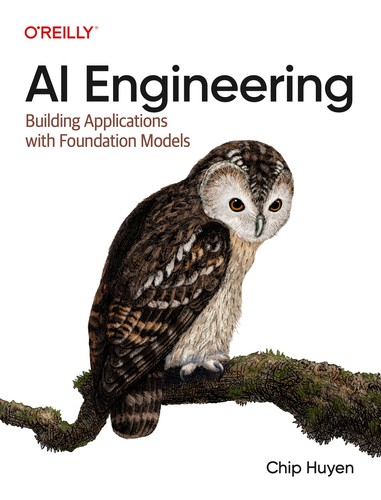
The reference manual for building products on top of AI models: prompts, RAG, fine-tuning, agents, evaluation and deployment.
As an Amazon Associate, Zendoric earns from qualifying purchases; the price does not change for you. · all our recommended books →
🔗 Related on Zendoric