Google Meet drops ChromeOS and migrates its room hardware to Android
🕒 Published on Zendoric: September 3, 2026 · 10:20
✨ AI-generated · how it's made
Google has announced the full transition of its Google Meet hardware portfolio from ChromeOS to Android. This hardware includes touchscreen controllers, cameras, microphones, speakers and the "compute systems" (a kind of Chromebox) that run both the meeting scheduling software…
📚 Go deeper
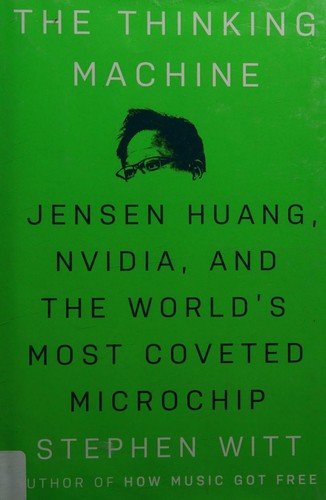
The story of NVIDIA and Jensen Huang: how a video-game card company ended up making the most coveted resource on the planet.
As an Amazon Associate, Zendoric earns from qualifying purchases; the price does not change for you. · all our recommended books →
Google has announced the complete transition of its Google Meet hardware portfolio from ChromeOS to Android. This hardware includes touchscreen controllers, cameras, microphones, speakers and the "compute systems" (a kind of Chromebox) that run both the meeting-scheduling software and the videoconferencing suite itself in corporate meeting rooms.
The company has been explicit in guaranteeing that investments already made in ChromeOS devices are protected. According to the statement, Google will continue to deliver security patches, stability updates and new ChromeOS releases for all Meet hardware running that operating system. There are no changes to support timelines: recent models will keep working with support until 2030.
Where there are changes is in manufacturing. The hardware partners that build this equipment —Logitech, CTL and Asus— will gradually stop manufacturing and selling ChromeOS-based devices on specific timelines: Logitech/CTL's "Google Meet Compute System" will cease production in February 2027, while the Asus equivalent will do so in April 2027. Google recommends that customers who need to buy more ChromeOS equipment to complete their existing fleet —especially with large event spaces in mind— do so as soon as possible, given that the purchase window is closing.
As for the reasons behind the change, Google lists several benefits it attributes to Android over ChromeOS in this context. First, greater device variety: Android-based room hardware would offer a wider range of form factors, from compact all-in-one devices to video bars and integrated room solutions, making it possible to better cover everything from a single-person focus room to a boardroom. Second, enterprise stability, with performance and responsiveness comparable to what ChromeOS already offered. Third, hardware flexibility: because these are AOSP-certified (Android Open Source Project) devices, they could run several different videoconferencing solutions, which would protect companies' investment by allowing rooms to be reused without having to replace the physical equipment. And fourth, longer life cycles, with devices certified for Google Meet designed for long-term reliability and predictable software support.
Google also hints, without giving specifics, that it plans "several interesting Android devices" aimed at large-format spaces during 2027.
This move fits into a broader context: the news itself is mentioned alongside the wait for the first consumer "Googlebooks," suggesting a more general strategic reorientation by Google toward Android as a unified platform, even in categories —such as meeting-room hardware— that had traditionally been ChromeOS territory. For companies that depend on this hardware, the practical message is clear: there is no urgency to replace what is already installed, but it is worth planning any fleet expansion well in advance, before sales of ChromeOS models end in early 2027.
📚 Go deeper
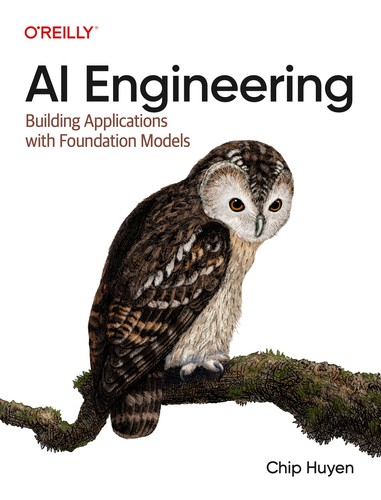
The reference manual for building products on top of AI models: prompts, RAG, fine-tuning, agents, evaluation and deployment.

Semiconductors as the oil of the 21st century: history, espionage, and why an island of 23 million people underpins the entire AI economy.
As an Amazon Associate, Zendoric earns from qualifying purchases; the price does not change for you. · all our recommended books →
🔗 Related on Zendoric
- 140,000 tech layoffs alongside $800B in AI spending: the story is capital reallocation, not machines · 2026-07-27
- A Nobel Laureate Leaves DeepMind for Anthropic — and the Market Treats Talent as the Real Moat · 2026-06-24
- «Get the Flock out of here»: the town council meeting as a thermometer of AI surveillance · 2026-06-27