OpenAI tops $1 billion in annual ChatGPT advertising revenue

🕒 Published on Zendoric: September 2, 2026 · 08:27
✨ AI-generated · how it's made
OpenAI announced that its advertising business has reached an annualized revenue rate of $1 billion, a milestone the company presents as proof of its "diversified business model."
📚 Go deeper
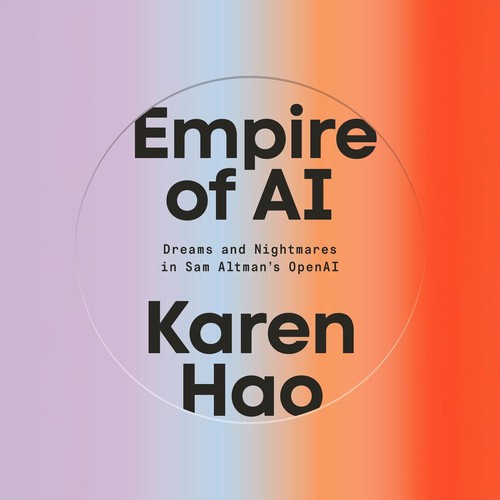
The definitive piece of investigative journalism on OpenAI: 260+ interviews, the clash between safety and speed, and the attempted firing of Sam Altma
As an Amazon Associate, Zendoric earns from qualifying purchases; the price does not change for you. · all our recommended books →
OpenAI announced that its advertising business has reached an annualized revenue run rate of $1 billion, a milestone the company presents as evidence of its "diversified business model." It is a particularly striking figure considering that, according to the company itself, this line of business is barely 200 days old.
The announcement comes at a time of mounting pressure for OpenAI, which is preparing for what is expected to be a large-scale IPO and needs to justify an $852 billion valuation to investors. Showing that advertising already generates substantial revenue, on top of its other business lines — enterprise offerings, consumer subscriptions and pay-as-you-go APIs — bolsters the argument that the company does not depend on a single path to monetization.
OpenAI began testing ads inside ChatGPT in the United States in February of this year, a move as anticipated as it was controversial. Digital advertising has long been the main revenue engine for other big tech companies such as Google and Meta, but OpenAI's entry into the field did not go unnoticed: it was mocked by its chief rival, Anthropic, which made the move the centerpiece of its first Super Bowl campaign.
According to the information shared, ChatGPT ads are now available in more than 40 countries, and on Monday OpenAI announced the expansion of self-serve access to India, Europe, the Middle East and North Africa. Ads inside the chatbot are shown to users on the Go plan and on the free tier, who make up the vast majority of the platform's 1 billion weekly active users.
The company has been keen to stress certain safeguards around how this advertising works: ads are clearly labeled, they do not influence ChatGPT's answers, and advertisers do not have access to users' private conversations. These are significant assurances in a context where trust in the neutrality of AI assistants is a sensitive point for users and regulators alike.
Looking ahead, OpenAI said its "next phase of growth" will include bringing ChatGPT ads to more markets, as well as introducing new formats, advertising objectives, buying options and measurement capabilities. The company also mentioned that it will explore "new ways" for businesses to interact with consumers more natively inside ChatGPT, though no specifics have yet been given about what those interactions would involve.
Taken together, the news confirms a trend many had anticipated: the transformation of conversational AI assistants into large-scale advertising platforms, following the path already taken by search engines and social networks. With a base of a billion weekly users and an accelerating geographic expansion, OpenAI appears determined to make advertising a stable pillar of its revenue before facing the scrutiny of public markets.
📚 Go deeper
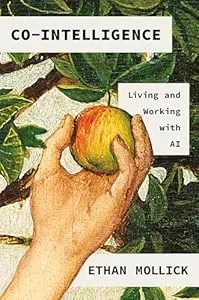
The best starting book if you're not technical: a Wharton professor explains how to work WITH AI — when to delegate, when to supervise, when to keep i

The reference manual for building products on top of AI models: prompts, RAG, fine-tuning, agents, evaluation and deployment.
As an Amazon Associate, Zendoric earns from qualifying purchases; the price does not change for you. · all our recommended books →
🔗 Related on Zendoric
- Anthropic bills like infrastructure, not like an app: how it's gaining ground on OpenAI in the enterprise · 2026-07-09
- Meta claims its 'Watermelon' model has reached the level of OpenAI's GPT-5.5 · 2026-07-07
- East Bay Express runs an 'AI girlfriend' ranking written by the industry itself: advertising now dresses up as journalism · 2026-07-28