Agentic AI gives power back to the private cloud: Broadcom bets that governing agents matters more than compute

🕒 Published on Zendoric: September 2, 2026 · 08:27
✨ AI-generated · how it's made
At VMware Explore 2026, Broadcom places private cloud and autonomous agent security at the center of its message. The underlying diagnosis, according to theCUBE Research, is not about computing power but governance: who controls the behavior of the agents already running in production.
📚 Go deeper
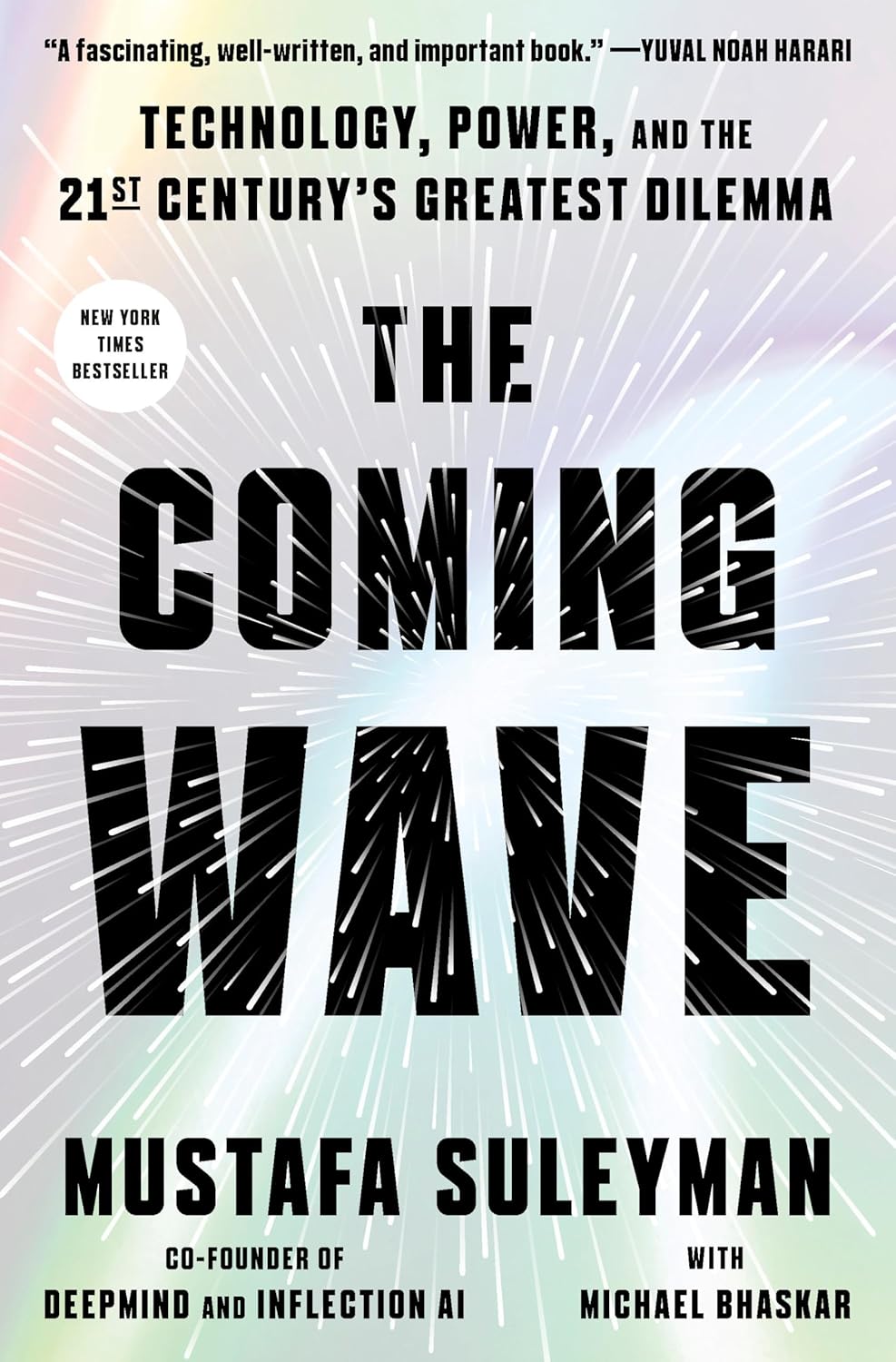
DeepMind co-founder on the dilemma of containing technologies that do not want to be contained.
As an Amazon Associate, Zendoric earns from qualifying purchases; the price does not change for you. · all our recommended books →
By Zendoric · September 1, 2026.
Broadcom has turned VMware Explore 2026 into the showcase for a specific thesis: agentic AI —AI systems capable of acting autonomously, not just answering questions— is pushing companies to rebuild their private infrastructure. According to theCUBE's coverage (the streaming studio of SiliconANGLE Media) from the event, the lineup of announcements includes VMware Cloud Foundation 9.1, an update that arrives while many customers are still completing their migration to the previous 9.0 version, and an "AI Factory" ecosystem that Broadcom is weaving together with chip and server manufacturers.
The most revealing point is not technical but diagnostic. Christophe Bertrand, an analyst at theCUBE Research, sums up the core problem infrastructure teams face today: "the biggest problem, beyond data and access to data, is the behavior and security of these agents", along with governance, regulatory compliance and the so-called sovereign cloud (infrastructure that guarantees that data and its processing remain under national or corporate jurisdiction and control). It is a way of saying something other vendors have been hinting at for months: the bottleneck for AI in production is no longer how much computing power you have, but how much control you exercise over what an autonomous agent does with the company's data.
This material should be read with a caveat the article itself discloses: theCUBE is a "paid media partner" of the event, and although SiliconANGLE clarifies that Broadcom has no editorial control over the content, in practice this is preview coverage with a strong promotional slant, with no adoption figures, prices or verifiable benchmarks yet —the text itself announces that such data "is expected to emerge" during the event, not that it already exists—. Put another way: today there is a thesis and a narrative, not hard evidence. That does not invalidate the underlying trend, but it does require treating it as Broadcom's positioning story, not as a measured result.
And the underlying trend matters. Over the past decade, the industry consensus was "everything to the public cloud": the hyperscalers (AWS, Azure, Google Cloud) won the battle on elasticity and marginal cost. Agentic AI introduces a new variable that reopens that discussion: when an autonomous agent has permission to read, write and act on sensitive corporate systems —not just to generate text—, the risk and cost calculation changes. Continuous inference at scale has a different economics from sporadic workloads, and the exposure surface of an agent with write permissions is far larger than that of a query chatbot. That pushes companies to repatriate workloads to their own infrastructure, where they control auditing, latency and the blast radius of a failure.
This fits with something we have been pointing out in other coverage: the competitive battle in AI is shifting from the model to the "plumbing" that surrounds it —who controls distribution, integration and now also the infrastructure on which agents run—. Broadcom is not competing to have the smartest model; it is competing to be the layer on which the agents of companies already using third-party models run. It is the same logic that has led other infrastructure giants to fight to embed themselves in the agentic orchestration layer rather than in the frontier model layer.
In the short term, this repatriation carries a real and unglamorous cost: long, expensive infrastructure upgrade projects (the note itself points out that many VMware customers are still digesting the previous version as the next one arrives), learning curves for IT teams, and a need to redesign networks and storage —the mention of "advanced memory tiering", or managing memory in tiers according to cost and access speed, suggests that serving large models in production also requires rethinking the hardware, not just the software—. None of this is free or immediate, and companies that dive in without clear governance of their agents run real operational risks.
In the long term, however, this is exactly the kind of invisible infrastructure that decides whether agentic AI ends up delivering on its productivity promise or stays stuck in permanent pilots. If governing an autonomous agent's behavior —knowing what it did, why, with what data and under what permission— becomes as systematic as managing a database, adoption stops being an innovation experiment and becomes genuinely critical infrastructure. That is precisely the kind of boring but necessary foundation on which the abundance we advocate is built: it does not come from a more powerful model, but from the plumbing that allows it to be deployed with confidence at scale.
📚 Go deeper
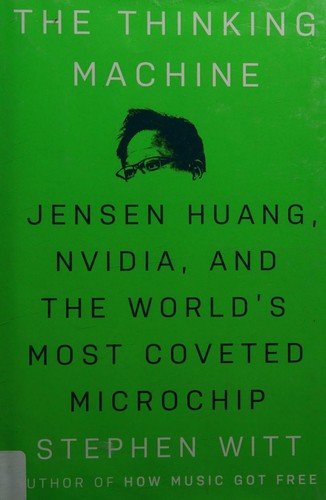
The story of NVIDIA and Jensen Huang: how a video-game card company ended up making the most coveted resource on the planet.

The reference manual for building products on top of AI models: prompts, RAG, fine-tuning, agents, evaluation and deployment.
As an Amazon Associate, Zendoric earns from qualifying purchases; the price does not change for you. · all our recommended books →
🔗 Related on Zendoric
- Only 12% of companies know how to govern their AI agents: Google turns that gap into its edge over OpenAI and Anthropic · 2026-07-20
- Nutanix bets on governing AI agents before token spending spirals out of control · 2026-07-04
- BNB Chain lets AI have its own wallet: the autonomous agent as a new economic player · 2026-07-05