Georgia tests an AI that reads 911 calls to spot mental health crises before police do

🕒 Published on Zendoric: September 1, 2026 · 00:48
✨ AI-generated · how it's made
Police in Moultrie, in southern Georgia (US), are piloting CaseFinder, an AI that combs through reports and 911 transcripts to flag who should be referred to psychological help rather than to the station. The police chief himself admits the university's announcement came before the software actually worked: it still cannot connect to the department's files.
📚 Go deeper
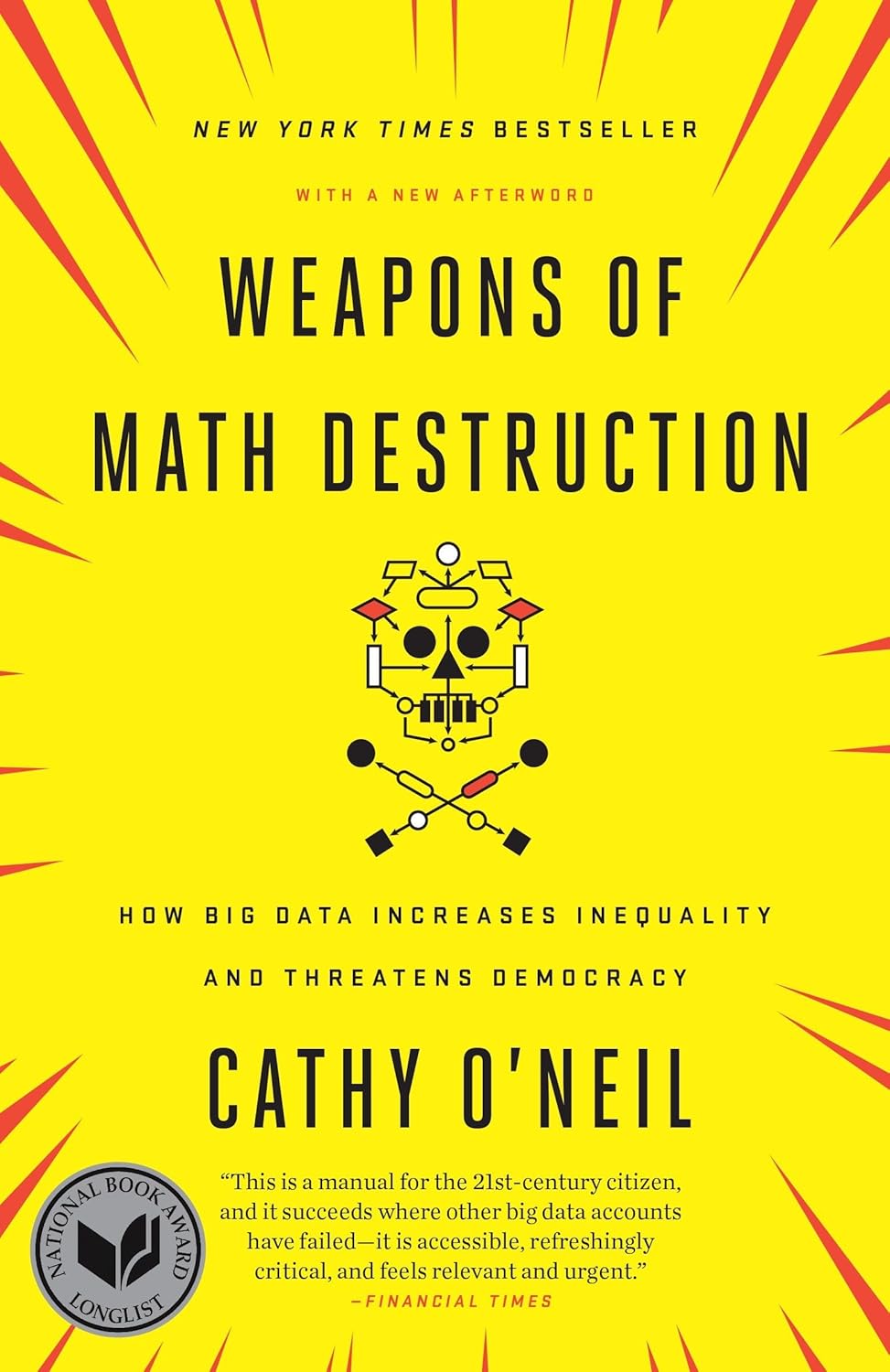
How opaque algorithms decide who gets credit, a job or parole — and why they tend to punish the same people.
As an Amazon Associate, Zendoric earns from qualifying purchases; the price does not change for you. · all our recommended books →
By Zendoric · September 1, 2026.
Moultrie is a city of just over 14,000 residents in south Georgia (USA). Its police department, Kennesaw State University (KSU) and the company Technovative AI, Inc. have launched a pilot called CaseFinder: a system that reviews police reports and 911 call transcripts to detect patterns —repeated calls to the same address, keywords such as "alcohol" or "drugs"— and generate a list of people who might need mental health or addiction help, as police chief Chad Castleberry explained.
That list is not handled by an algorithm alone: it is passed to a "co-response" unit made up of an officer and a social worker from the Georgia Pines Community Service Board, which visits the flagged individuals and, where appropriate, connects them with local resources. The unit has been in place since May 2022, with support from the UGA Archway Project, and logged 305 such encounters in 2025 and 230 so far in 2026, spanning crisis calls, follow-ups and welfare checks, according to figures published by the department itself together with Georgia Pines.
There is one detail that deserves more attention than the tool itself: KSU announced the partnership on its website on August 20, but Castleberry admits the announcement was premature. As of Monday, the developers had still not managed to connect CaseFinder to the department's records management system, the software where all the information the AI needs to work resides. In other words: the partnership was celebrated before the technology had done anything.
The agreement also has the classic shape of a small tech vendor hunting for its first reference customer: Moultrie deploys CaseFinder on its own hardware at no licensing cost during the pilot, KSU and Technovative AI provide installation and technical support, and in exchange the department contributes structured feedback to refine the product. The company, the statement notes, retains the right to cite the deployment as a customer case. It is the standard early-stage acquisition playbook: get into a small institution for free, learn from it and use it as an endorsement to sell to the next one.
As industry context, it is worth distinguishing this from the "predictive policing" that stirred controversy a decade ago, which used historical crime data to decide where to patrol and ended up reproducing racial and class biases. CaseFinder points in the opposite direction: it does not seek to predict crimes, it seeks to divert people from the criminal justice system into the health system. The intent is commendable and fits a real trend: more and more local police forces in the US are adding co-response units with social workers, and AI appears here as a way to stretch a scarce human resource —one officer, one social worker— to cover hundreds of contacts a year without additional staff.
But the very design that avoids the bias of predictive policing opens another problem: building a list of people "with behavioral health needs" out of isolated words in a 911 call is, in practice, a surveillance file with good intentions. Someone mentioning alcohol or drugs on a call does not amount to needing intervention, and there is nothing in the public material about consent, criteria for removal from the list, or limits on who else may access that data later on. A tool meant to connect people with help can, without those limits clearly defined from day one, drift into a registry used for purposes other than the one that motivated it.
Our reading is that this story matters less for the technology —which sounds more like rules and pattern matching than a frontier language model— and more for what it represents: the boring, local layer of AI, the one that never shows up in the big labs' presentations, is starting to take root in town halls and police stations in small cities, with the marketing rush running ahead of the engineering, exactly as we already know from far larger deployments. If it really multiplies what two people can handle, it fits AI's underlying promise: using the abundance of compute to better allocate a scarce human resource, pulling people out of the punitive circuit before they collide with it. But that promise only holds if data governance —consent, auditing, red lines on use— is built with the same care as the software itself, and in Moultrie, for now, not even that is working yet.
📚 Go deeper

The best starting book if you're not technical: a Wharton professor explains how to work WITH AI — when to delegate, when to supervise, when to keep i

AI as the latest chapter in the history of information networks, from gossip to the printing press to the algorithm.
As an Amazon Associate, Zendoric earns from qualifying purchases; the price does not change for you. · all our recommended books →
🔗 Related on Zendoric
- UCLA Health bets on AI for cancer detection: another sign that precision medicine is no longer just a promise · 2026-06-26
- Specialized mental health AI versus everyday ChatGPT: the battle no one can win by ignoring the user · 2026-06-28
- The chatbot as a teen's confidant: a study in The Lancet flags two real risks the industry cannot ignore · 2026-06-30