Anthropic shows an automated AI researcher that fixes alignment failures better than humans
🕒 Published on Zendoric: September 1, 2026 · 00:48
✨ AI-generated · how it's made
Anthropic has published a new paper, titled "Automated Researchers Can Reliably Mitigate Alignment Failures", offering a first practical demonstration of how AI systems can be used to automatically improve a model's own alignment training.
📚 Go deeper
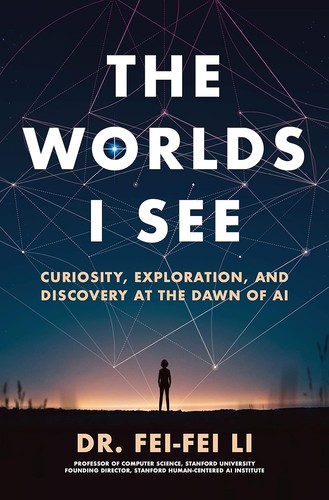
The memoir of the creator of ImageNet, the scientist who made the deep learning revolution in vision possible.
As an Amazon Associate, Zendoric earns from qualifying purchases; the price does not change for you. · all our recommended books →
Anthropic has published a new paper, titled "Automated Researchers Can Reliably Mitigate Alignment Failures," offering a first practical demonstration of how AI systems can be used to automatically improve a model's own alignment training. The work is led by Chen Yueh-Han, a researcher in Anthropic's fellows program, and fits within a goal increasingly pursued by the major AI labs: training models using other AI models as researchers.
The system described, which the paper calls the Automated Alignment Researcher (AAR), replicates the typical workflow of a human researcher: it searches the existing literature on a specific alignment problem, proposes a method to address it, trains the model with that method for 30 minutes, and evaluates the result against a benchmark. This cycle is repeated iteratively, keeping the methods that work and discarding those that do not, which allows it to operate quickly and at scale.
According to the article, when the system was given 10 different benchmarks, each focused on a specific misaligned behavior, the AAR managed to improve performance on all ten without degrading the model's general performance. The paper itself sums up the conclusion cautiously: "these results provide early evidence that automated alignment post-training could become practical in the near future."
One of the paper's most striking points is the explicit comparison between the AAR's performance and that of human researchers. As quoted verbatim, "the AAR's best method outperforms what experienced humans propose, on average within six hours," and moreover "human-guided research directions do not lead to stronger performance." To this is added a cost comparison the article describes as part of the paper itself: an AAR costs roughly $4 per hour in inference via API, compared with the $150 per hour Anthropic pays its human researchers.
This kind of result sits within the broader conversation about recursive self-improvement in AI, seen by many as the next major step in these systems' progress. The logic is as follows: if a model is capable of improving its own alignment training, it is plausible that the same approach could be extended to improving training practices in general, a scenario in which human AI researchers could become progressively less necessary.
That said, the paper itself acknowledges significant limits to this approach. The automated system is only as good as the benchmarks used to measure success: if these do not faithfully reflect real alignment goals, the measured improvements may not translate into genuine alignment. It also notes that considerable work remains to be done both in designing and maintaining those benchmarks and in updating and expanding the literature that automated researchers draw on to generate their proposals.
Taken together, the article presents this work as an early proof of concept rather than an already mature system: it shows that substantial parts of the alignment research cycle (literature search, method proposal, training and evaluation) can be automated, with results that, at least on these ten specific benchmarks, match or exceed what human researchers achieved, and at a fraction of the cost. At the same time, they make clear that the ultimate reliability of this approach depends critically on the quality of the metrics and the literature guiding the system, a problem that is not solved simply with more automation.
📚 Go deeper
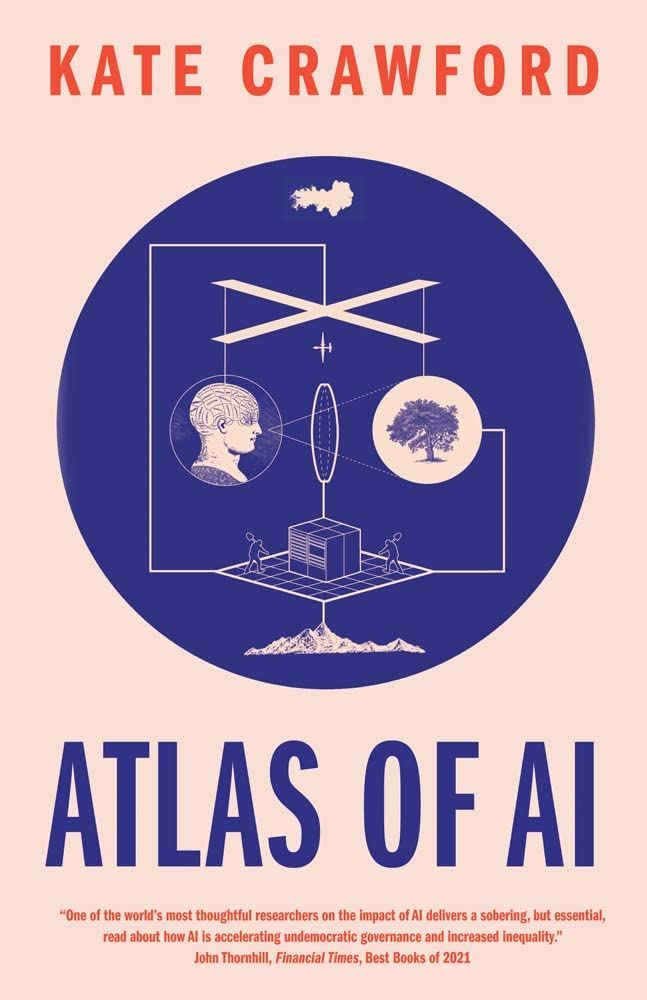
AI as an extractive industry: the lithium, the energy, the underpaid data-labeling work and the bodies behind the cloud.

The only novel on the list, by a Nobel laureate: an artificial friend observes humans with a blend of lucidity and innocence no essay achieves.
As an Amazon Associate, Zendoric earns from qualifying purchases; the price does not change for you. · all our recommended books →
🔗 Related on Zendoric