Cisco extends its Secure AI Factory with NVIDIA to Supermicro rack-scale systems

🕒 Published on Zendoric: September 1, 2026 · 00:48
✨ AI-generated · how it's made
Cisco has announced that its Secure AI Factory with NVIDIA program now extends to rack-scale infrastructure built on Supermicro systems, in both liquid-cooled and air-cooled versions.
📚 Go deeper
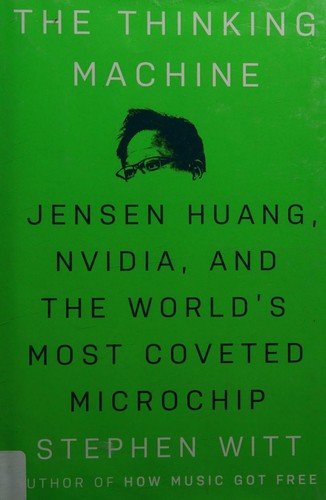
The story of NVIDIA and Jensen Huang: how a video-game card company ended up making the most coveted resource on the planet.
As an Amazon Associate, Zendoric earns from qualifying purchases; the price does not change for you. · all our recommended books →
Cisco has announced that its Secure AI Factory with NVIDIA program now extends to rack-scale infrastructure built on Supermicro systems, in both liquid-cooled and air-cooled versions. The offering rests on compliance with the NVIDIA Cloud Partner (NCP) Reference Architecture, to which Cisco adds its Validated Infrastructure Services, its own AI networking layer and unified management operations. According to the company, these Supermicro systems will be available from October through its enterprise and channel sales network, with Cisco support and lifecycle services included.
The reference design splits the cluster network into two distinct switch families according to function. The frontend fabric is based on Cisco N9300 switches, built on Cisco Silicon One, while the backend fabric uses Cisco N9100 switches, built on NVIDIA Spectrum-X silicon. Cisco positions this combination as valid for clusters ranging from roughly 1,000 GPUs to more than 100,000, and associates it with NVL72 configurations for Vera Rubin and Grace Blackwell, HGX NVL8 systems for Rubin and B300, and MGX platforms with PCIe GPUs.
The piece where Cisco takes on the most direct responsibility is CVIS (Cisco Validated Infrastructure Services). It includes a CVIS Toolkit for repeatable provisioning and automated validation, a specialist-led delivery process that culminates in a validated cluster along with a performance and compliance report, and dedicated CVIS clusters intended for software testing and tooling development.
The validated designs are split by scale into two reference architectures. The Enterprise Reference Architecture covers AI server clusters below roughly 1,000 (or 1,024) GPUs, based on N9300 switching with Silicon One. The Cloud Reference Architecture, by contrast, stretches from around 1,000 to more than 100,000 GPUs, combining an N9300 frontend with an N9100 backend based on NVIDIA Spectrum-X silicon. The Supermicro systems are aimed at AI clusters that go beyond the Cisco Unified Edge and Cisco AI POD offerings, since they are designed for model training and trillion-parameter-scale workloads, not for edge inference or optimization scenarios.
As for the planned catalog, Cisco lists Supermicro MGX systems, NVIDIA HGX B300 NVL8 in air-cooled and liquid-cooled versions, NVIDIA HGX Rubin NVL8, and the Vera Rubin NVL72 and GB300 NVL72 rack-scale systems, all alongside Cisco's own UCS X-Series modular servers. At the cluster network level, the management fabric maps onto an N9364E-SG2-O switch with Silicon One, while the frontend and backend fabrics use an N9164E-NS4-O with NVIDIA Spectrum-X silicon; Cisco maintains that this same network model scales beyond 100,000 GPUs on an architecture network operations teams already know.
Unified management will come via Cisco Cloud Control, planned for the fourth quarter of 2026. This console will initially add unified sign-on, inventory and topology, along with server, power and cooling management for the infrastructure and for the network itself, integrating Intersight and Nexus One under a single Day 0 to Day 2 operating model. The idea is to give the operator a complete view of the cluster: the network fabric and topology, the frontend, backend, storage and management switches, and the servers and storage, with an 'AI Canvas' for troubleshooting and continuous visibility.
On the split of physical responsibilities, the article notes that, in response to a question raised on a call this week about who would handle physical maintenance of the equipment, everything points to Supermicro performing the physical service —replacing an SSD or a GPU, for example— on its own servers, while Cisco provides the networking, validation, management and commercial support layer around it.
The outlet reporting the announcement, ServeTheHome, also includes the assessment of its editor-in-chief, Patrick Kennedy, who knows both Cisco and Supermicro first-hand. As he explains, Supermicro has a high-volume AI cluster business that includes its own integration, testing and deployment facilities, plus a faster new-server development cycle than Cisco's UCS line, something he considers crucial in a field like AI infrastructure, where hardware generations move very fast. On the components that fall outside the rack itself —such as chillers or in-row cooling distribution units (CDUs)— Cisco's answer was that they will be available under a resale agreement, although they require additional engineering compared with simply delivering an already integrated rack.
All told, what Cisco is doing is wrapping Supermicro's rack-scale infrastructure in its own networking layer, its validated designs, its sales channels, its support, its lifecycle services and its unified management. For companies that have already standardized their network on Cisco and are looking for a single provider responsible for the entire AI cluster deployment, this deal removes the need to separately integrate Supermicro systems, Cisco switches and third-party management tools, offering instead a single end-to-end point of accountability.
📚 Go deeper

Semiconductors as the oil of the 21st century: history, espionage, and why an island of 23 million people underpins the entire AI economy.
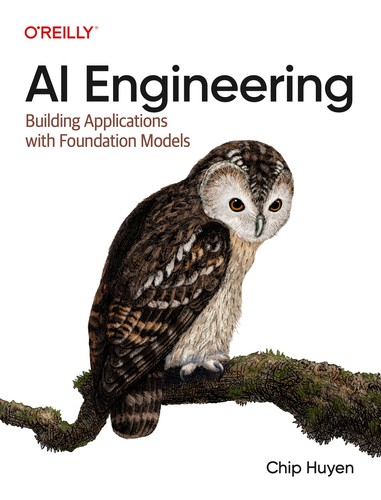
The reference manual for building products on top of AI models: prompts, RAG, fine-tuning, agents, evaluation and deployment.
As an Amazon Associate, Zendoric earns from qualifying purchases; the price does not change for you. · all our recommended books →
🔗 Related on Zendoric
- Identity for machines: the Agent Name Service aims to be the DNS of AI agents · 2026-06-24
- The U.S. expands its ban on importing Chinese technology: the FCC extends the veto to older models from Huawei, ZTE, Hikvision and more · 2026-06-30
- Penguin Solutions surges 24% on joining Nvidia's partner club: infrastructure, not the model, moves the AI market · 2026-07-09