Diamond Rapids, Crescent Island and Wildcat Lake: Intel's hardware for agentic AI

🕒 Published on Zendoric: September 1, 2026 · 00:48
✨ AI-generated · how it's made
At Hot Chips 2026, Intel presented three architectures it says are meant to sustain the next wave of agentic AI, from the data center rack to the consumer laptop: the Diamond Rapids server processor, the Crescent Island inference GPU and the Wildcat Lake client SoC.
📚 Go deeper

The story of NVIDIA and Jensen Huang: how a video-game card company ended up making the most coveted resource on the planet.
As an Amazon Associate, Zendoric earns from qualifying purchases; the price does not change for you. · all our recommended books →
At Hot Chips 2026, Intel presented three architectures with which it says it wants to underpin the next wave of agentic AI, from the data center rack to the consumer laptop: the Diamond Rapids server processor, the Crescent Island inference GPU and the Wildcat Lake client SoC. Pushkar Ranade, Intel's chief technology officer, said agentic AI is changing the company's compute design "from the transistor up", a phrase that neatly sums up the thrust of this announcement: this is not a single chip, but a three-layer strategy aimed at different points in the AI pipeline.
Diamond Rapids is by far the project Intel detailed most, which makes sense for a server product that enterprise customers plan for years in advance. It will be sold under the Xeon 7 brand and, in its top-end configuration, will reach 256 cores, backed by 1.28 GB of low-latency last-level cache, 16 memory channels, 128 PCIe 6 lanes and support for CXL 3.0. According to the specialist outlet ServeTheHome, the maximum configuration is built from 16-core chiplets manufactured on Intel's 18A-P node. The problem is that it will arrive in 2027, and by then it will have to measure up against AMD's EPYC 9996, a chip that also has 256 cores, is built on TSMC's 2 nm node and, unlike Intel's, retains hyperthreading (SMT), which in practice gives it twice as many execution threads as Intel's flagship. In other words: Intel matches AMD on core count and bandwidth, but arrives late and with half the threads available per core, hardly a trivial disadvantage in highly parallelized agentic workloads.
Crescent Island is, in the article's own words, the most interesting of the three designs and, at the same time, the least detailed. It is an air-cooled PCIe card with a 350 W power draw, built on Intel's Xe3P GPU architecture, with 32 cores feeding 256 third-generation XMX engines and 32 MB of unified L2 cache. The most striking decision concerns memory: instead of HBM, Intel has opted for LPDDR5X, a choice that sacrifices peak bandwidth in exchange for a cost and power profile that would let it compete more realistically with Nvidia and AMD in the inference segment. Here, however, comes the trickiest point of the announcement: the 480 GB figure Intel highlights in its press release is not what will reach the market on Intel-branded cards, which will top out at 160 GB; the 480 GB is a ceiling reserved for ODM partners that build their own configurations on the same design. On top of that, Intel has confirmed to the outlet Chips and Cheese that it does not intend to publish the memory bandwidth figure, a detail that is anything but minor: bandwidth determines decode performance, and decode performance is, in practice, what defines the token economics of an inference accelerator. Without that figure, it is hard to judge whether Crescent Island is genuinely competitive against Nvidia's and AMD's alternatives beyond the marketing.
Wildcat Lake is the only one of the three you can actually buy today: it has reached the market as Intel's Core Series 3, built into miniPCs and laptops. Intel explained that it has replaced the Foveros packaging used in Panther Lake with organic multichip packaging, eliminating the base die and, with it, part of the assembly cost and the associated yield losses. The result, according to the company, is a 38% reduction in compute die area and a 15% reduction in I/O tile area. The weak point is the NPU: its 17 TOPS falls well short of the 40 TOPS Microsoft requires for Copilot+ certification. Intel clarifies that the 40 TOPS figure it cites in its own materials is a platform total combining CPU, GPU and NPU, not the NPU alone, so in theory it could be reached by combining all three blocks. Even so, it is an awkward flank for a company whose AI push has been concentrated above all on capturing enterprise and hyperscale customers, leaving the client and edge terrain in a weaker position against a certification that the Windows ecosystem itself has turned into a de facto standard.
Taken together, the message Intel tried to convey at Hot Chips 2026 is that of a company with a complete roadmap for agentic AI, covering server, dedicated inference and client in a single event. But the technical detail reveals a more nuanced story: in server, Intel matches AMD on cores but arrives later and with fewer threads per core; in inference, it offers a memory proposition cheaper than HBM but withholds the figure that would really matter to a technical buyer; and in client, the product already on the market falls short of the bar Microsoft has set for the Copilot+ ecosystem. None of these three points invalidates Intel's strategy, but they do suggest that, in this announcement cycle, the company has chosen to show breadth of range rather than a clear competitive edge in each segment.
📚 Go deeper

The reference manual for building products on top of AI models: prompts, RAG, fine-tuning, agents, evaluation and deployment.
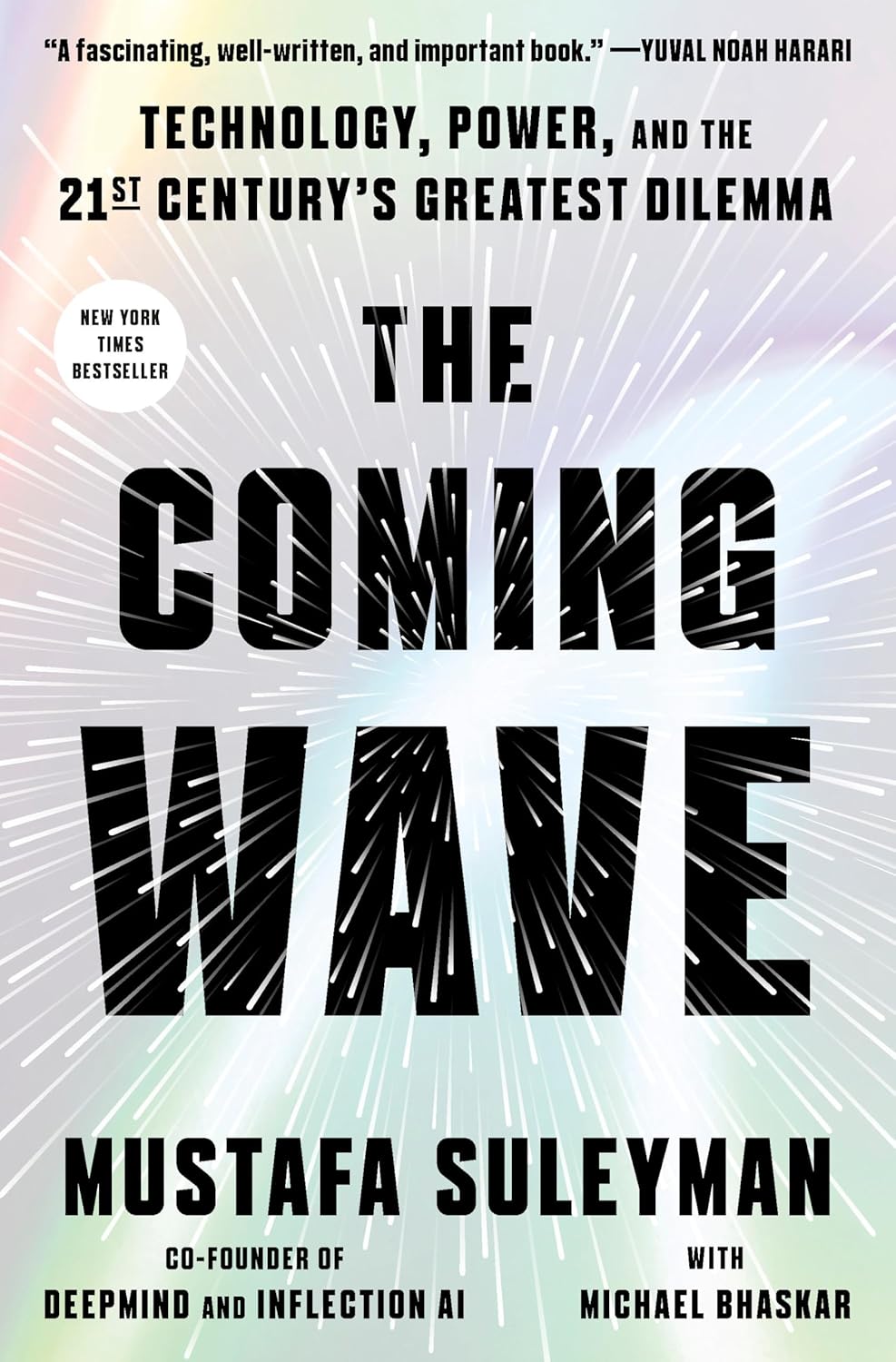
DeepMind co-founder on the dilemma of containing technologies that do not want to be contained.
As an Amazon Associate, Zendoric earns from qualifying purchases; the price does not change for you. · all our recommended books →
🔗 Related on Zendoric
- AMD rewrites its AI roadmap around agentic orchestration and challenges Nvidia's reign in the data center · 2026-07-24
- The agent that made up a test: what agentic testing reveals about the AI software factory · 2026-07-11
- OpenAI goes down to the silicon: 'Jalapeño' and the bet on controlling the entire intelligence chain · 2026-06-26