Chubut swaps its AI classroom ban for teaching it: the shift already spreading across education

🕒 Published on Zendoric: September 1, 2026 · 00:48
✨ AI-generated · how it's made
At two schools in Chubut, principals and teachers are dropping their ban on artificial intelligence and betting instead on teaching its ethical, critical use in the classroom. The case is small and local, but it illustrates a shift already underway in education systems around the world: from policing AI to integrating it.
📚 Go deeper
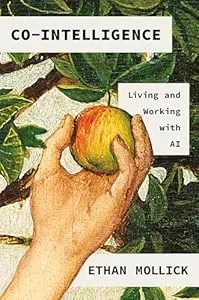
The best starting book if you're not technical: a Wharton professor explains how to work WITH AI — when to delegate, when to supervise, when to keep i
As an Amazon Associate, Zendoric earns from qualifying purchases; the price does not change for you. · all our recommended books →
By Zendoric · September 1, 2026.
At the Escuela Municipal de Pesca N° 2701 "Juan Demonte" and the Escuela N° 785 "Troperos Patagónicos", both in Chubut (Argentina), the management teams have decided to bring artificial intelligence (AI) into lesson planning rather than ban it, as reported by Canal 12. "Our premise as a management team is to make friends with artificial intelligence," explained Norma Morales, deputy head of the fishing school. Cecilia Pérez and Selena Méndez, head and deputy head of the Troperos Patagónicos school, agreed with the approach.
The benefit the school leaders highlight most is concrete and modest: less time spent planning, less stress and more hours to grade work or be in the classroom. "The time we used to spend planning, we can now put more of it into grading or into the classroom carrying out the activities," Morales noted. This is not a pedagogical revolution; it is a productivity tool that frees up administrative hours, something we have spent months documenting across different sectors as the most immediate and least discussed effect of generative AI.
There is an important nuance in the words of the Troperos Patagónicos leaders themselves: "We have to give the order so that the AI does exactly what we want and not what it wants, because otherwise there may not be enough description, but the AI gives you the base and then each of us adds our own stamp." It is, without calling it that, a precise description of prompt literacy: the quality of the result depends on how well the teacher can specify what they need. Those who do not master that skill will get a generic "base"; those who do will get a tool fine-tuned to their own judgment.
The underlying point, according to Morales, is not to fall into prohibition: "Teach them to use it, take a little time, just as we make a pause to work on bullying — well, let's work on AI too." The comparison is not accidental: it puts the use of these tools on a par with other aspects of school life that call for explicit guidelines, not policing. "It doesn't replace my cognitive ability, my ability to write; it has to help me," she summed up.
Overall, this report describes a local, anecdotal case —two schools, three school leaders, no figures or studies to back it up— and it should not be extrapolated into a portrait of the entire Argentine education system. But it is worth more as a signal of direction than as a statistic: it is the same transition we have been seeing at universities and education ministries around much of the world, which in barely a couple of years went from banning ChatGPT in exams to drawing up responsible-use guidelines. Chubut is arriving late to that curve, but it is arriving, and it is doing so the right way: from teaching practice rather than from a desk-issued directive.
Our reading connects with something we have already been arguing when analyzing AI's impact on jobs in education: the teacher who wins is the one who learns to orchestrate AI as support, and the one who loses is the one who merely delivers content mechanically. This case is that thesis in miniature, told by the people living it: the deputy head who "gives the order" and adds her own stamp is not being replaced, she is redefining what she spends her time on. If AI's long-term promise is to free people from repetitive tasks so they can devote their energy to what really matters —in this case, supporting each student in the classroom— AI-assisted lesson planning is a small but real preview of that abundance of time.
The risk, honestly, lies not in this report but in what it does not tell: what happens to schools in the same province that lack stable connectivity, management teams with time to experiment or teacher training in these tools. Chubut is a vast province with enormous disparities between its towns; a "don't ban, teach" policy only closes gaps if it comes with training and equivalent access in every school, not just in those with leaders motivated enough to go first.
📚 Go deeper
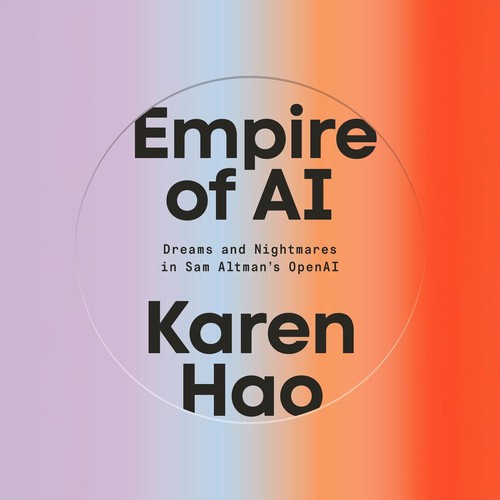
The definitive piece of investigative journalism on OpenAI: 260+ interviews, the clash between safety and speed, and the attempted firing of Sam Altma
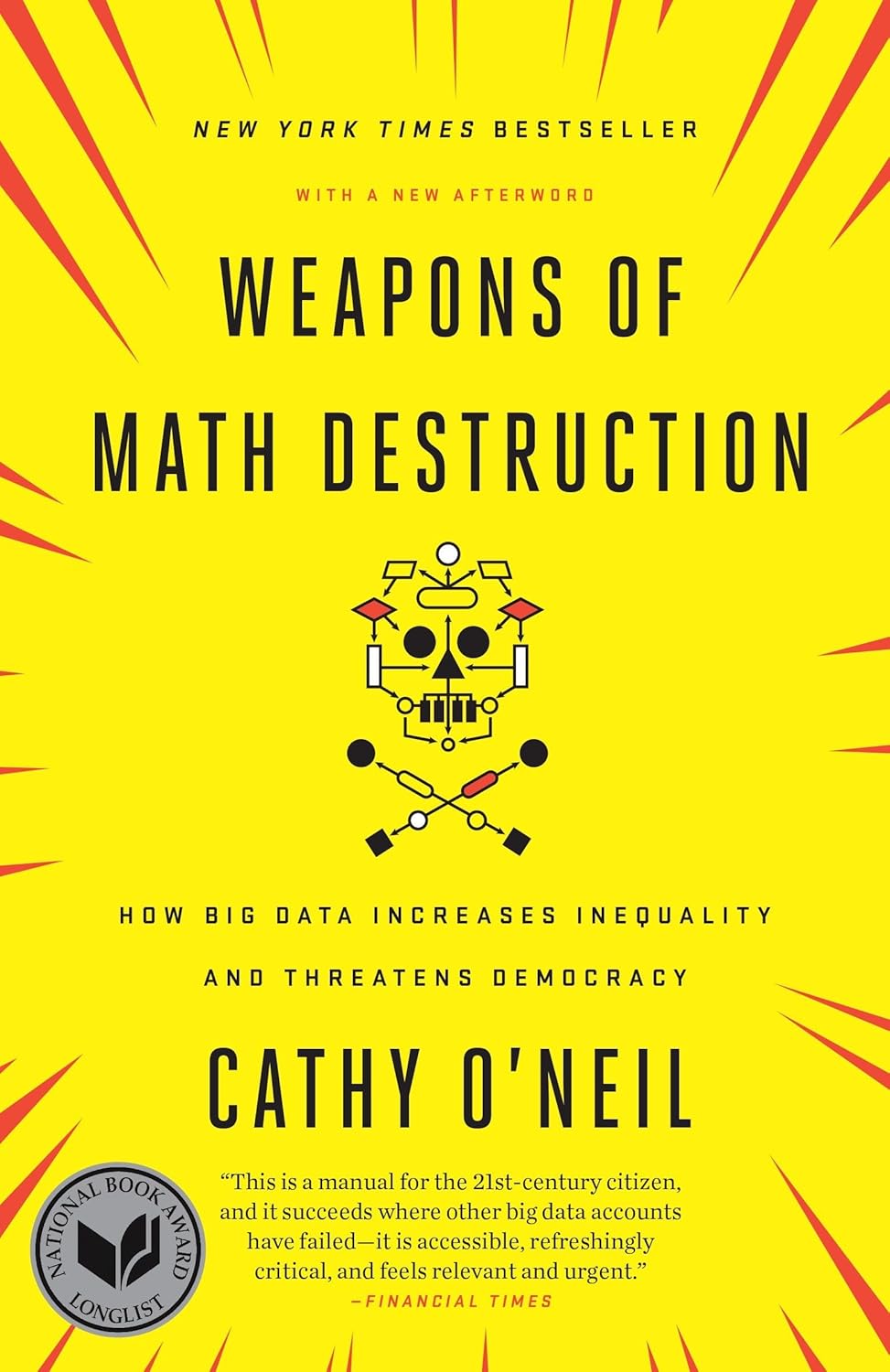
How opaque algorithms decide who gets credit, a job or parole — and why they tend to punish the same people.
As an Amazon Associate, Zendoric earns from qualifying purchases; the price does not change for you. · all our recommended books →
🔗 Related on Zendoric