When the commander-in-chief posts AI slop: a fake strike video forced the Pentagon to deny its own boss
🕒 Published on Zendoric: August 31, 2026 · 09:29
✨ AI-generated · how it's made
Trump posted a photorealistic AI video of Iran's Kharg Island oil terminal in flames; a US official had to confirm no such strike happened. The real story isn't one bad post — it's that fabrication now costs nothing while verification still costs institutional credibility.
📚 Go deeper
How opaque algorithms decide who gets credit, a job or parole — and why they tend to punish the same people.
As an Amazon Associate, Zendoric earns from qualifying purchases; the price does not change for you. · all our recommended books →
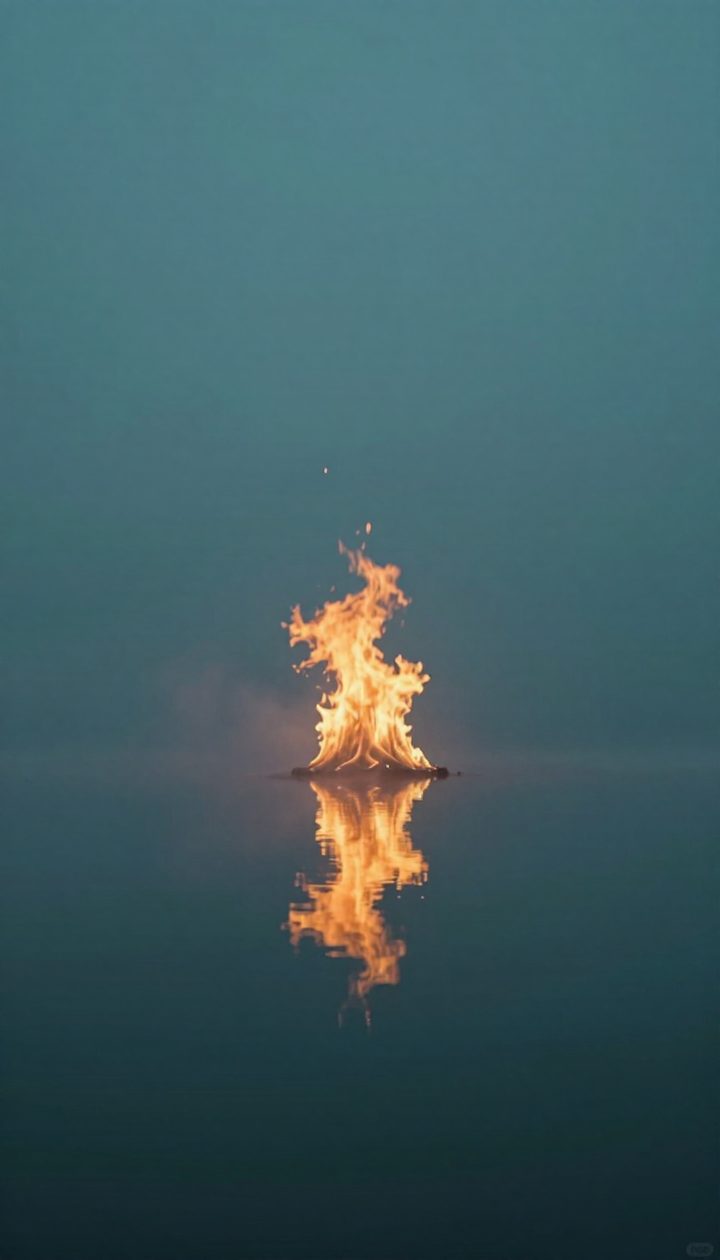
The Defense Department was pushed on Monday into denying that the United States had struck Iran's main petroleum export facility, after President Donald Trump posted a fake but photorealistic AI-generated video of the attack to his Truth Social account, The Independent reports. The clip shows oil storage tanks and refineries erupting in flames, filmed as if from a helicopter overhead, captioned "Kharg Island being blown to smithereens" and signed "President DJT." A US official told the outlet no such attack took place, and that Kharg Island was not among the sites hit overnight in what was the first exchange of fire between American and Iranian forces in weeks.
The denial did not come only from Washington. Hamid Bovard, head of the National Iranian Oil Co, called the post "laughable" and described conditions on Kharg Island as "calm and appropriate." The detail that turns this from a bad post into a governance problem is procedural: as The Independent notes, the White House has repeatedly stated that Trump's Truth Social posts count as official statements from the commander in chief. That means the same channel designated as an authoritative government voice published a synthetic depiction of a military operation that, per a US official, never happened.
Context matters here, and it is not calm. According to the report, Iranian media described explosions near Larak Island in the Strait of Hormuz, where an American official said Tehran had been preparing mine-laying rockets; Iranian forces then fired missiles at Jordan, which another American official told CNN were intercepted. The war has passed the half-year mark with no exit strategy in sight. Kharg is not a symbolic target: the strait it sits beside carried roughly 20 percent of the world's oil before the conflict. Trump's separate posts calling Iran a "Failed Nation" and citing 300% inflation and over 100,000 protesters killed are his claims, not verified figures — and that distinction is exactly what a realistic fake erodes.
Here is the asymmetry that should worry anyone building or governing these systems. Generating a convincing video of a strike on the world's most consequential oil terminal now costs a prompt and a few minutes. Refuting it costs a Pentagon official's time, an on-record denial, and a measurable slice of institutional credibility — spent against the credibility of the institution's own head. Fabrication scales; verification does not. In a live shooting war beside a chokepoint that moves a fifth of global crude, that gap is not just an information problem, it's a market and escalation problem. Traders, insurers and foreign ministries all read the same feed.
Our reading: don't file this under "deepfakes are coming." They arrived, and the failure mode is not the anonymous troll — it's the trusted channel. That reframes the fix. Forensic detection is a losing race, as the false-positive mess in education already showed; the durable answer is cryptographic provenance at the source, signed content from official accounts, so the burden shifts from proving something is fake to proving something is authentic. Boring plumbing, like HTTPS was boring. The same generative capability that makes this trivially cheap is what will make signed, machine-verifiable official communication cheap too.
That is the nuance we keep insisting on. Short term, this is genuinely bad: synthetic media has entered statecraft before institutions built the habits to handle it, and the cost lands on the people who need accurate information to avoid a wider war. Long term, we still think the arc bends the other way — toward AI that compresses drug discovery, extends healthy life and expands what humans can do with their time. But that future requires a shared factual floor, and the Kharg Island clip is a warning that the floor is now something we have to actively engineer rather than assume. Provenance is not a side quest. It's infrastructure for everything else we want AI to deliver.
📚 Go deeper
Algorithms in justice, medicine, cars and art, explained with British humor and mathematical honesty.

The best starting book if you're not technical: a Wharton professor explains how to work WITH AI — when to delegate, when to supervise, when to keep i
As an Amazon Associate, Zendoric earns from qualifying purchases; the price does not change for you. · all our recommended books →
🔗 Related on Zendoric