Gartner: 4 in 10 enterprise agentic AI projects will be cancelled before 2027 over poor design, not the model

🕒 Published on Zendoric: August 31, 2026 · 09:29
✨ AI-generated · how it's made
Only 23% of companies that piloted AI agents have scaled them, according to McKinsey; Gartner expects more than 40% of these projects to be cancelled before 2027. The difference lies not in the prompt, but in how the workflow is designed.
📚 Go deeper

The best starting book if you're not technical: a Wharton professor explains how to work WITH AI — when to delegate, when to supervise, when to keep i
As an Amazon Associate, Zendoric earns from qualifying purchases; the price does not change for you. · all our recommended books →
By Zendoric · July 31, 2026.
Only 23% of organizations have managed to take their artificial intelligence agent projects —systems capable of planning and executing multi-step tasks without constant supervision— beyond a pilot, and almost always within a single department. The figure comes from a McKinsey State of AI survey, which puts the share of organizations at least experimenting with agents at 62%. The gap between piloting and scaling is the real bottleneck for agentic AI in 2026.
Gartner adds a figure that puts numbers on the failure: more than 40% of enterprise agentic AI projects will be cancelled before 2027, mainly because of runaway costs, blurry return on investment and insufficient risk controls. The same consultancy estimates that agents specialized in specific tasks will be present in 40% of enterprise applications by the end of 2026 —compared with less than 5% in 2025— and that they could generate close to 30% of enterprise software revenue in 2035. Adoption is growing at full speed and, at the same time, much of that adoption is doomed to die along the way.
Why do so many projects that start well end up failing? As The AI Journal reports, the problem usually lies not in the quality of the prompt —the natural-language instruction given to the model— but in the absence of a workflow architecture: who decides what at each step, what happens when something fails, where a human steps in and how context is preserved from one task to the next. A prototype held up by clever instructions works in the demo; in production, with legacy systems and shifting data, those same instructions break as soon as a branch appears that nobody anticipated.
Organizations that keep their agents in production share, according to the article, a handful of practices: well-defined role boundaries for each agent, persistent memory that avoids resetting the context at every step, checkpoints where a human reviews before the process moves forward, explicit recovery paths for foreseeable failures and measurable success criteria from the initial design onward. None of them is a prompting trick: they are process engineering decisions, the same ones any critical software system has always required.
Two voices quoted in the report sum up where the debate is heading. Harrison Chase, co-founder of LangChain, argues on Sequoia Capital's Training Data podcast that the real value lies in the orchestration layer —the software that coordinates which agent does what and when— and calls for constrained, domain-specific cognitive architectures rather than unlimited autonomy. Guillermo Rauch, chief executive of Vercel, urges treating agents as "first-class users" of software: redesigning interfaces and APIs on the assumption that whoever uses them will not be a person, but an automated process with a different set of needs. Deloitte, for its part, puts a number on the prize for getting it right: solid orchestration can unlock between 15% and 30% more market value than a poorly coordinated multi-agent deployment.
Our reading: this cancellation figure does not contradict the underlying thesis about agentic AI, it confirms it. This is the hard, predictable phase of any transformative technology. It happened with relational databases, with the Internet and with the cloud: first it is tested small with shortcuts, then most of those shortcuts fail to hold at scale, and the only survivors are those who invest in the least eye-catching infrastructure —memory, permissions, error recovery— that never shows up in a demo. What matters is not that 40% of projects will fail, but that the split between who fails and who does not no longer depends on having access to the best model, but on knowing how to redesign internal processes around it.
This connects with something we have been observing in the transformation of administrative work sector by sector: the companies capturing real value from AI are not the ones that bought the most expensive model, but the ones that sat down to redraw the workflow before writing a line of code. It is the same logic we see in banking, insurance or business administration, where the profiles that orchestrate the process survive and those that previously only executed it step by step are being cut back. Agentic AI neither destroys nor creates jobs directly: it reshuffles who designs the work and who was merely following loose instructions.
In the long run, this phase of mass failures is the toll on the road to the abundance we defend at Zendoric. When agent orchestration matures as an engineering discipline —with patterns, standards and tools as settled as those we take for granted today in software development—, reliable automation of complete processes will stop being a privilege of whoever has the best technical team and will become infrastructure accessible to any organization. The path runs, as almost always, through the least eye-catching part of the problem.
📚 Go deeper
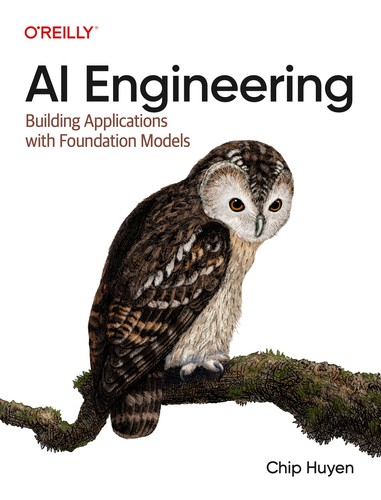
The reference manual for building products on top of AI models: prompts, RAG, fine-tuning, agents, evaluation and deployment.
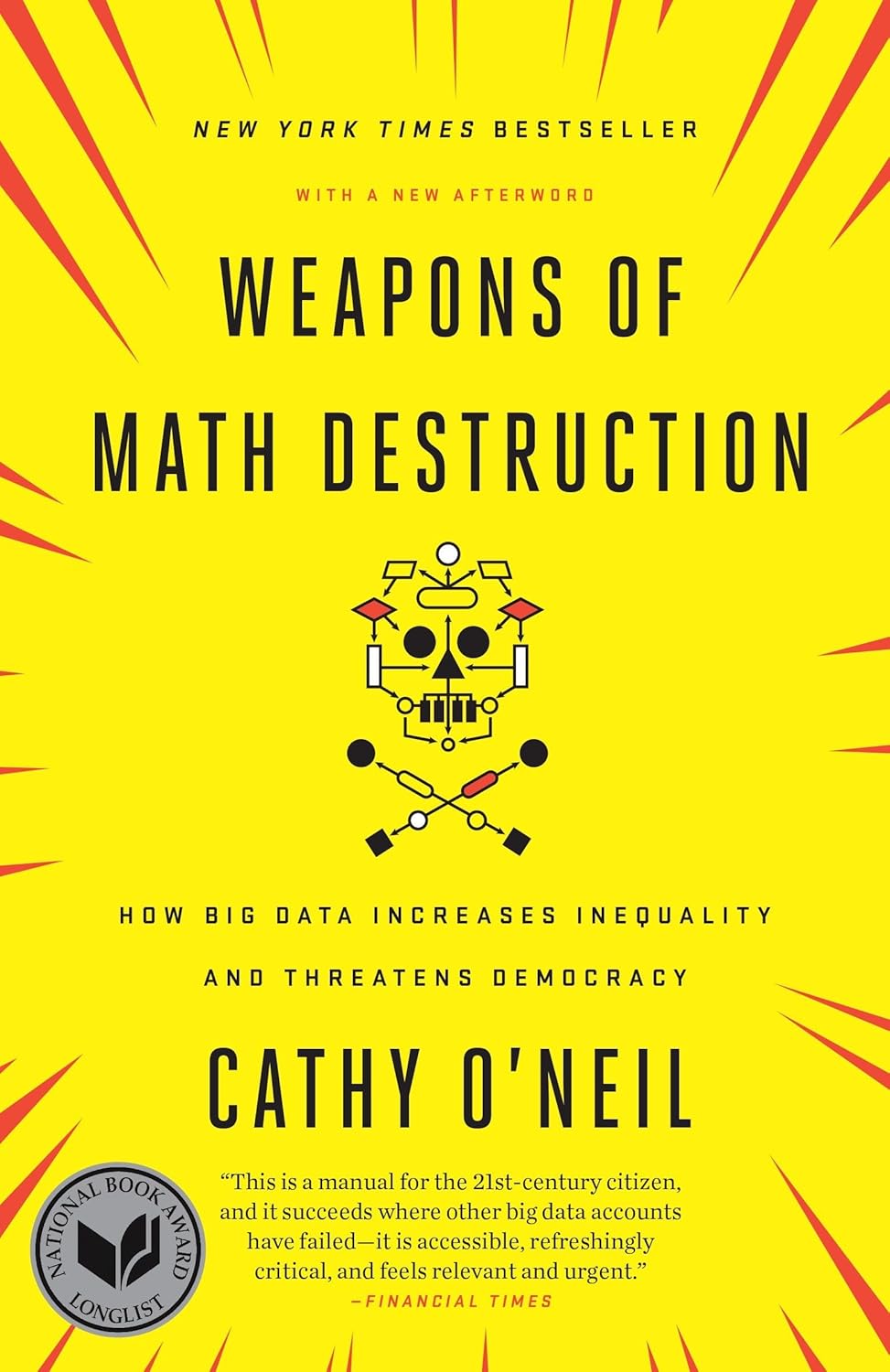
How opaque algorithms decide who gets credit, a job or parole — and why they tend to punish the same people.
As an Amazon Associate, Zendoric earns from qualifying purchases; the price does not change for you. · all our recommended books →
🔗 Related on Zendoric
- Gartner: 4 out of 10 enterprise agentic AI projects will be cancelled before 2027 because of poor design, not the model · 2026-07-31
- Agentic AI: 60% of spending goes to correcting its own answers, and 93% of companies are already over budget · 2026-07-26
- McKinsey: agentic AI adoption soars, but ROI stalls · 2026-09-04