AI already thinks faster than we understand it: chat falls short for long conversations

🕒 Published on Zendoric: July 30, 2026 · 00:20
✨ AI-generated · how it's made
An engineer documents in an essay something any heavy AI user recognizes: the longer the conversation, the easier it is to lose the thread. Chat preserves the order of messages, not the structure of ideas — and that, he argues, is the real bottleneck.
📚 Go deeper
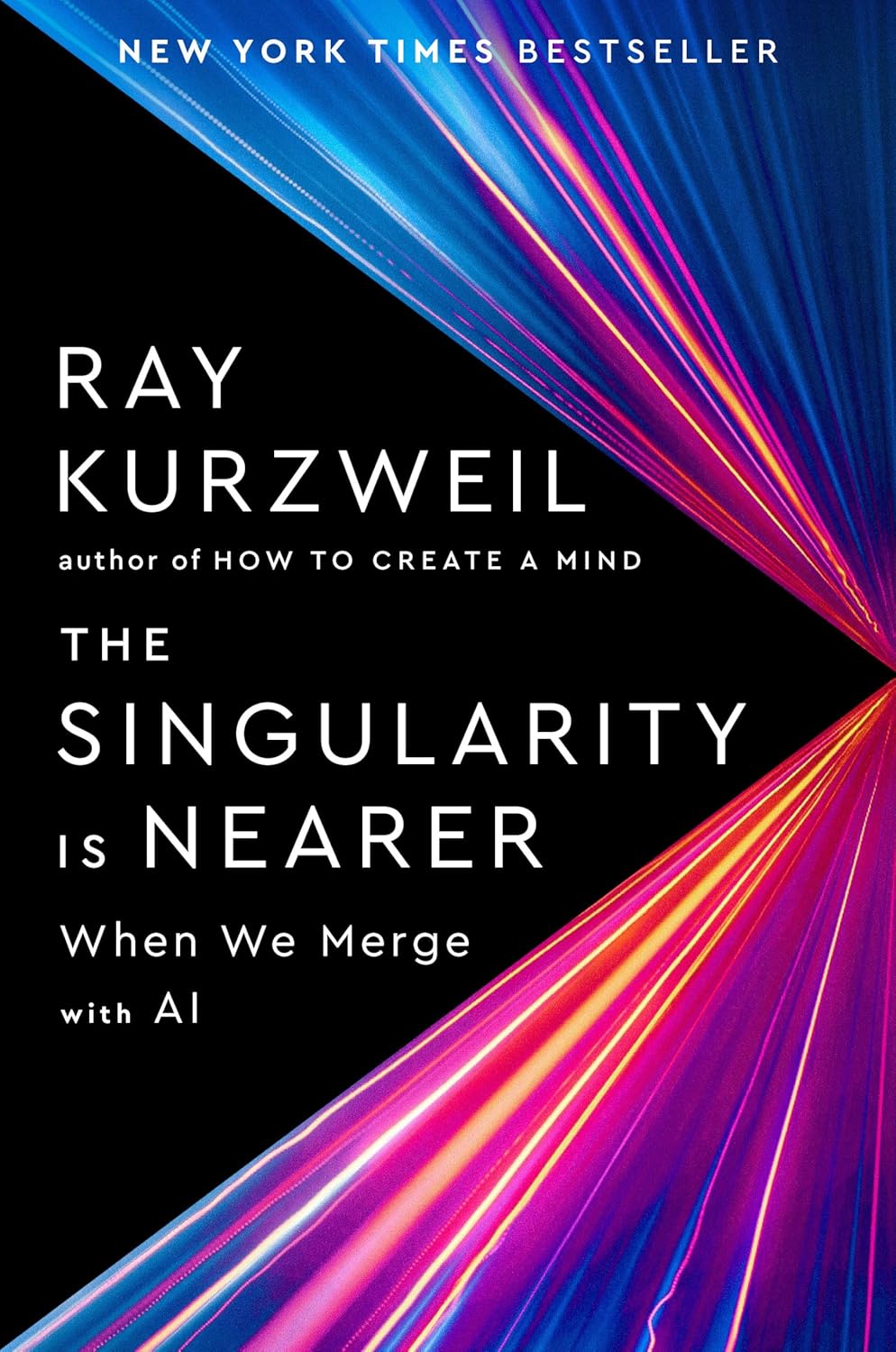
Twenty years after "The Singularity Is Near", Kurzweil revisits his predictions and keeps the date: human-AI merger around 2045.
As an Amazon Associate, Zendoric earns from qualifying purchases; the price does not change for you. · all our recommended books →
By Zendoric · July 30, 2026. Andrey Samsonov, author of the personal blog Commit Messages, published an essay on July 28 about a phenomenon that anyone who talks to a language model daily will recognize: long, exploratory sessions tend to dissolve. You open with a specific question, the model unfolds it in new directions, each answer spawns several more questions, and three hours later you're left with ten interesting threads, no conclusions, and barely any memory of where you started.
His central diagnosis is simple: the bottleneck is no longer the model. Today's systems generate a dense argument in seconds; integrating it with everything else that has been discussed, he says, can take him an hour. Text became cheap to produce; understanding did not.
The problem, Samsonov argues, is not the content of each answer — nearly all of them are reasonable and follow naturally from the previous one — but the format. A chat preserves the sequence of messages, but sequence is not structure: it doesn't distinguish an idea being abandoned from one being picked back up, or one that branches from one that merges into another. Everything is flattened into a before and an after. That's why drift is so hard to detect: there is no identifiable wrong turn, only an accumulation of reasonable steps that end up far from the starting point. Changing direction isn't the problem; not noticing that you've changed is.
As a contrast he reaches for an old image: a group thinking around a whiteboard. Someone draws a circle, explains it for five minutes, and later returns to it by pointing, without repeating the explanation — the circle has acquired a place and a history within the conversation. Chat has no equivalent of that circle: forty messages later, an important idea is still there, but nothing on the current screen points to it. His proposal, which he explicitly leaves unresolved, is to imagine a visual layer that grows alongside the text — not an after-the-fact summary (which he considers inherently "lossy," because it compresses by discarding part of what made the conversation valuable), but a structure that stays alive while the conversation is happening.
Broadly speaking, the industry is already probing variations on that idea without having solved the problem Samsonov raises: ChatGPT's canvas and Claude's Artifacts pull certain content out of the chat flow into a separate panel, and several infinite-canvas tools now include an AI assistant. But these are, above all, spaces for the final output — a document, some code, a diagram — and not for mapping in real time how an idea branches, stalls, or merges with another as you think.
Here's what really matters about this essay, beyond the personal anecdote: it precisely describes a bottleneck that has shifted. For years the limit on intellectual productivity with AI was model quality — how much it knew, how much it reasoned, how many mistakes it made. That limit has been receding, back toward the human: with frontier models capable of sustaining a coherent argument in seconds, the real constraint is how much of that density a person can absorb, verify and fit together in the time available. Applied to individual thinking, it's the same pattern we already see in work with agents: there's no shortage of capacity to generate, but a shortage of capacity to direct, verify and integrate what has been generated.
In the short term this has an uncomfortable side that shouldn't be glossed over: cognitive overload is a real cost of conversational AI, not an anecdote about clumsy users. The more ideas a model can unfold per minute, the easier it is to mistake volume of exploration for real progress, and the more expensive human synthesis time becomes — precisely the thing that used to be less scarce. If the interface doesn't evolve, the risk is a generation of AI users with brilliant conversations and few actionable conclusions.
In the longer run, however, this kind of friction is usually a sign that it's time to invent the next layer of tooling, not that the approach is exhausted. Every time a technology radically cheapened the production of something — text, code, images — it took a while for an interface capable of organizing that abundance into something usable to appear; it happened with the printing press and the index, with the web and the search engine, and it's reasonable to expect it to happen with AI conversation and some form of visual map of thought. Whoever solves that orientation problem well won't just sell a product feature: they will give AI-assisted human exploration something like what the whiteboard gave a classroom 2,400 years ago, a place to stop and think without losing sight of the rest of the argument. At bottom, it's the kind of limit worth taking seriously, because it points not to a ceiling in the model but to a gap in the interface — and those, unlike the former, we know how to solve with time and iteration.
📚 Go deeper

AI as the latest chapter in the history of information networks, from gossip to the printing press to the algorithm.
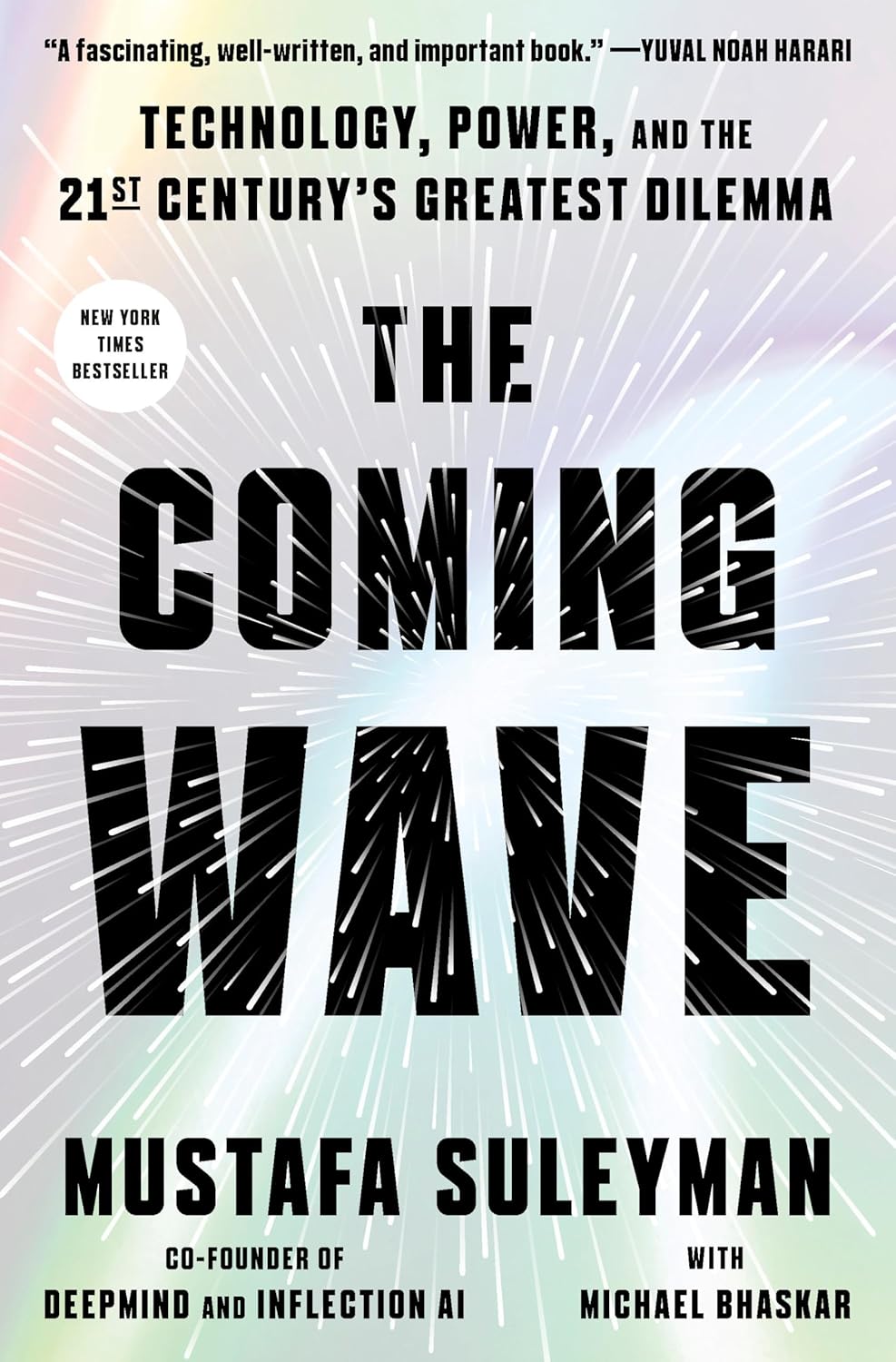
DeepMind co-founder on the dilemma of containing technologies that do not want to be contained.
As an Amazon Associate, Zendoric earns from qualifying purchases; the price does not change for you. · all our recommended books →
🔗 Related on Zendoric
- Open Engine and the handoff thesis: AI's bottleneck is no longer the model, it is what happens between models · 2026-06-27
- Memory, the bottleneck for agents: Neo4j's proposal to break context into three layers · 2026-06-26
- Breast cancer leaves traces six years earlier: AI can already see them, and that forces a rethink of the entire screening process · 2026-06-28