Samsung's chip engineers are leaving en masse for rival SK Hynix over bonuses
🕒 Published on Zendoric: July 30, 2026 · 00:20
✨ AI-generated · how it's made
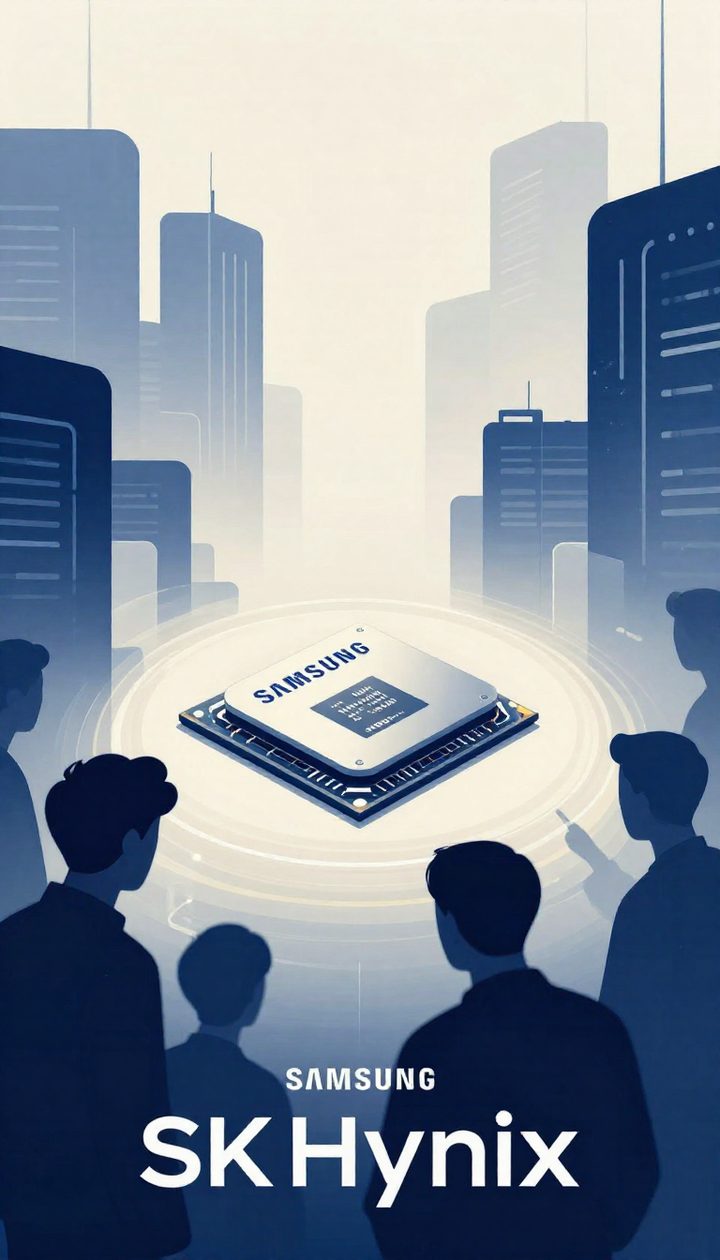
The war for talent in South Korea's semiconductor industry has intensified into an open exodus of engineers from Samsung to rival SK Hynix.
📚 Go deeper

The best starting book if you're not technical: a Wharton professor explains how to work WITH AI — when to delegate, when to supervise, when to keep i
As an Amazon Associate, Zendoric earns from qualifying purchases; the price does not change for you. · all our recommended books →
The war for talent in South Korea's semiconductor industry has escalated into an open exodus of engineers from Samsung to its rival SK Hynix. The trigger is purely economic: SK Hynix will pay its employees a $476,000 bonus this year, thanks to record profits from making high-bandwidth memory (HBM) chips, the components that power Nvidia's AI accelerators. That figure far exceeds what Samsung workers receive, and has caused deep internal discontent.
According to the article, bonuses within Samsung vary widely by division. Employees in the memory division, which is also benefiting from the HBM chip boom, will receive around $400,000 this year. But those working in the foundry division, which makes logic chips for customers such as Tesla and Google and has been operating at a loss, will get only about $135,000. The company has told employees it cannot hand out equivalent bonuses in divisions that are not performing well, leaving many foundry workers feeling that even if Samsung improves in the future, that progress will not translate into their own earnings.
The origin of the disparity dates back to a deal reached in May, after lengthy negotiations between Samsung and its union, under which the company committed to distributing 10.5% of its semiconductor division's operating profits as annual bonuses over ten years, mostly in shares that vest over three years. That agreement came after SK Hynix agreed the previous year to share 10% of its operating profits with employees, mostly in cash, which this year works out to that $476,000 per worker.
The discontent shows up in concrete figures cited in the article: according to a Samsung union survey conducted in June, 81.5% of employees in the foundry division, and almost half of all employees across the semiconductor division, said they wanted to move to another company within the next two years. In April, Samsung union leader Choi Seung-ho said more than 200 union members had left the company for SK Hynix over the previous four months. On the anonymous workplace forum Blind, numerous Samsung engineers openly express their desire to jump to the competition.
The article includes first-hand accounts from workers (identified only by surname or a pseudonym for fear of reprisals). Lee, a foundry division engineer with three years at Samsung, says his own team leader encourages all staff to apply to SK Hynix, and that of the 30 members of his team, all but the two team leaders have already submitted applications to the rival company after a job posting published in July. Choi, another engineer with seven years at Samsung who used to stand out in performance reviews, says he and his colleagues now spend their time watching for every new SK Hynix opening, and no longer see any point in going beyond their basic duties.
The historical backdrop helps explain the reversal. For decades, SK Hynix lived in Samsung's shadow, seen as the smaller, less attractive option for the best newly graduated engineers. But in 2019 Samsung cut back its HBM team, betting that the market would remain a niche, while SK Hynix went all in on the technology. When the AI boom sent demand for HBM chips soaring — they are needed to feed AI chips huge volumes of data at high speed — prices rocketed to unprecedented levels and SK Hynix ended up leading the global HBM market, leaving Samsung playing catch-up. Both companies passed $1 trillion in market value in May, and in June SK Hynix briefly overtook Samsung as South Korea's most valuable company.
With memory chip demand expected to keep growing, both companies are investing heavily: last month they announced joint plans to invest more than $2 trillion through 2040, including a semiconductor "mega-cluster" in Yongin, south of Seoul. To sustain that expansion, SK Hynix added 2,152 employees in the first half of 2026 alone and aims to double its manufacturing capacity within five years, while Samsung plans to hire 60,000 employees over the next five years, especially for its semiconductor division. Even so, according to the Korea Semiconductor Industry Association, the sector will need some 304,000 workers by 2031 and already faces an estimated shortfall of 54,000 people.
This talent shortage explains why both companies have begun competing openly to retain and attract staff through bonuses. Baek, a manager at SK Hynix, suggests in the article that the company appears to be targeting its recruitment specifically at Samsung engineers because it is its direct rival, and that the large bonuses handed out internally were intended, from what he has heard, to attract talent from the competition.
The dispute has already reached the courts: in July, Samsung obtained an injunction barring two former chip employees from working at SK Hynix for 18 months, on the grounds that semiconductors constitute a “national core technology” deserving protection. The court justified its ruling by citing the need to “establish a fair market order” given the intense competition in the semiconductor industry.
Beyond the labor conflict, the article points to an underlying strategic consequence: Samsung is the world's only memory maker that also owns its own foundry business, a significant advantage because the new generation of HBM, known as HBM4, requires the logic chip at the base of each memory stack to be made with an advanced process that only foundries can run. Samsung can do this in-house, while SK Hynix relies on Taiwan's TSMC for it. Park Jun-young, a semiconductor expert at the Industrial Anthropology Laboratory who spent a decade at Samsung, warns that if the company keeps losing foundry engineers, collaboration between its memory and foundry divisions could be compromised, while SK Hynix — which previously had only a memory team and is now hiring foundry engineers — could end up improving its own HBM research thanks to that new talent.
📚 Go deeper
The story of NVIDIA and Jensen Huang: how a video-game card company ended up making the most coveted resource on the planet.

Semiconductors as the oil of the 21st century: history, espionage, and why an island of 23 million people underpins the entire AI economy.
As an Amazon Associate, Zendoric earns from qualifying purchases; the price does not change for you. · all our recommended books →
🔗 Related on Zendoric
- The brain drain from Google to OpenAI and Anthropic shows that in AI money is no longer enough to retain talent · 2026-06-25
- AI glasses in exams: when cheating beats the top 5 of the class, the assessment system has a bigger problem · 2026-06-28
- Anthropic sets up shop in Manhattan: AI is no longer just a San Francisco thing · 2026-07-08