AI revenues are growing fast, but not fast enough to justify trillion-dollar spending

🕒 Published on Zendoric: July 30, 2026 · 00:20
✨ AI-generated · how it's made
Editorial notice: the content downloaded from this article in The Economist corresponds only to the introductory fragment visible before the paywall. The full analysis is not available, so this summary is strictly limited to the data appearing in that opening fragment and should not be taken…
📚 Go deeper

The story of NVIDIA and Jensen Huang: how a video-game card company ended up making the most coveted resource on the planet.
As an Amazon Associate, Zendoric earns from qualifying purchases; the price does not change for you. · all our recommended books →
Editorial notice: the content downloaded from this article in The Economist covers only the introductory excerpt visible before the paywall. The full analysis is not available, so this summary is strictly limited to the data appearing in that opening excerpt and should not be taken as complete coverage of the original article.
The text opens by underlining the scale of spending on artificial intelligence infrastructure by America's big tech companies. Last year, companies such as Amazon, Google and Microsoft invested a combined $450 billion in infrastructure, much of it aimed at supporting AI development. According to the article, that figure was only an appetiser: this year, planned spending on chips, data centres, power supply and other components comes to $900 billion, and by 2027 it is projected to reach $1.4 trillion.
To finance that level of investment, these companies have turned to debt: so far this year they have borrowed more than $400 billion. The article notes that this AI capex boom is fast becoming the largest investment cycle in history.
The article's headline and subheading — AI revenues are growing fast, but not fast enough, and the returns on trillions of dollars of spending are deeply uncertain — indicate that the full body of the text, which we were unable to access, digs into the gap between the growth rate of AI-generated revenues and the far faster pace of the capital spending needed to sustain it. Without access to the full piece, it is not possible to set out here the specific revenue figures, the return-on-investment calculations or the particular arguments The Economist uses to support that conclusion.
📚 Go deeper

The best starting book if you're not technical: a Wharton professor explains how to work WITH AI — when to delegate, when to supervise, when to keep i
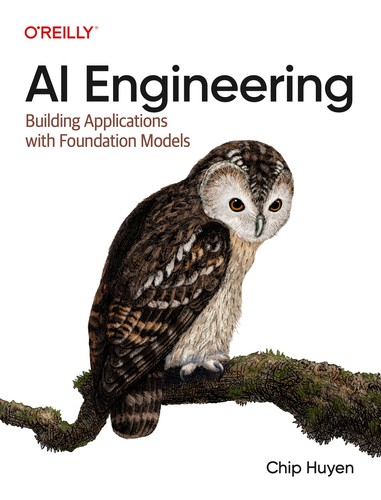
The reference manual for building products on top of AI models: prompts, RAG, fine-tuning, agents, evaluation and deployment.
As an Amazon Associate, Zendoric earns from qualifying purchases; the price does not change for you. · all our recommended books →
🔗 Related on Zendoric