Banning AI in schools won't stop it: Tiramonti warns the real problem is Argentina's connectivity gap

🕒 Published on Zendoric: July 27, 2026 · 00:21
✨ AI-generated · how it's made
Political scientist and education specialist Guillermina Tiramonti warns that banning artificial intelligence in Argentine classrooms is an illusory response: for many students the mobile phone is their only gateway to technology, and a large share of schools do not even have an internet connection.
📚 Go deeper
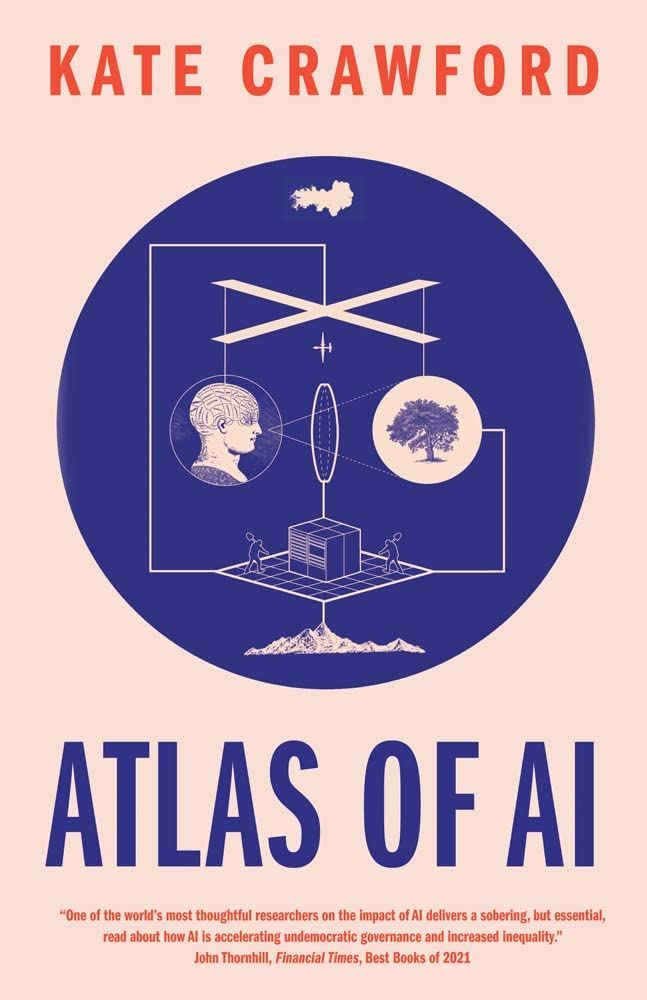
AI as an extractive industry: the lithium, the energy, the underpaid data-labeling work and the bodies behind the cloud.
As an Amazon Associate, Zendoric earns from qualifying purchases; the price does not change for you. · all our recommended books →
By Zendoric · July 27, 2026.
Argentine political scientist and education specialist Guillermina Tiramonti, who holds a master's degree in Education and Society and was recently named a Distinguished Personality of the City of Buenos Aires, has joined the debate over the use of cell phones and artificial intelligence (AI) in the classroom with a blunt stance: you don't ban it, you integrate it. She said so in an interview with InfoPico Radio 99.9, during the winter break in Argentina, amid a discussion that cuts across teachers, families and education authorities nationwide.
"Artificial intelligence — how are you going to ban it?", Tiramonti asked. For her, the answer is not a veto but pedagogical work: "You have to work hard, very hard, to see how you can use it in school to improve children's learning, to enrich schoolwork, but in no way reject it".
On cell phones she is more nuanced: she acknowledges the concern about kids who spend "10 hours on the phone" and does not oppose device-free time slots within the school day. But she stresses a fact that reframes the entire debate: for a large share of Argentine students, the cell phone is not one more toy, it is the only technology they have at hand. "They don't have a computer", she says. Banning it at school, then, is not just a disciplinary measure: it means closing the only digital door some kids have to "research, find things out, sort out everyday matters".
That is where the underlying problem appears, and Tiramonti does not dodge it: infrastructure. "There is no connection in many schools", she laments, drawing a telling parallel with the lack of libraries at the start of the 20th century. Without connectivity or equipment, and without teachers trained to teach with these tools, the "ban or integrate" dilemma becomes almost rhetorical in one portion of the education system: there is nothing to integrate yet. Her conclusion is a broader warning about the country: "Argentina has no awareness of how enormously important it is to have a population prepared to move forward in a century where knowledge matters".
Our reading: the Argentine case illustrates, in miniature, the tension running through education systems across half the world since generative AI entered classrooms through the back door, in every student's pocket. The instinctive reaction — ban the phone, block chatbots on the school network — is understandable and, in the short term, not entirely unjustified: there is real evidence of lost attention, of cognitive effort being replaced by shortcuts, of a more anxious adolescence with more screen time. Zendoric does not downplay that. But banning without offering a pedagogical alternative does not solve the problem, it merely moves it outside the classroom, where nobody teaches how to use the tool with judgment.
The paradox Tiramonti points to is the one that really matters: the same technology some see as a threat to concentration is, for the student with no computer at home, the only route of access to networked knowledge. Banning the phone in those schools protects no one; it deepens a gap that existed before AI came along. It is the pattern we have been observing in education in general: the teacher who orchestrates AI with judgment wins — designing the assignment so the student thinks with the tool rather than letting it think in their place — and the model that merely transmits memorized content loses. That orchestrating teacher, however, needs training, connectivity and equipment that today, as Tiramonti herself describes, are missing in much of Argentina's schools.
There lies the hard transition that should not be glossed over: integrating AI into schools costs money, teacher training time and, above all, basic infrastructure — fiber, devices, maintenance — that in many parts of Latin America still has not arrived. If that investment is not made, the outcome is not neutral: kids with a computer at home will learn to use AI with an advantage, and those who depend on the school's phone will fall a step behind, not for lack of talent but for lack of cable. The underlying good news, the kind that sustains long-term optimism, is that the technology capable of personalizing learning and compensating for initial gaps — adaptive tutors, explanations paced to each student — already exists and keeps getting cheaper. The problem is not AI: it is whether education systems, starting with Argentina's, decide to invest in time so that promise reaches everyone and not only those who already had a computer at home.
📚 Go deeper
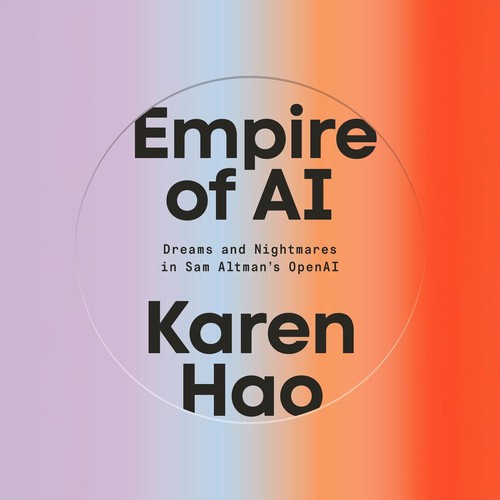
The definitive piece of investigative journalism on OpenAI: 260+ interviews, the clash between safety and speed, and the attempted firing of Sam Altma
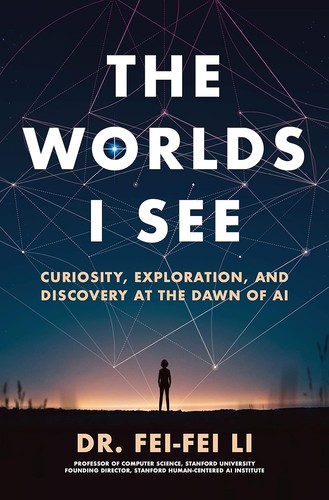
The memoir of the creator of ImageNet, the scientist who made the deep learning revolution in vision possible.
As an Amazon Associate, Zendoric earns from qualifying purchases; the price does not change for you. · all our recommended books →
🔗 Related on Zendoric
- Bristol students showcase AI and aerospace projects: the next generation is already touching the future · 2026-06-30
- AI cameras to detect weapons in schools: a useful patch that doesn't solve the underlying question · 2026-07-17
- Tuberville calls for teaching AI to Alabama's children, but the plan remains just an announcement · 2026-07-24