Monday.com cuts 20% of its staff in AI's name — and the market discounts that story by 10%

🕒 Published on Zendoric: July 26, 2026 · 00:23
✨ AI-generated · how it's made
Monday.com is laying off just over 600 people while telling employees the move is "not to replace people with AI." The same week, a Financial Times analysis found that companies blaming AI for job cuts trail the Nasdaq by nearly 10% afterwards. The label is doing more work than the technology.
📚 Go deeper

The best starting book if you're not technical: a Wharton professor explains how to work WITH AI — when to delegate, when to supervise, when to keep i
As an Amazon Associate, Zendoric earns from qualifying purchases; the price does not change for you. · all our recommended books →
Monday.com will cut just over 600 employees — about 20% of its workforce — under what the Tel Aviv work-management company described in a Wednesday SEC filing as a "restructuring plan" tied to its "AI-driven growth strategy" and a "leaner, more focused operating model." It expects $45 million to $55 million in net restructuring charges, and still projects up to 20% year-over-year revenue growth for 2026. Co-founder Eran Zinman told staff in a LinkedIn memo that the decision "was not made to reduce costs or replace people with AI," framing it instead as aligning the company with the AI-first vision it laid out roughly a year ago. Read those two statements side by side and you have the defining contradiction of this layoff cycle: AI invoked as the reason and disclaimed as the cause, in the same week.
The scale is not trivial. According to a Financial Times analysis cited by TechCrunch, U.S. tech companies have shed nearly 140,000 jobs since the start of 2026, with Amazon, Oracle, Meta and Microsoft alone accounting for almost 50,000 as they pour hundreds of billions into AI data centers. That last clause matters more than the AI framing: payroll and capital expenditure are competing for the same balance sheet. When a company commits to multi-year data center spending, headcount becomes the adjustable variable — regardless of whether a model is doing anyone's job.
Investors appear to have noticed. The FT found that companies citing AI as a factor in job cuts underperformed the Nasdaq by almost 10% over the 30 trading days following the announcement. That is a remarkable finding, because the conventional wisdom was the opposite — that saying "AI" would be rewarded as a margin story. Instead, the market seems to read the phrase as a euphemism for demand problems or overhiring, not as evidence of automation-driven productivity. The AI halo, at least for now, trades at a discount.
The details in the underlying cases point the same way. Oracle is the bluntest: it disclosed a 21,000-person reduction over 12 months (13% of staff) and stated in a regulatory filing — where language carries legal weight — that AI adoption "have resulted, and may continue to result, in reductions to our workforce." Microsoft's July cut of ~4,800 roles was concentrated in Xbox, a reset three years after the $75 billion Activision Blizzard deal; the company said the roles were "not being replaced by AI" while acknowledging that "AI is changing how work gets done." GitLab cut ~14% of staff and exited 22 countries while reporting revenue up 23%. And Google, per the same reporting, has cut more than a third of the managers overseeing small teams — 35% fewer — even as Cloud revenue grew 63% past $20 billion. Notice what most of these have in common: growing revenue, shrinking middle layers, geographic retrenchment. That is organizational flattening and capital reallocation, not machines taking desks one for one.
Our read: "AI layoffs" is becoming a narrative wrapper that launders ordinary management decisions, and that is bad for everyone — it lets executives claim futurist credit for a cost cut, and it lets the public misdiagnose what is actually happening to work. The honest version is more specific and more useful. The exposed layer is administrative, coordinative and managerial work — the same pattern we've tracked sector by sector — while judgment, client relationships and physical presence hold up. And the earliest labor signal is rarely mass unemployment; it is compression: fewer rungs, flatter orgs, downward pressure on pay before headcount collapses. Watch the shape of the org chart, not just the total.
There is also a genuinely non-bleak side, and it deserves equal weight. Meta moved roughly 7,000 employees into AI roles while laying off 8,000. IBM says it is tripling entry-level hiring for AI and hybrid-cloud work. Anthropic and OpenAI are hiring fast enough to absorb some of the talent shed elsewhere. Labor is being reallocated, not deleted — which is cold comfort if you are one of the 600 at Monday.com, and that gap between aggregate churn and individual disruption is exactly where transition policy should live. The long-term case remains intact: if this capex converts into real capability, the payoff is compounding scientific and medical progress and, eventually, abundance that widens what people can choose to do. But the bar for believing it should be productivity we can measure, not restructuring charges we can read in a filing.
📚 Go deeper

The story of NVIDIA and Jensen Huang: how a video-game card company ended up making the most coveted resource on the planet.
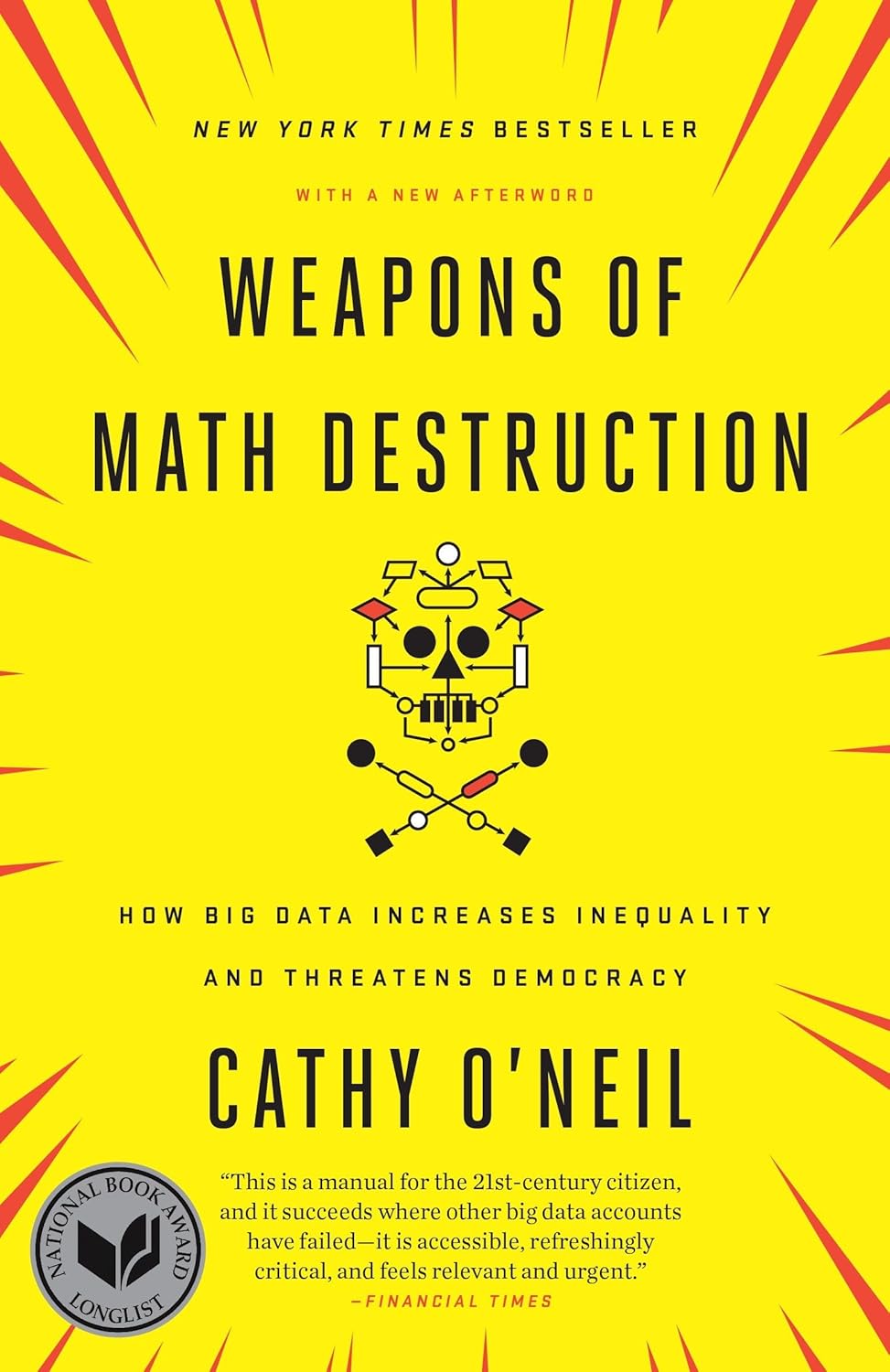
How opaque algorithms decide who gets credit, a job or parole — and why they tend to punish the same people.
As an Amazon Associate, Zendoric earns from qualifying purchases; the price does not change for you. · all our recommended books →
🔗 Related on Zendoric