A Canadian MP unknowingly reads a chatbot's instructions on the floor: the symptom of AI used in secret
🕒 Published on Zendoric: July 25, 2026 · 00:23
✨ AI-generated · how it's made
Bill Oliver, a Conservative MP from New Brunswick (Canada), read a line in a parliamentary speech that only makes sense as a chatbot note: 'here is a more natural version of that section.' The video, overlooked in June, went viral this week and exposes how much political speech already runs through an LLM without saying so.
📚 Go deeper
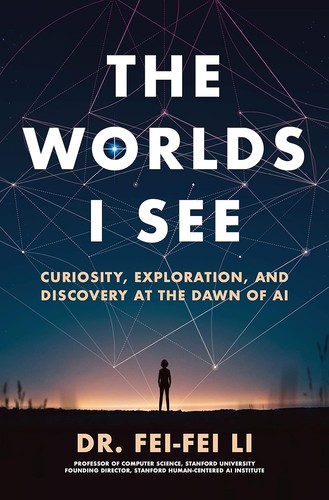
The memoir of the creator of ImageNet, the scientist who made the deep learning revolution in vision possible.
As an Amazon Associate, Zendoric earns from qualifying purchases; the price does not change for you. · all our recommended books →
By Ars Technica · July 24, 2026.
The fact is as simple as it is revealing. Bill Oliver, a member of the Progressive Conservative Party in the legislative assembly of New Brunswick (Canada), delivered a speech last month about citizen advocacy offices. After a sentence about the expectations such offices raise, Oliver continued reading aloud: 'here's a more natural and fluid version of that section, which sounds more like a legislative speech than a series of brief points.' It is, in all likelihood, the comment that a language model (LLM, a chatbot like ChatGPT or Claude) adds alongside its response to explain a wording alternative, and which the legislator should never have read out.
At the time, the slip went almost unnoticed. But the video began circulating this week on Reddit and Threads, and from there jumped to mainstream Canadian outlets such as the CBC and the Toronto Star. The latter described it as a symptom of "a growing divide in our society: between the elites, delighted to delegate their functions to the Borg, and the masses, who find it objectionable" (a quote attributed to the newspaper itself). Oliver is not the first politician to read a speech written by someone else, nor the first to lean on an AI to draft it. What is different here is the clumsiness: reading aloud in public, without realizing it, the tool's internal scaffolding.
The case fits a pattern we have already seen with lawyers, authors, journalists and academics: the use of AI comes to light almost always through carelessness—an unchecked hallucination, an instruction left undeleted—and not through a decision to be transparent. Ars Technica recalls a Duke University study (2025) according to which employees tend to hide their use of AI because they fear their colleagues will perceive that work as "lazy" or "replaceable." That is the point worth retaining: it's not that people don't use AI to write, it's that almost no one admits it.
Our reading is that the problem is not the use of the tool, but the absence of a social norm for declaring it. When AI use is hidden out of stigma, every generated text depends on perfect editing to pass as human; and perfect editing, at scale and without exception, is statistically impossible. Sooner or later the extra sentence appears, the note that shouldn't have been printed, the prompt that slipped into the final document. These incidents are not anomalies: they are the predictable consequence of normalizing use without normalizing disclosure.
In the short term, this erodes trust in institutions that depend on the given word being their own—parliaments, law firms, newsrooms—precisely when that trust is most needed to navigate an already uncomfortable transition. But in the medium term, it is reasonable to expect this kind of embarrassment to accelerate the very opposite of concealment: explicit disclosure norms (what was generated with assistance, what was reviewed and by whom), just as the use of ghostwriters, teleprompters or copy editors came to be accepted without scandal in politics and journalism. AI as a writing tool is not going away; what changes is that it will stop being a shameful secret and become just another detail of the process, just as today no one hides that a speech went through a team of writers.
That, ultimately, is the underlying pattern that interests us: the real short-term risk of AI in knowledge work is not that it replaces the professional, but that stigma pushes people to hide its use rather than integrate it with judgment. The sooner those transparency norms mature, the sooner we will stop stumbling into these awkward episodes and the sooner AI can deliver on its long-term promise: freeing up human time—of the legislator, the lawyer, the journalist—for what truly requires judgment, relationship and responsibility, not for polishing the prose of an administrative paragraph.
📚 Go deeper
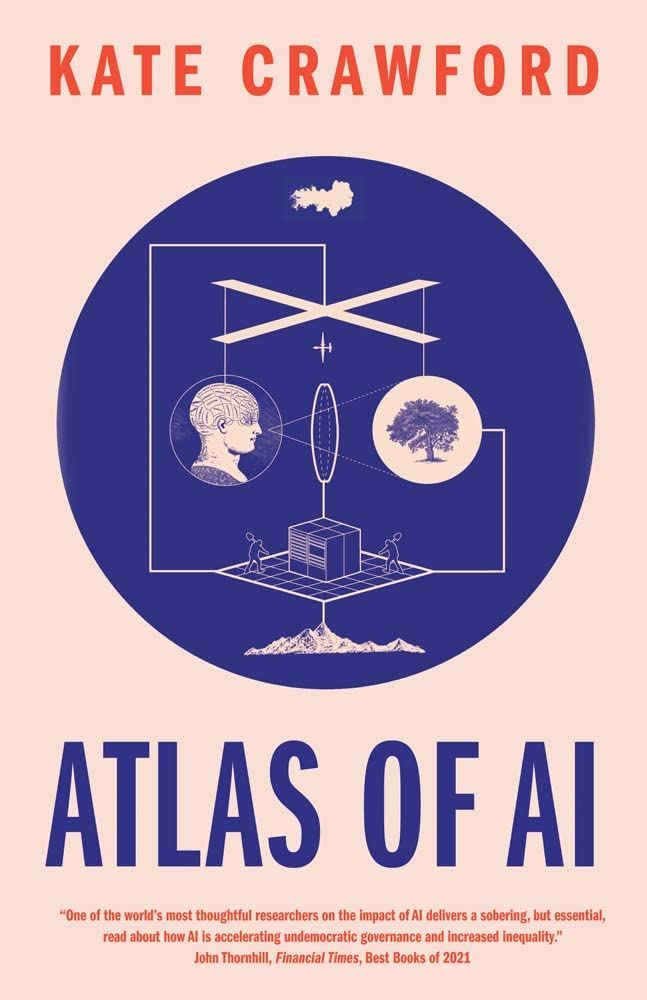
AI as an extractive industry: the lithium, the energy, the underpaid data-labeling work and the bodies behind the cloud.

The only novel on the list, by a Nobel laureate: an artificial friend observes humans with a blend of lucidity and innocence no essay achieves.
As an Amazon Associate, Zendoric earns from qualifying purchases; the price does not change for you. · all our recommended books →
🔗 Related on Zendoric
- When AI hallucinates a link, the scammer has already registered it: how 'HalluSquatting' is born · 2026-07-15
- An Indian lawmaker reports a voice deepfake showing him talking about 'commissions': AI political disinformation reaches Maharashtra · 2026-06-29
- When the patient arrives at therapy with their chatbot: the APA flags a dynamic the profession cannot ignore · 2026-06-30