Anthropic hires the woman who opened the Pentagon to Amazon's cloud: it wants to be the next federal infrastructure

🕒 Published on Zendoric: July 23, 2026 · 00:24
✨ AI-generated · how it's made
Anthropic names Teresa Carlson, the executive who took AWS from zero to the go-to provider for the CIA and the Pentagon, as its first global head of public sector. Washington Technology's reading: this isn't a hire to appease regulators, it's the opening of an offensive for multiyear U.S. government contracts.
📚 Go deeper
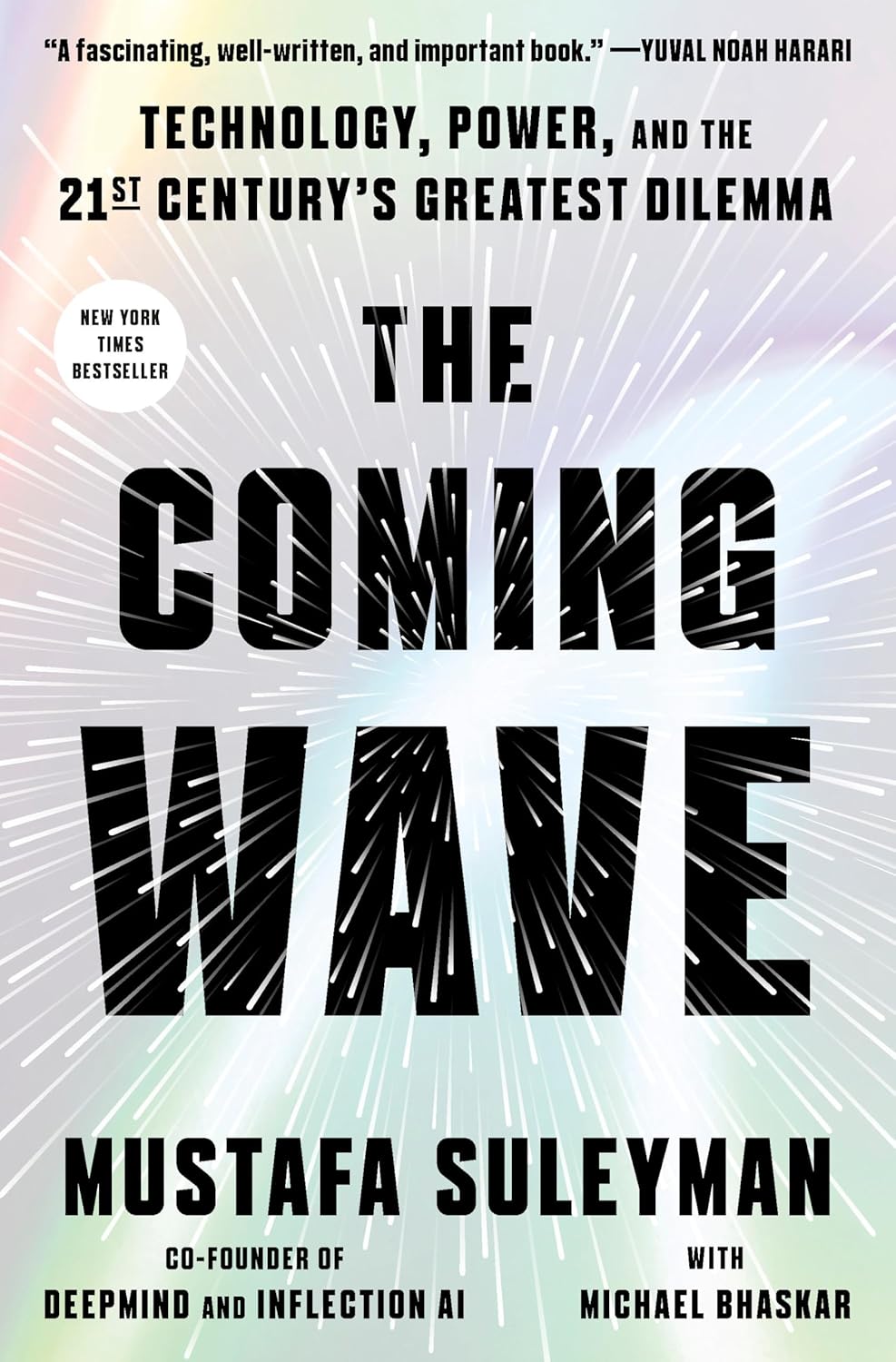
DeepMind co-founder on the dilemma of containing technologies that do not want to be contained.
As an Amazon Associate, Zendoric earns from qualifying purchases; the price does not change for you. · all our recommended books →
By Zendoric · July 23, 2026.
Anthropic has named Teresa Carlson as its first global head of public sector, according to Washington Technology. Carlson arrives with a very specific track record: she led Amazon Web Services' (AWS) public sector business from 2010, when she built it up practically from scratch, and in 2013 she closed the Commercial Cloud Services (C2S) contract with the Central Intelligence Agency (CIA), valued at 600 million dollars — a milestone that earned her the Federal 100 Eagle Award that same year for breaking down intelligence agencies' resistance to the commercial cloud. In 2017 she also launched the AWS Secret Region, the infrastructure that gave the 18 U.S. intelligence agencies and the Department of Defense a unified cloud capable of operating across all classification levels. Before joining Anthropic, Carlson was chief executive of the General Catalyst Institute, where she worked on transatlantic AI policy and national security.
The hire comes after a year of regulatory friction for Anthropic: the company faced temporary export controls on its Mythos 5 and Fable 5 models, and, according to Washington Technology, had a 200-million-dollar dispute with the Department of Defense over its models' guardrails — the limits an AI system must not cross, for example in military uses. It is in that context that the article, written as an opinion column by Tim Hartman, chief executive of GovExec Media, lays out its central thesis: if Anthropic had merely wanted to appease Washington, it would have hired a lobbyist or a regulatory lawyer. Hiring Carlson is something else.
It is worth being precise about what this text is: an opinion column by an industry executive, not a statement from Anthropic nor a leak of its government-hiring plans. Its argument — that the company is shifting from a defensive posture toward the regulator to a multibillion-dollar infrastructure offensive — is an interpretation, and we treat it as such. But the fact underpinning it is verifiable and significant: Anthropic has not hired just any government executive, but the person who over the past decade solved exactly the same problem Anthropic itself faces today — convincing national-security institutions, structurally risk-averse, to adopt frontier commercial technology at scale.
Our reading is that this move should be placed within a broader trend we have already been observing: the battle for enterprise and government AI is being fought less and less on the terrain of the smartest model and more and more on that of integration, regulatory compliance and the contractual vehicles that turn a pilot into permanent infrastructure. It is the same logic with which Microsoft competes by selling a "complete system" versus the "loose parts" of OpenAI or Anthropic: whoever controls the plumbing — how the technology enters the organization and stays there — wins more than whoever simply publishes the best benchmark. With Carlson, Anthropic is not buying a lobbyist for a one-off problem: it is buying the experience of someone who knows how to use framework contracts (IDIQ, GWAC and the like) so that an emerging product becomes the computing backbone of several agencies at once, for years.
The underlying fact that explains the urgency is one of scale: training and deploying frontier models requires capital that few private players can sustain alone, and the U.S. government remains, by far, the largest buyer of technology infrastructure on the planet. That the Department of Defense itself — the very body Anthropic clashed with over its guardrails — is also the prize it is now pursuing illustrates well the sector's structural tension: the same institutions that demand stricter guardrails are the ones offering the biggest contracts. Resolving that tension without giving ground on safety limits — and without repeating the mistakes of other providers who did give ground — will be the real test of this hire, beyond the headline.
In the long run this fits with the thesis we hold at Zendoric: the more frontier AI infrastructure that is deployed in a solid and governed way within the state itself — military health, science, public administration — the closer we are to that capability translating into better and cheaper public services for citizens, not just into the provider's bottom line. The short-term risk is real and we have flagged it before: the concentration of critical infrastructure in very few players demands governance as solid as the commercial ambition. If Carlson repeats at Anthropic what she did at AWS, the U.S. public sector will have, for the first time, two serious contenders for benchmark AI infrastructure instead of one. That, for the taxpayer and for market competition, is not bad news.
📚 Go deeper

The best starting book if you're not technical: a Wharton professor explains how to work WITH AI — when to delegate, when to supervise, when to keep i

The definitive piece of investigative journalism on OpenAI: 260+ interviews, the clash between safety and speed, and the attempted firing of Sam Altma
As an Amazon Associate, Zendoric earns from qualifying purchases; the price does not change for you. · all our recommended books →
🔗 Related on Zendoric
- When a decree shuts off an API: the Legion case exposes the fragility of building on a single AI provider · 2026-06-24
- Claude Fable 5 and the first AI 'blackout' over national security: a precedent that changes the sector's rules · 2026-06-29
- Brazil opens another front: Amazon's investment in Anthropic comes under antitrust scrutiny · 2026-07-09