Traffic from generative AI to online stores rises 1,200% and Adobe urges preparing marketing for agents

🕒 Published on Zendoric: July 23, 2026 · 00:24
✨ AI-generated · how it's made
An analysis by Adobe Analytics documents a 1,200% jump in traffic to U.S. e-commerce sites from generative AI platforms between July 2024 and February 2025. Adobe, which sells the tools to manage that shift, proposes that brands begin designing their presence with an eye on the AI agents that shop on people's behalf.
📚 Go deeper
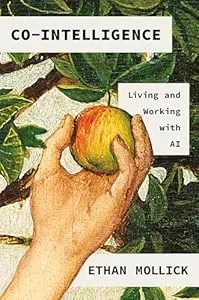
The best starting book if you're not technical: a Wharton professor explains how to work WITH AI — when to delegate, when to supervise, when to keep i
As an Amazon Associate, Zendoric earns from qualifying purchases; the price does not change for you. · all our recommended books →
By Adobe · July 22, 2026.
The key figure comes from Adobe Analytics: traffic to e-commerce sites in the United States originating from generative AI platforms grew by 1,200% between July 2024 and February 2025. Added to this is a survey by Adobe itself: 39% of consumers already use generative AI to shop online and 53% say they will do so this year. These are the figures the company uses to justify a fundamental shift in its marketing message.
Adobe proposes moving from simply 'adopting' AI to what it calls Customer Experience Orchestration: a model in which data, content, creativity and artificial intelligence are coordinated so that the experience is consistent at every point of contact, whether human or an automated agent. 'The challenge for organizations is no longer merely to incorporate AI into their operations, but to integrate it strategically to create more connected, relevant and personalized experiences,' summarizes Jovanni Juarez, business strategist at Adobe Mexico, in the statement. The theoretical backing comes from the Adobe AI and Digital Trends 2026 study, produced with Oxford Economics, which places companies as they move out of the AI experimentation phase and toward full integration into the customer journey.
Broadly speaking, the digital marketing sector has spent a year and a half talking about this transition under labels such as GEO (Generative Engine Optimization) or AEO (Answer Engine Optimization): it is no longer enough to rank a website on Google, an AI assistant must be able to read, understand and correctly cite information about a product or service when a user asks. Structuring data, keeping catalogs up to date and offering verifiable content becomes the new SEO, with the difference that the intermediary is no longer a list of links but a generated answer that can omit, summarize or directly replace the visit to the brand's site.
These figures are worth reading with a certain critical distance: the one publishing them is Adobe, which sells precisely the orchestration software it says brands are going to need, and a 1,200% increase sounds spectacular largely because it started from an almost nonexistent base in mid-2024, when chatbot-referred traffic was still marginal. That does not reverse the trend—which other independent sector analysts also document—but the percentage should be taken as an indicator of direction, not as a measure of an already mature market.
The underlying takeaway, however, matters more than the methodological nuance. If AI agents begin to routinely mediate between the consumer and the brand, the power to decide which product is recommended and which is rendered invisible shifts toward whoever controls those agents: OpenAI, Google, Perplexity, Anthropic and the like. It is the same 'toll' dynamic Google built with search and SEO, now one rung higher and with less transparency about why an assistant prefers one brand over another. Companies that relied on organic traffic will have to negotiate visibility on a terrain where the rules are set by a handful of AI platforms, not by a public, audited ranking algorithm.
In the day-to-day work of marketing teams, this fits with something we have already seen in other sectors: the most mechanical part of the job—optimizing meta tags, generating content variants, monitoring rankings—is the most automatable and the most exposed in the short term. What gains weight is strategic judgment: deciding what story a brand tells, what data to expose and how to verify that an AI agent is not distorting that story when summarizing it. This is consistent with the thesis we have been maintaining about AI-driven employment: routine tasks shrink, while expert judgment and the relationship of trust with the customer become more valuable, even if the transition forces many teams to rebuild processes that had worked the same way for years.
In the long run, if the underlying promise is fulfilled, a consumer who delegates the comparison of prices, features and reviews to a trusted agent should shop better and waste less time on trivial decisions, freeing up attention for what truly matters to them. That is exactly the kind of abundance of time and efficiency we champion as the horizon of well-deployed AI. But getting there requires those agents to be reliable and competition between brands not to be settled solely on the basis of who pays more to appear in the generated answer, because then we will have swapped one toll for another, more opaque one.
📚 Go deeper

The reference manual for building products on top of AI models: prompts, RAG, fine-tuning, agents, evaluation and deployment.
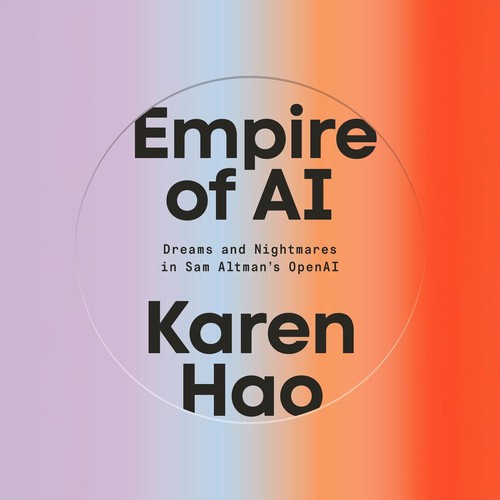
The definitive piece of investigative journalism on OpenAI: 260+ interviews, the clash between safety and speed, and the attempted firing of Sam Altma
As an Amazon Associate, Zendoric earns from qualifying purchases; the price does not change for you. · all our recommended books →
🔗 Related on Zendoric
- Agentic AI comes to chip design to ease the engineer shortage, not to replace them · 2026-07-22
- From standalone features to an operational layer: Streamline's bet on coordinated AI agents · 2026-06-27
- With no coding background, he connects his insurance agency to AI agents: this is how agentic commerce begins · 2026-07-11