Ship promises to serve GPT-5.6 or Claude Opus at 50% of the price: the model is becoming a quality tier, not a product

🕒 Published on Zendoric: July 22, 2026 · 01:59
✨ AI-generated · how it's made
Startup Thesean.ai launches Ship, an 'optimal execution' layer that claims to replicate the behavior of GPT-5.6 Sol or Claude Opus 4.8 at half the cost, without touching the prompt. The idea is appealing and its own benchmarks back it up, but for now these are self-published tests for a product that went almost unnoticed on Hacker News.
📚 Go deeper
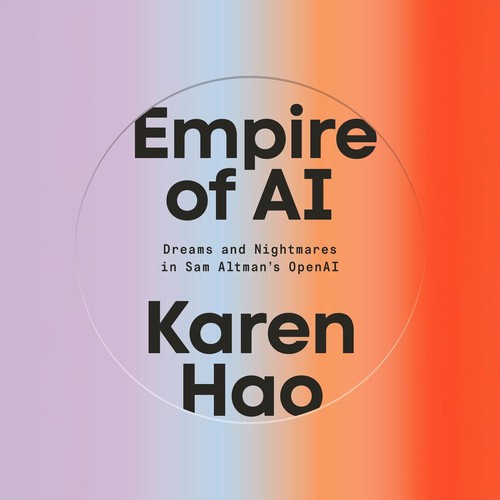
The definitive piece of investigative journalism on OpenAI: 260+ interviews, the clash between safety and speed, and the attempted firing of Sam Altma
As an Amazon Associate, Zendoric earns from qualifying purchases; the price does not change for you. · all our recommended books →
By Zendoric · July 21, 2026.
Thesean.ai has unveiled Ship, an endpoint billed as a drop-in replacement for any large language model (LLM) already in production. The change, according to the company, is literal: simply replace model="<original>" with model="ship-like/<original>" and requests cost 50% less. The company says it absorbs the difference itself, taking on the risk that running a given request may cost it more than it charges for it.
The technical argument rests on two guarantees that Thesean.ai calls 'capability equivalence' and 'behavior equivalence.' The first states that any problem the reference model solves (the company cites GPT-5.6 Sol, from OpenAI, and Claude Opus 4.8, from Anthropic, as examples) is also solved by Ship. The second, that the way it is solved —number of tool calls, response length, style, refusals to answer— stays within statistical margins similar to those of the original model. To back this up, Thesean.ai says it measures both with public benchmarks, reproducible by anyone, and private benchmarks that, it claims, its customers run with real traffic to verify it has not overfitted the system to the known tests.
The mechanism that makes this possible, according to the company, is what they call 'inference-time optimization': instead of deciding in advance which model or process handles each request, Ship decides in the moment, with the specific request already on the table, which combination of models, tools, cascades or ensembles solves it at the lowest possible cost without dropping below the reference quality. The analogy they use is that of a just-in-time compiler versus a traditional one: training a model would be like compiling ahead of time, never seeing the real request; Ship would optimize afterward, with that information. It is a reasonable idea —the room for savings lies in treating each request as a search problem, not in a fixed router of the 'this is easy, send it to the cheap model' type— and consistent with years of research into model cascades and ensembles, though here it is presented packaged as a commercial product with a name of its own.
As evidence of traction, Thesean.ai cites two testimonials: Kilo Code, an AI-assisted coding tool, says it ran Ship in stealth mode processing trillions of tokens without its users noticing any difference; and Baz, which offers automated code review, states it saw no statistical difference against its reference model on an in-house benchmark of 168 complex bugs, and used the savings to launch features —security review, plan review, code-merge review— that were not previously profitable. The company caps off the pitch with what it calls the industry's first 'quality SLA': a contractual commitment, not just to availability or latency, but to the delivered intelligence not falling below an agreed level.
That said, it is worth separating what Thesean.ai claims from what this article can independently verify. The concrete data —the error margins, the exact correlation figures between Ship and the reference model— appear in charts within its own blog, published by the very company selling the product; the private benchmarks cited as proof of generalization are not detailed beyond two customer quotes. There is, for now, no independent third party —such as Artificial Analysis or an academic lab— that has replicated those figures. And the company itself acknowledges that its current definition of 'behavior equivalence' is, in its words, 'probably too strict,' which suggests the system is still being calibrated. Add to this a telling piece of context: the original post on Hacker News, the forum where this kind of launch usually generates intense technical debate, registered barely one vote and zero comments. It is a very new product, from a little-known company, and for now outside scrutiny is practically nil.
Our reading is that Ship, beyond whether it delivers exactly what it promises, is a clear symptom of where the generative AI business is heading. If the value of a frontier model starts to be replaceable by 'whatever produces a statistically indistinguishable result,' the model stops being the product and becomes a quality grade that anyone can try to match from below. It is the same commoditization dynamic of base models we already see in the market —the defensible margin shifts toward the execution, infrastructure and application layer— only here it is made explicit and sold as a standalone service. If this 'better execution' category takes hold, it pushes down the price of the intelligence available to everyone, which in the long run drives toward the abundance we defend as our underlying thesis: more capability for less money brings more people closer to building things that are not economically viable today, as the very customers cited in the article acknowledge.
But that promise carries a short-term toll that must be named without embellishment. Delegating to an opaque third-party layer the decision of how each request is resolved adds a new trust dependency: if 'equivalence' fails in a rare but important case —a legal, medical or security task—, the user has no easy way of knowing until it has already happened. And Thesean.ai's own business model, which bets on losing money on the most expensive requests in exchange for making it on the aggregate, is exactly the kind of bet that works very well in the demo and is only truly tested when the volume and variety of traffic grow. Before any team moves critical production to this kind of intermediate layer, it is worth demanding the independent verification that is still missing today.
📚 Go deeper
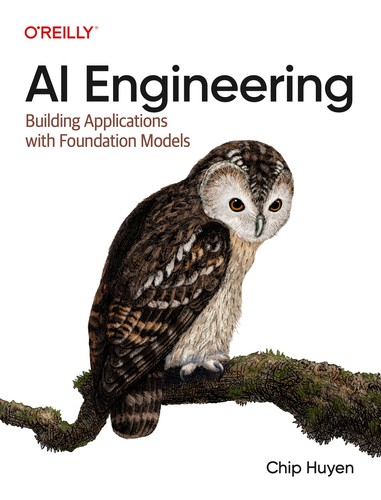
The reference manual for building products on top of AI models: prompts, RAG, fine-tuning, agents, evaluation and deployment.
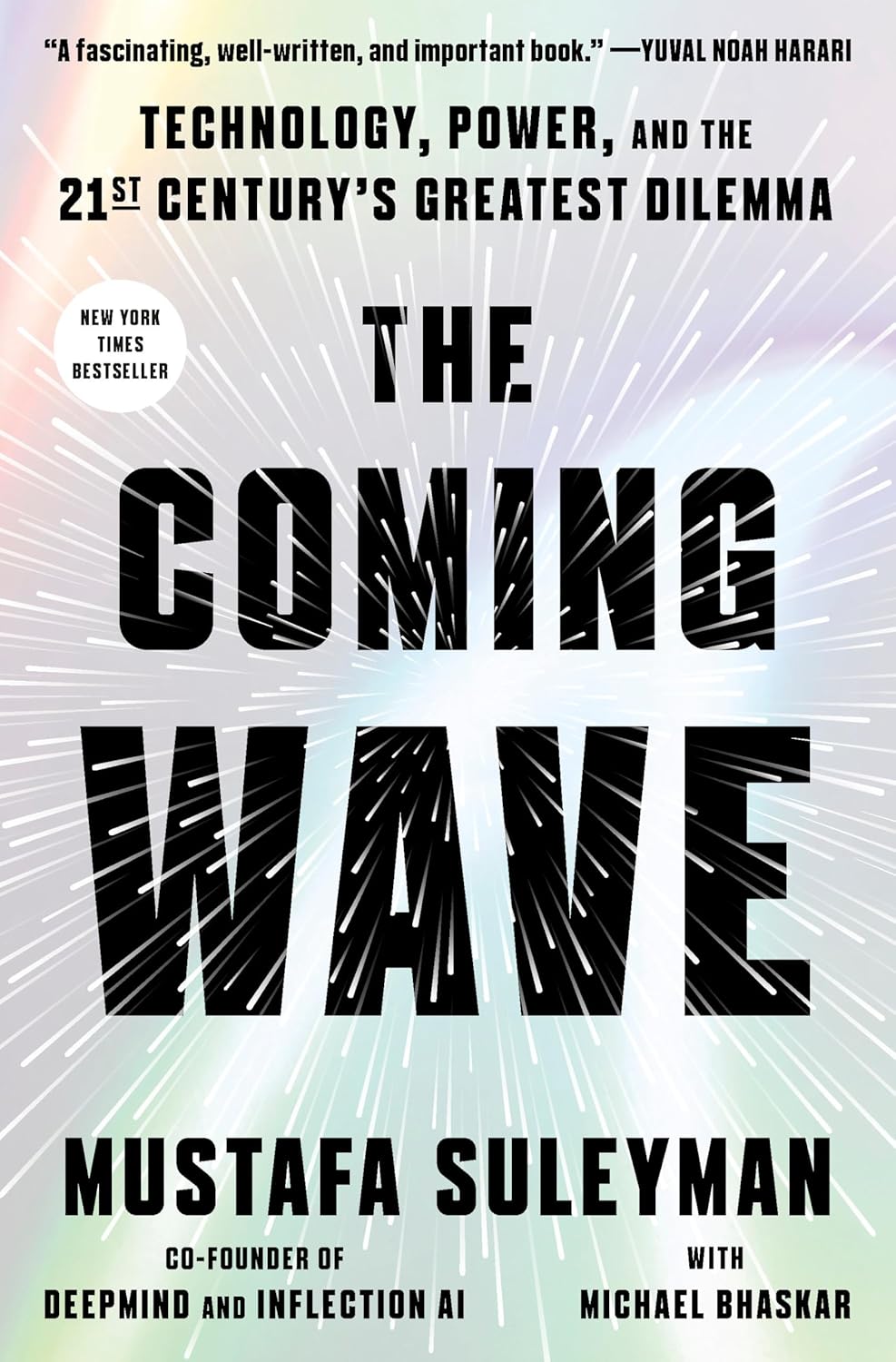
DeepMind co-founder on the dilemma of containing technologies that do not want to be contained.
As an Amazon Associate, Zendoric earns from qualifying purchases; the price does not change for you. · all our recommended books →
🔗 Related on Zendoric
- Claude Sonnet 5: Anthropic's bet is price, not raw performance — and that changes everything · 2026-07-01
- Anthropic discovers 'J-space': a hidden global workspace where Claude thinks without saying it · 2026-07-08
- Anthropic's platform squeeze: when your model supplier ships your product, trust becomes a pricing input · 2026-07-29