Microsoft expands its alliance with AMD: it will deploy the Helios rackscale and new "Venice" EPYC chips on Azure

🕒 Published on Zendoric: July 22, 2026 · 01:59
✨ AI-generated · how it's made
On July 20, 2026, AMD and Microsoft announced an expansion of their long-term strategic partnership, which now covers AMD GPUs, CPUs, networking and software within the Azure cloud.
📚 Go deeper

The story of NVIDIA and Jensen Huang: how a video-game card company ended up making the most coveted resource on the planet.
As an Amazon Associate, Zendoric earns from qualifying purchases; the price does not change for you. · all our recommended books →
AMD and Microsoft announced on July 20, 2026 an expansion of their long-term strategic partnership, which now covers AMD GPUs, CPUs, networking and software within the Azure cloud. The announcement, released from Santa Clara (California), places at its center Microsoft's deployment of the AMD Helios rack-scale solution, aimed at powering inference for frontier AI models both for Microsoft and for its AI customers and Azure AI services.
Helios is AMD's flagship platform for large-scale AI infrastructure: it combines AMD Instinct MI455X GPUs, AMD EPYC 'Venice' (sixth-generation) processors, Pensando networking and the ROCm software stack in an open, rack-level integrated design, intended for both training and inference of large AI models. According to the statement, AMD will begin shipping Helios to customers, including Microsoft, during the second half of 2026. On Azure, Helios will be used specifically for inference workloads spanning frontier models, Azure AI's own services and customer applications.
Beyond rack-scale, the collaboration also translates into new general-purpose compute capacity: Azure will incorporate two new virtual machine series powered by sixth-generation EPYC 'Venice' processors. One of them, Azure HDv2, is geared toward agentic AI and data pipelines; the other, Azure HXv2, targets semiconductor design. With this, AMD and Microsoft seek to broaden the EPYC portfolio on Azure beyond pure AI, also covering data and engineering workloads.
The third pillar of the expansion is the networking layer. Microsoft had already been broadly deploying AMD's Pensando DPUs (data processing units), and now both companies will integrate that technology with Azure Boost, Microsoft's network and storage acceleration system, with the stated goal of improving network performance, efficiency and cloud-scale connection processing across the entire server fleet.
As for the official statements, Lisa Su, chair and CEO of AMD, noted that AMD and Microsoft have been building high-performance infrastructure together for years and that this expansion extends the collaboration to AMD's entire AI solutions stack on Azure, calling Microsoft's new deployments an important milestone in scaling the next generation of AI infrastructure. For his part, Satya Nadella, chairman and CEO of Microsoft, framed the deal in terms of customers' need for AI infrastructure optimized for a wide variety of workloads —training, inference, data preparation, search and reinforcement learning—, stressing that the collaboration with AMD broadens Azure's infrastructure portfolio to give customers performance, scale and choice.
The statement further specifies that frontier model developers will be able to leverage AMD-based infrastructure to train and serve AI models at scale, while enterprise customers will be able to deploy and scale production AI workloads through Azure Foundry Managed Compute.
In terms of context, this announcement fits into the broader battle over cloud AI compute, where AMD has been positioning its Instinct line and ROCm software as an open alternative to the market's dominant solutions, and where major cloud providers are seeking to diversify silicon suppliers for their AI data centers. AMD's own statement lists, among recent news in the category, the addition of FastFlowLM for inference software and the availability of Ryzen AI Halo systems at Micro Center, suggesting that this announcement with Microsoft adds to a series of AMD moves to expand its presence in the AI ecosystem, from the data center to the PC.
The original text is, in essence, a corporate press release (from AMD, quoting its CEO and Microsoft's CEO), so it contains no investment figures, detailed contractual timelines, or comparative performance data between Helios and other competing platforms; nor does it specify the volume or economic value of the deployment. Any concrete figures on this were not disclosed in the available material.
📚 Go deeper

DeepMind co-founder on the dilemma of containing technologies that do not want to be contained.
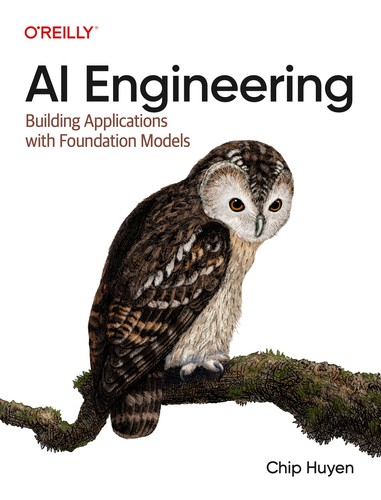
The reference manual for building products on top of AI models: prompts, RAG, fine-tuning, agents, evaluation and deployment.
As an Amazon Associate, Zendoric earns from qualifying purchases; the price does not change for you. · all our recommended books →
🔗 Related on Zendoric
- Microsoft and Mistral expand their alliance to bring controllable frontier AI to enterprises and regulated sectors in Europe · 2026-07-23
- Microsoft and Mistral expand their strategic alliance to bring controllable frontier AI to enterprises and regulated industries · 2026-07-24
- Azure and AWS launch Multicloud Interconnect: direct private connectivity between both clouds · 2026-09-03