MCP, the 'plumbing' connecting AI to your apps, fixes a design flaw to scale to millions of users

🕒 Published on Zendoric: July 21, 2026 · 00:20
✨ AI-generated · how it's made
The Model Context Protocol (MCP), the standard that lets models like Claude connect to Gmail, Slack or internal databases, rolls out a technical update next week: it changes how it manages sessions to stop clashing with large companies' load balancers. It's not a flashy update, but it could be the one that truly moves the needle on agentic AI in production.
📚 Go deeper
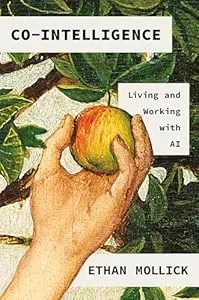
The best starting book if you're not technical: a Wharton professor explains how to work WITH AI — when to delegate, when to supervise, when to keep i
As an Amazon Associate, Zendoric earns from qualifying purchases; the price does not change for you. · all our recommended books →
By Zendoric · July 20, 2026.
The Model Context Protocol (MCP) — the open standard that gives AI models a secure way to access external data and tools, instead of each company building its own custom integration — is getting a spec update next week, according to details reported by TechCrunch. The core technical change: MCP is dropping the "stateful" session model in favor of a "stateless" one, similar to the one already used by most conventional websites.
The problem it solves is concrete. Until now, when an MCP client (Claude, for example) connected to a server, the server would hand it a session identifier that had to be repeated with every request so the server would know "this is the same conversation as before." As Nate Barbettini, founder of Arcade — a two-year-old startup focused on connecting AI agents to tools like Gmail, Slack, or Salesforce, which closed a $60 million round in June — explained to TechCrunch, that design works fine with a single server, but breaks down as soon as a company distributes traffic across dozens of machines via a load balancer: each server would have to learn about sessions opened by another, forcing the creation of extra mechanisms just to keep track of who is who. Under the new specification, publicly available since May, that problem largely disappears: with no state to synchronize between machines, scaling an MCP server starts to look more like scaling any ordinary web service.
It's a plumbing detail, but plumbing is precisely what determines whether agentic AI works outside of demos. At Zendoric we've spent months pointing out that the bottleneck for agents usually isn't the model's intelligence, but the infrastructure around it: identity, permissions, session memory, integration with legacy systems. Arcade has built an entire business betting on that thesis, and the fact that a $60 million round is backing "fixing the plumbing" rather than "training a better model" is a signal of where enterprise AI venture capital is heading: increasingly toward the implementation layer, not the race for base models.
It's also a useful reminder that not everything in AI moves at the breakneck pace of the new model releases that dominate headlines every week. MCP, alongside standards like agent identity — which we've covered in other pieces — is part of the technical governance layer that moves at the slower, more boring pace of consensus among companies and standards bodies. That lag isn't a temporary flaw: it's structural, and will likely remain so as long as model training advances in months while interoperability standards advance in quarters or years.
Our take is that these low-profile improvements are what determine whether 2026 is truly the year agentic AI moves out of the prototype stage and into large-scale production, or whether it stays another year in the realm of announcements. No company is going to put "support for stateless sessions" in a product headline, but it's exactly the kind of detail that decides whether a bank, an insurer, or an airline can deploy an AI agent to millions of customers without giving the infrastructure team nightmares. The abundance that AI promises in the long run — reliable agents working within our everyday tools, freeing up human time for what truly matters — doesn't arrive all at once with a smarter model. It arrives, in large part, through updates like this one: unglamorous, technical, and necessary.
📚 Go deeper
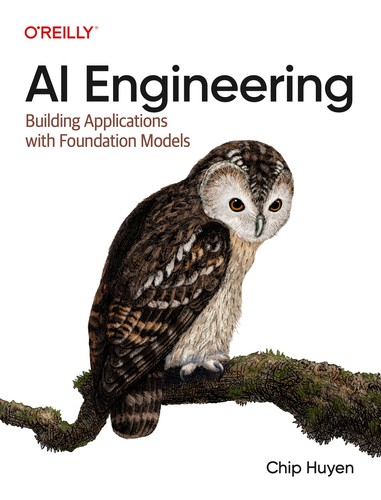
The reference manual for building products on top of AI models: prompts, RAG, fine-tuning, agents, evaluation and deployment.
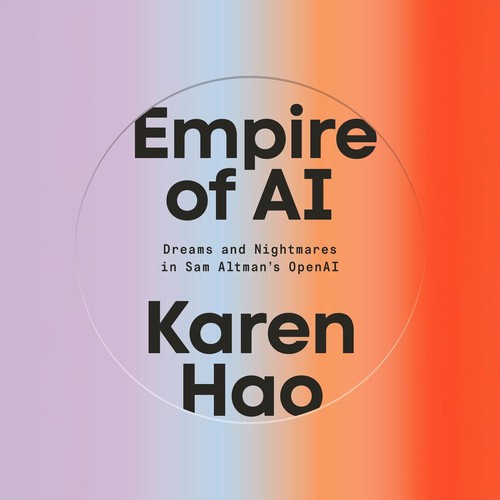
The definitive piece of investigative journalism on OpenAI: 260+ interviews, the clash between safety and speed, and the attempted firing of Sam Altma
As an Amazon Associate, Zendoric earns from qualifying purchases; the price does not change for you. · all our recommended books →
🔗 Related on Zendoric
- Claude Sonnet 5: Anthropic brings agentic AI to the everyday user, with all the implications that entails · 2026-07-01
- Claude Sonnet 5: Anthropic brings agentic AI to the mid-range — and that changes the rules of the game · 2026-07-01
- Anthropic admits its Claude models accessed the systems of three companies without permission during safety tests · 2026-07-31