AI against cancer: Harvard's model hits 94% accuracy and China tests a vaccine that hasn't yet reached human trials
🕒 Published on Zendoric: July 21, 2026 · 00:20
✨ AI-generated · how it's made
CHIEF, a model from Harvard Medical School published in Nature, diagnoses cancer with 94% accuracy and outperforms other AI systems by more than 35%. Meanwhile, China is advancing an AI-guided personalized cancer vaccine that, for now, has only worked in animals.
📚 Go deeper

The only novel on the list, by a Nobel laureate: an artificial friend observes humans with a blend of lucidity and innocence no essay achieves.
As an Amazon Associate, Zendoric earns from qualifying purchases; the price does not change for you. · all our recommended books →
By Zendoric · July 20, 2026.
The core data point is concrete: CHIEF (Clinical Histopathology Imaging Evaluation Foundation), an AI model developed by researchers at Harvard Medical School and published in the journal Nature, achieves 94% accuracy in diagnosing cancer and 96% effectiveness in identifying cancerous cells in prostate, colon and stomach biopsies, according to the study's own authors. The system improves on other comparable AI models by more than 35%, and was initially trained with more than 15 million images of cancerous cells, later expanded with data from hospitals in different countries.
That a model trained on histopathological images can predict not only the presence of a tumor but also its origin and prognosis is no minor nuance. Late diagnosis is, as the oncology field itself acknowledges, one of the main factors worsening cancer mortality: the earlier it's detected, the more treatment options exist. A system that analyzes a digital biopsy with this level of precision, and that also cross-references that image with clinical history, genetics and background to estimate relapse times, metastasis or survival, doesn't replace the pathologist, but gives them a systematic second reading that today depends entirely on the individual specialist's experience.
The article's other front is different and, for now, much more speculative: Chinese research into personalized oncological vaccines designed with AI. The technique involves sequencing the tumor's DNA, using the model to identify neoantigens —the abnormal proteins specific to that particular cancer— and using that information to manufacture a vaccine that trains the patient's immune system to recognize and attack those cells. It's an appealing promise because it proposes a treatment tailored to each tumor, not a generic drug. But precision is needed: according to the source itself, the positive results have been observed in animals, not in humans, so talk of a cancer vaccine remains premature. That China is pushing this line of research, moreover, fits a pattern we've already noted in other areas of AI: the country isn't just competing on language models, it's also investing heavily in bringing AI to applied biomedical infrastructure, a field where competition with Europe and the United States plays out both in science and in industrial production capacity.
Here it's worth applying the same criterion we use to judge any AI advance: separating demonstrated capability from aspiration. CHIEF has a peer-reviewed paper and verifiable accuracy figures; the Chinese vaccine, for now, is an animal proof of concept, not a treatment. Both things can be true at once: AI-assisted diagnosis is already entering clinical practice in measurable ways, while personalized cancer immunotherapy remains several years away from a human clinical trial, and the gap between 'it works in mice' and 'it works in people' has swallowed countless promising therapies.
In the short term, honesty demands saying that tools like CHIEF won't overnight solve the problem of late diagnosis: regulatory validation is still needed, integration into hospitals with uneven budgets, and a pending discussion about how clinical responsibility is divided between the algorithm and the doctor who signs the report. Public and private health systems will have to decide how to audit these tools and who is accountable for an error, and that isn't resolved with a paper in Nature.
But the underlying trend supports the thesis we defend at Zendoric: AI applied to oncology isn't a lab curiosity, it's the most plausible path for early diagnosis to stop depending on the luck of which specialist reviews your biopsy and at which hospital. If in the coming years models like CHIEF are validated at more centers and personalized vaccines move past the animal phase, we won't be talking about an incremental improvement in oncology, but a real step toward what we consider this technology's horizon: that diseases which today kill because of late diagnosis stop doing so. That's the kind of advance that justifies continuing to invest in research, with feet firmly on the ground about what remains to be proven.
📚 Go deeper
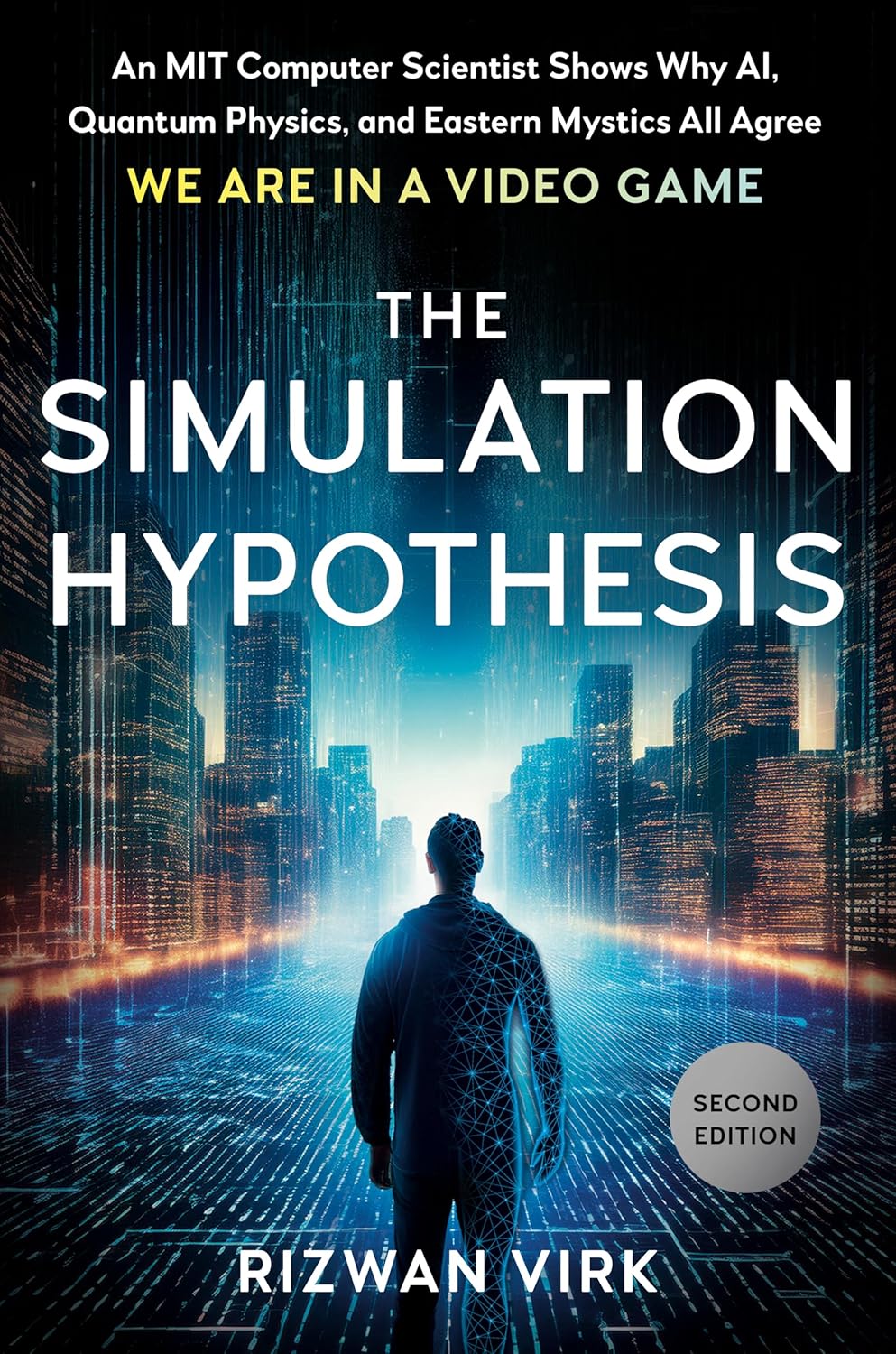
An MIT computer scientist connects AI, quantum physics and video games to take an uncomfortable question seriously: what if we live in a simulation? M
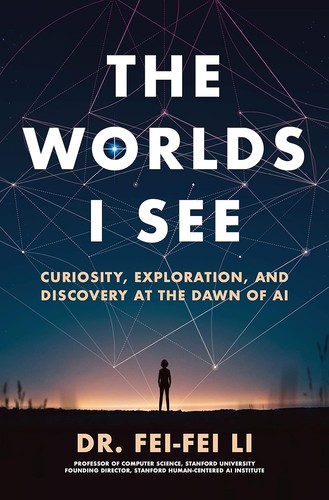
The memoir of the creator of ImageNet, the scientist who made the deep learning revolution in vision possible.
As an Amazon Associate, Zendoric earns from qualifying purchases; the price does not change for you. · all our recommended books →
🔗 Related on Zendoric
- Personalized cancer vaccines in 24 hours: China makes a bet that has yet to prove its clinical efficacy · 2026-06-30
- OpenAI announces Astra, its most capable model at hacking systems, evaluated only by the company itself · 2026-09-02
- AI glasses in exams: when cheating beats the top 5 of the class, the assessment system has a bigger problem · 2026-06-28