Tempus AI pays $1.5 billion for Personalis: it buys the cancer test it already sold exclusively

🕒 Published on Zendoric: July 21, 2026 · 00:20
✨ AI-generated · how it's made
Tempus AI acquires Personalis for $1.5 billion in stock, three years after becoming its commercial partner. The goal: to control end-to-end a residual cancer detection test whose sales are already growing 33% quarterly in a barely tapped $20 billion market.
📚 Go deeper
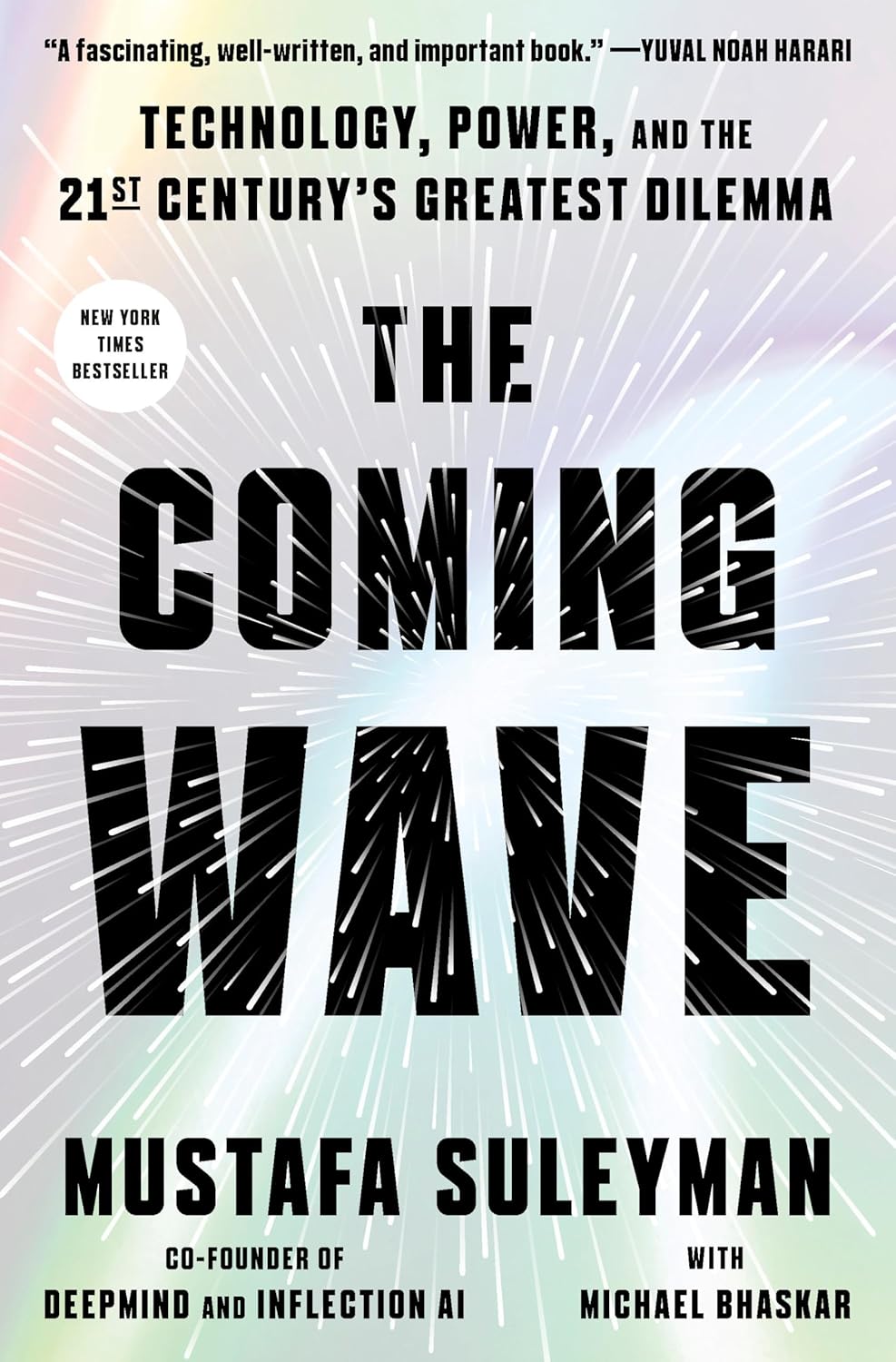
DeepMind co-founder on the dilemma of containing technologies that do not want to be contained.
As an Amazon Associate, Zendoric earns from qualifying purchases; the price does not change for you. · all our recommended books →
By Zendoric · July 21, 2026.
Tempus AI, an artificial intelligence-based diagnostics company, has announced the acquisition of Personalis for $1.5 billion in an all-stock deal, as confirmed by CEO Eric Lefkofsky on a call with investors on Monday. The figure reflects that Tempus already held a $200 million stake in Personalis; without discounting that, the deal values the company at $1.7 billion. The agreement still needs approval from Personalis shareholders and regulators, and Tempus expects to close it by the end of this year or early 2027.
This is not a blind purchase. Tempus has been the commercial partner for Personalis's test, NeXT Personal MRD, since 2023—a liquid biopsy that detects minimal residual disease (MRD): traces of cancer cells that survive surgery or chemotherapy and can trigger a relapse, with sensitivity that surpasses conventional imaging tests. The partnership expanded in phases—to pharmaceutical companies for research in 2024, to colorectal cancer last year—until Tempus decided to buy the manufacturer outright instead of continuing to pay to distribute its product.
The reason, according to Lefkofsky, is purely about business cycle timing: oncology tests take years to demonstrate analytical and clinical validity to insurers and regulators, but once validated, revenue takes off. Personalis recorded $22.4 million in revenue in the second quarter of 2026, with a 33% increase in test volume compared to the first quarter, the company itself reported. "You go from zero revenue to significant revenue," the executive summarized, and that inflection point is what Tempus wants to capture before it is fully reflected in the stock price.
The size of the market explains the urgency. Tempus estimates the MRD opportunity in the United States alone at more than $20 billion, with penetration below 10% in most cancer types, according to its own investor presentation. It is, in other words, a market with an already validated product that is barely being sold: ideal terrain for a company that wants to control distribution rather than split margins with an outside partner.
There is also a strategic piece that goes beyond saving on commissions. Personalis uses a "tumor-informed" approach (sequencing the complete genome of the patient's own tumor and healthy tissue to build a customized test); Tempus, with its xM test, bets on "tumor-agnostic" (no need to know the patient's mutations beforehand). Lefkofsky admitted that the market currently favors the tumor-informed approach, but said he continues investing in both paths because, in his view, they will coexist. Buying Personalis isn't about picking a horse: it's about keeping both and deciding later which one wins in each indication.
Our take is that this deal accurately portrays a very specific phase of AI applied to health: one of commercial consolidation, not scientific advancement. The test isn't new—it has been on the market since 2023—and the novelty isn't technological but about ownership structure. Tempus is paying to control end-to-end (sequencing, AI analysis, sales force and billing) a product whose demand is already proving to be real. It's the same pattern we've been pointing out in other layers of the AI value chain: the defensible margin isn't in the promise of the technology, but in who controls access to the end customer once the technology already works.
In the short term, this is good for Tempus and its shareholders, and will likely accelerate access to the test for cancer patients, though it also reduces competition within the liquid biopsy ecosystem itself by merging into a single company two approaches that previously competed for clinical budget. In the medium term, this is exactly the kind of deal that supports our underlying thesis: tests of this type—capable of detecting a cancer relapse before it's visible on an MRI—are a concrete step toward a world with less lethal cancer, not an abstract promise. The gap between that promise and clinical reality still depends on market penetration, currently below 10%, growing steadily; this acquisition is betting, with money and stock, that this will happen.
📚 Go deeper

The best starting book if you're not technical: a Wharton professor explains how to work WITH AI — when to delegate, when to supervise, when to keep i
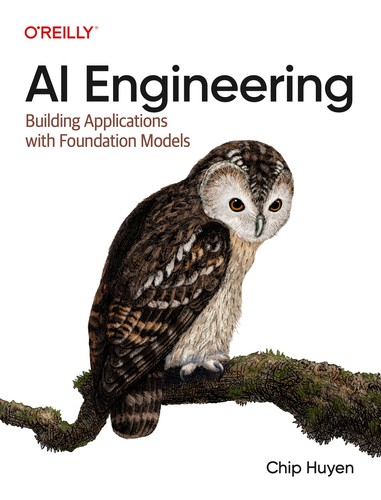
The reference manual for building products on top of AI models: prompts, RAG, fine-tuning, agents, evaluation and deployment.
As an Amazon Associate, Zendoric earns from qualifying purchases; the price does not change for you. · all our recommended books →
🔗 Related on Zendoric
- Tempus pays 1.5 billion for Personalis: AI cancer diagnostics enters its consolidation phase · 2026-07-23
- Breast cancer leaves traces six years earlier: AI can already see them, and that forces a rethink of the entire screening process · 2026-06-28
- The US$1.8B contract between Anthropic and Akamai reveals where AI's next battle is being fought: infrastructure · 2026-07-04