A study with real AI-spending data dismantles (with caveats) the fear of mass layoffs

🕒 Published on Zendoric: July 20, 2026 · 00:19
✨ AI-generated · how it's made
Ramp Economics Lab and Revelio Labs cross-referenced the real AI spending of 21,559 companies with their payrolls: those that invest the most grew their headcount by 10.2% over two years, even in entry-level roles. But the study's own design leaves one question unresolved: does the company grow because of AI, or does it adopt AI because it was already growing?
📚 Go deeper

The best starting book if you're not technical: a Wharton professor explains how to work WITH AI — when to delegate, when to supervise, when to keep i
As an Amazon Associate, Zendoric earns from qualifying purchases; the price does not change for you. · all our recommended books →
By Ramp Economics Lab / Revelio Labs · July 19, 2026.
A joint study by Ramp Economics Lab (the research division of fintech company Ramp) and Revelio Labs analyzed 21,559 U.S. companies by cross-referencing two unusual data sources: real spending data on AI tools (Ramp corporate cards and payments) and Revelio Labs' detailed workforce records. Instead of asking executives what they think AI will do to employment, they measured what each company spends on AI and what subsequently happened to its workforce.
The central finding: companies in the top third for AI spending per employee —after at least three consecutive months spending $100 or more per month— increased their total workforce by 10.2% over the following two years. Low-adoption companies showed no significant change. The growth was gradual, consistent with a learning curve: teams take months to properly integrate the tools before the effect shows.
The figure that most upends the usual script concerns entry-level jobs: at heavy-adoption companies, junior employment grew by 12%, faster than the overall workforce. It is the exact opposite of the dominant narrative, which casts junior profiles as the first to be sacrificed to generative models. Here, moreover, the growth was spread across engineering, sales, customer success and administration, not just technical roles.
It is worth not stopping at the headline. The authors themselves note that companies adopting AI intensively were already different before spending on it: larger, more tech-oriented, faster-growing and, often, venture-backed. That leaves open the question of causation that the study does not fully resolve: does AI accelerate these companies' growth, or are already-growing companies the ones with more cash and ambition to invest in AI? The researchers themselves frame it as the acceleration of a prior trajectory, not the creation of growth from scratch, and the analysis window —two years— is short for talking about structural trends; they themselves warn that workforce restructuring may come later, once capabilities mature.
This fits with what we have been documenting sector by sector at Zendoric: administrative and back-office employment is the most exposed, while expert judgment, client relationships and in-person work hold up. What this study adds is a different layer: even within that exposure, the aggregate effect at companies investing seriously is not net destruction but reallocation within a growing pie. If AI works above all as an accelerator of ambition —allowing a company to pursue more clients, more markets, more projects with the same team— the logical result is not fewer people, but more different people.
Our reading: this is partial good news, not an acquittal. It is consistent with the underlying thesis we defend —that in the short term the transition is real and uneven, but that AI used well tends to expand the pie rather than divide the same pie among fewer hands— and it provides the kind of hard evidence (real spending, not intention surveys) that this debate needed. But the study measures a short window and a sample skewed toward already-winning companies; it says nothing about laggard companies, about sectors outside knowledge-intensive fields, or about what happens when the learning curve of agentic AI reaches real maturity. Fear of generalized mass layoffs may be premature, as the authors conclude. But premature does not mean unfounded: it means the account is not yet closed, and that the outcome will depend on whether more companies —not just those already soaring before investing in AI— manage to turn that investment into growth and not merely into cost-cutting.
📚 Go deeper

The memoir of the creator of ImageNet, the scientist who made the deep learning revolution in vision possible.
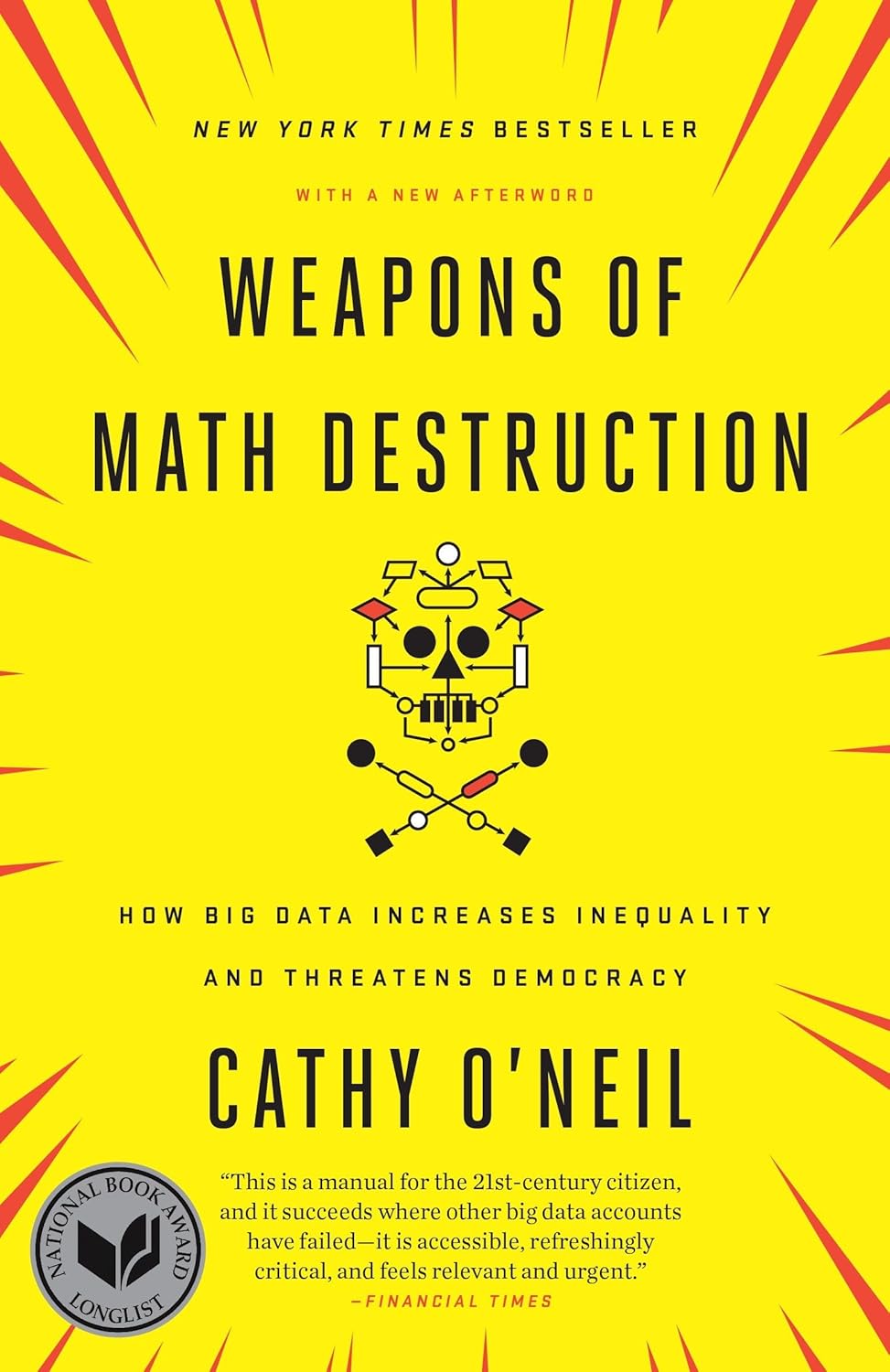
How opaque algorithms decide who gets credit, a job or parole — and why they tend to punish the same people.
As an Amazon Associate, Zendoric earns from qualifying purchases; the price does not change for you. · all our recommended books →
🔗 Related on Zendoric
- Tech layoffs and AI: the data points to the opposite of what CEOs say · 2026-07-13
- Breast cancer leaves traces six years earlier: AI can already see them, and that forces a rethink of the entire screening process · 2026-06-28
- Microsoft cuts thousands of jobs to fund its AI bet: the paradox of record spending · 2026-07-02