Anthropic says Claude Cowork cut its weekly report from 2 days to 2 hours: the savings were in the data, not the text

🕒 Published on Zendoric: July 19, 2026 · 00:04
✨ AI-generated · how it's made
Anthropic describes how its own marketing team uses Claude Cowork to automate the weekly report and event setup, compressing up to two days of work into two hours. What's revealing isn't the figure, but what filled those two days: not writing, but chasing scattered data across Slack, transcripts and incomplete repositories.
📚 Go deeper
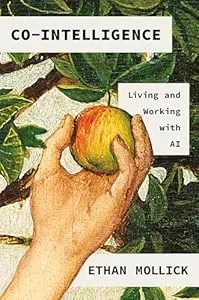
The best starting book if you're not technical: a Wharton professor explains how to work WITH AI — when to delegate, when to supervise, when to keep i
As an Amazon Associate, Zendoric earns from qualifying purchases; the price does not change for you. · all our recommended books →
By PPC Land · July 18, 2026.
Anthropic published on July 8 an internal account, written by Ian Chan and Annabel Custer of its operational marketing team, on how they redesigned two of their most manual processes around Claude Cowork, the agent that in January 2026 the company opened up to non-technical users as an extension of Claude Code. The first case: the weekly metrics report, which took Chan between one and two days to put together, now gets done in as little as two hours. The second: the infrastructure for each event or campaign—CRM, marketing automation platform, registration manager—which Annabel Custer has almost entirely delegated to a set of specialized agents.
The figure worth examining is not the headline, but what filled those two days. According to the account itself, it was not designing charts: it was getting the numbers into a reliable state before a single line could be written. The metrics arrived at four different levels of maturity—already in the dashboard, in the data warehouse but without a panel, in systems that did not even feed the warehouse, or merely mentioned in a Slack thread or a call transcript—and when two sources did not match, someone had to figure out which definition was the correct one. Anthropic cites the case of a sales team reorganization that stopped squaring with the marketing figures.
The technical setup is more interesting than the figure. A scheduled task runs every Sunday night: Claude reads the previous week's review, checks the latest meeting transcript, consults Slack and the data warehouse, and leaves a folder with the numbers and suggested focus areas. On Monday, Chan reviews, redirects the narrative and asks it to expand the chosen threads; the system also generates the slide for leadership and turns the pending items into Asana tasks. Everything relies on three skills—reusable instruction modules that Chan constantly revises—: one for assembly, one for review that verifies each figure against a checked source, and one for task generation. In the second workflow, a dispatcher only assigns work to five specialized skills, and when an event setup finishes, a different agent, with no prior context, acts as auditor: it fills in a real test registration and only marks the task as complete if everything works.
There is a skeptical reading that the account, written by Anthropic itself, does not develop, and which is worth stating clearly: if a company routinely generates decision metrics that only exist in a Slack thread or a transcript, the underlying problem may be an immature data infrastructure, not an unusually difficult reporting task. An agent that chases scattered numbers every Sunday automates around that crack; it is not clear that it closes it. The disputed definitions still exist, the data is still born outside the warehouse, and what changes is that now someone—or something—reconciles them faster. Anthropic's own text hints at this without underscoring it: it mentions that Chan now has room to "work more deeply on the data layer" so that Claude interprets numbers and definitions as the warehouse does, which is almost an admission that they were not fully resolved before.
As sector context, this account comes amid a wave of marketing platforms connecting their data directly to Claude and other assistants via MCP (Model Context Protocol, Anthropic's standard for linking models to external tools and data): Meta opened its advertising infrastructure to Claude and ChatGPT in April, Channel99 connected cross-channel data in February. What was previously coverage from the provider side—who opens their systems to agents—is here documented from the demand side: a team consuming those connections at scale for its own operation. It is worth keeping in mind that it is Anthropic itself recounting how well its own product works with its own team; it is a real use case, but also a promotional video with data verifiable only as far as the company decides to show it.
Our reading is that the case illustrates, better than almost any other we have covered, where office work shifts when execution is automated: it does not disappear, it concentrates upstream. The human stops assembling the report and moves to deciding which metric definition is correct, validating that the agent did not hallucinate a figure and teaching the system to correct its own errors. It is exactly the pattern we had been pointing out in business administration and banking: fewer hands executing, more judgment governing. In the short term that means less need for junior analysts dedicated to manual reconciliation tasks, a real problem for those who entered the profession that way. In the long term, if the pattern becomes widespread, it points to organizations that devote their human time to what truly requires judgment—what to count, why to trust a figure, how to frame a decision—while the plumbing runs itself, which is precisely the kind of abundance of organizational capacity that underpins our underlying thesis about AI: it does not eliminate work, it redefines which work matters.
📚 Go deeper
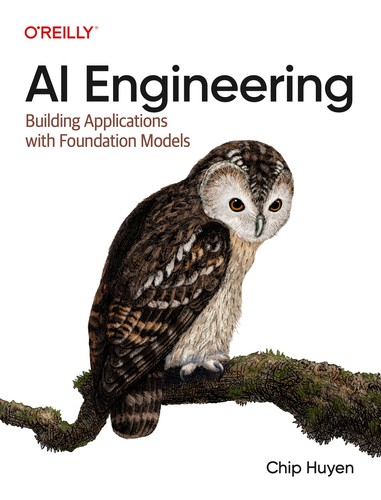
The reference manual for building products on top of AI models: prompts, RAG, fine-tuning, agents, evaluation and deployment.
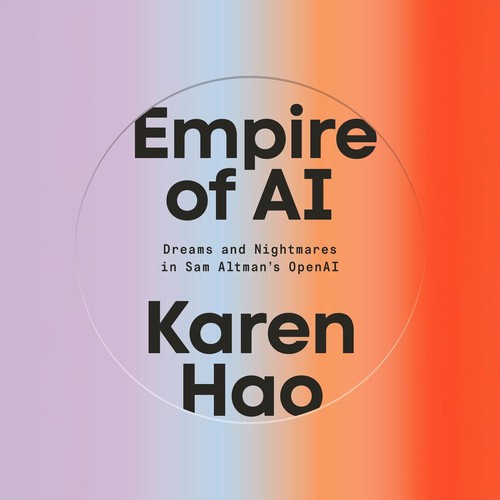
The definitive piece of investigative journalism on OpenAI: 260+ interviews, the clash between safety and speed, and the attempted firing of Sam Altma
As an Amazon Associate, Zendoric earns from qualifying purchases; the price does not change for you. · all our recommended books →
🔗 Related on Zendoric
- Anthropic takes AI distillation to the Senate: when copying agentic capabilities becomes a matter of state · 2026-06-26
- If the headline holds, Anthropic's AI finding flaws in classified systems would mark a new era of red teaming · 2026-06-25
- The new frontier of tech espionage is not the chip, it's the API: Anthropic accuses Alibaba of 'distilling' Claude · 2026-06-25