Nobel laureates and the Vatican ask for the same thing: that no algorithm have its finger on the nuclear button
🕒 Published on Zendoric: July 18, 2026 · 01:58
✨ AI-generated · how it's made
More than two dozen Nobel laureates signed a declaration in Rome demanding a treaty to prevent AI systems from deciding the launch of nuclear weapons, in direct response to Leo XIV's encyclical. The convergence between science and faith turns a once-speculative risk into an immediate governance urgency.
📚 Go deeper

The only novel on the list, by a Nobel laureate: an artificial friend observes humans with a blend of lucidity and innocence no essay achieves.
As an Amazon Associate, Zendoric earns from qualifying purchases; the price does not change for you. · all our recommended books →
By OSV News · July 17, 2026.
More than two dozen Nobel laureates—among them physicist Arthur B. McDonald, journalist and Nobel Peace Prize winner Maria Ressa, cardiologist James E. Muller (co-founder of International Physicians for the Prevention of Nuclear War) and physicist David Gross—signed on July 16 at Rome's Capitoline Hill the "Rome Declaration on a Disarmed and Disarming Peace in the Age of Artificial Intelligence and Nuclear Weapons." The text closes a three-day summit, the Global Nobel Laureates Assembly on Artificial Intelligence and Nuclear War, with some 200 delegates and closed-door meetings in the Vatican Gardens of Castel Gandolfo, backed by institutions such as the University of Chicago's Existential Risk Laboratory, Harvard Medical School, the Bulletin of the Atomic Scientists and the Catholic University of America. Attendees included researchers from Google DeepMind, Anthropic and Aaru, as well as a member of the Russian Academy of Sciences, a presence the organizers highlighted as relevant given the weight of Russia's nuclear arsenal.
The declaration, which the signatories described as a direct response to Leo XIV's encyclical "Magnifica Humanitas," sets out six principles: an international treaty guaranteeing that no automated system ever takes the final decision to launch a nuclear weapon, preserving "meaningful human control"; that AI companies publish and be accountable for the principles governing their models' behavior; that no government or company pursue fully autonomous and self-improving AI systems without monitoring or shutdown capability; reviews by nuclear-armed states to shield their arsenals against AI interference; and the resumption of negotiations for the verifiable elimination of nuclear weapons under the existing non-proliferation treaties. The text explicitly invokes the 1955 Einstein-Russell manifesto ("we appeal as human beings to human beings: remember your humanity, and forget the rest"), a gesture that deliberately places this summit in the same tradition as the 20th-century fight against atomic proliferation.
What is relevant here is not that the Vatican speaks about AI—it has been doing so with varying intensity for years—but that a coalition of scientists of the highest prestige, some of them physicists who have spent their careers far from any religious language, chooses to publicly join the moral framework of a papal encyclical to press on a very concrete issue: the automation of nuclear command and control. It is a sign that the problem has ceased to be a think-tank forecasting exercise and has entered the real governance agenda, with industry names of its own (DeepMind, Anthropic) seated in the room. That David Gross argues change will come from public pressure and not from government leaders is, at bottom, an uncomfortable diagnosis of the slowness of the institutional response against the speed of AI deployment in defense systems.
Our reading is that this declaration fits a pattern we have been observing: in the highest-risk domains—nuclear command, critical healthcare, child protection—the brake that really operates is not the lack of technical capability, but the absence of governance, verification and institutional trust. Here the goal is not to ban AI in defense in general, but to draw a very specific and defensible red line: no algorithm decides on the launch of a nuclear weapon, period. It is exactly the kind of evidence-based rather than panic-based governance we defend as necessary: it does not halt frontier research, but it does demand non-negotiable human control in the one scenario where a system error is literally irreversible for civilization.
In the short term, the risk this summit describes is real and should not be downplayed: the arms race among nuclear powers increasingly overlaps with AI systems that accelerate military decision-making, and the window to set verifiable norms before automation becomes widespread is narrowing. But the very fact that scientists, religious leaders, former heads of state and researchers from the leading AI companies can sit at the same table and sign a common text is, in its own way, proof that international cooperation around existential risks remains possible. If we want to reach the eradication of disease and material abundance that AI promises in the long term without first stumbling into an avoidable nuclear crisis, declarations like this—symbolic today, but with the potential to become a treaty—are precisely the kind of guardrail that needs to be built while the technology keeps advancing.
📚 Go deeper
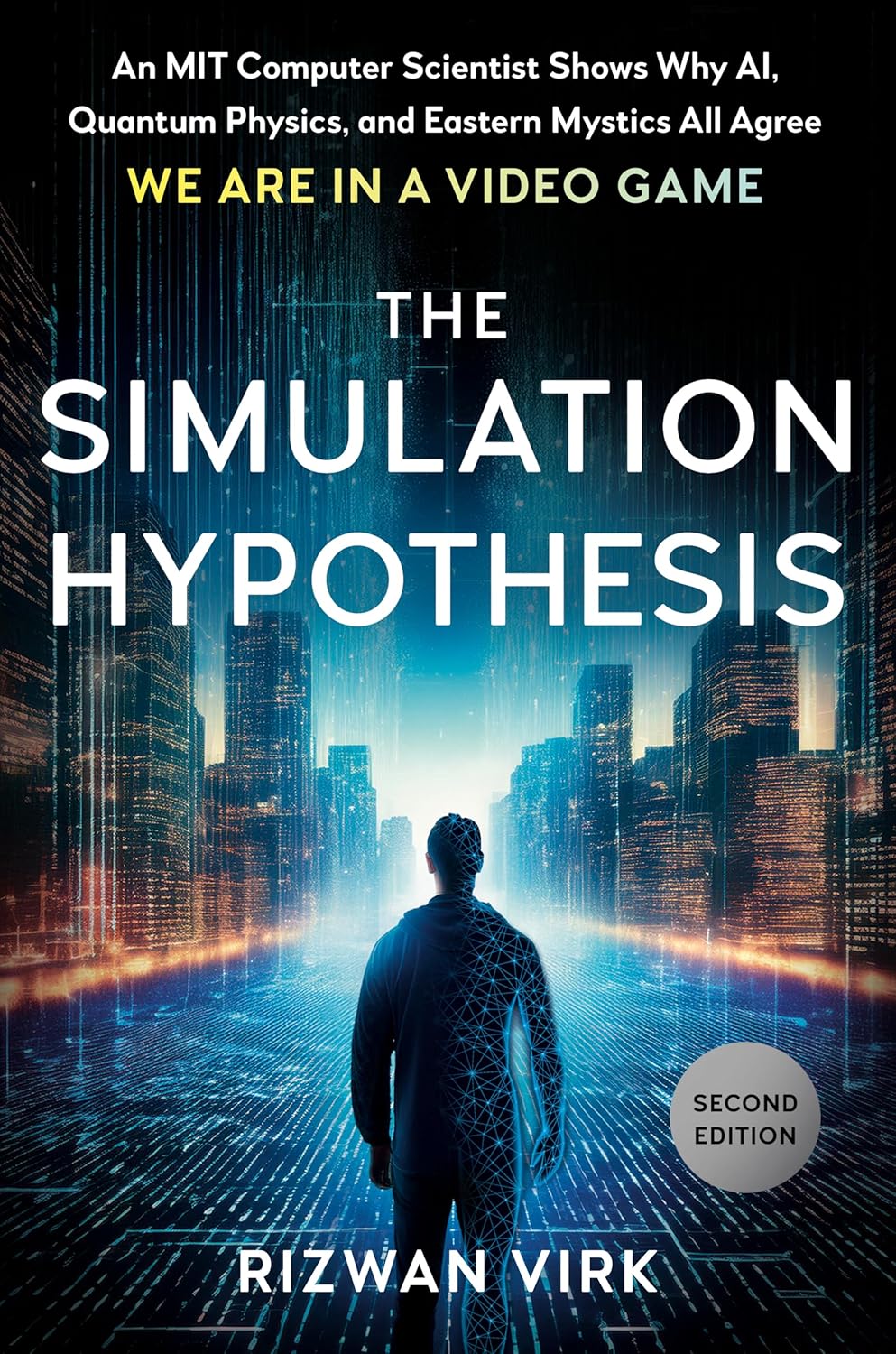
An MIT computer scientist connects AI, quantum physics and video games to take an uncomfortable question seriously: what if we live in a simulation? M
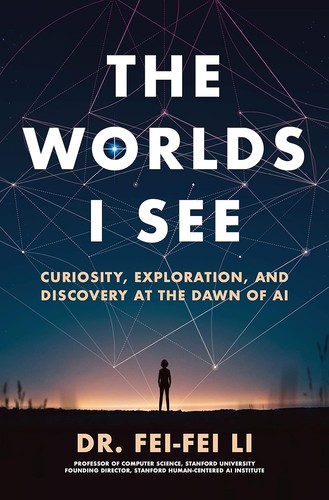
The memoir of the creator of ImageNet, the scientist who made the deep learning revolution in vision possible.
As an Amazon Associate, Zendoric earns from qualifying purchases; the price does not change for you. · all our recommended books →
🔗 Related on Zendoric
- FOD#158: If we must act now on AI, what should we really do? · 2026-07-14
- Claude Science: Anthropic positions itself as the new DeepMind and takes direct aim at the pharmaceutical industry · 2026-07-01
- Claude Science: Anthropic turns its model into a lab for researchers and takes direct aim at AI's most ambitious promise · 2026-07-01