Claude arrives free in classrooms: Anthropic wins the headline, but skips over who governs the data
🕒 Published on Zendoric: July 18, 2026 · 01:58
✨ AI-generated · how it's made
Anthropic launches Claude for Teachers, free for a year and tied to standards in all 50 states via the Chan Zuckerberg Initiative. Critics don't doubt the technology: they doubt it solves anything new and warn that it ignores who should decide on students' data: the district.
📚 Go deeper
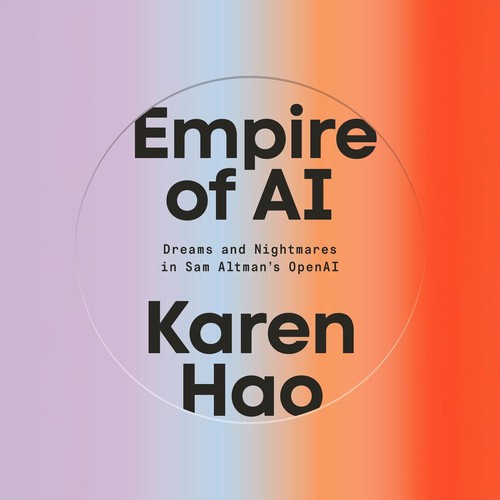
The definitive piece of investigative journalism on OpenAI: 260+ interviews, the clash between safety and speed, and the attempted firing of Sam Altma
As an Amazon Associate, Zendoric earns from qualifying purchases; the price does not change for you. · all our recommended books →
By Education Week · July 17, 2026.
Anthropic has launched Claude for Teachers, a version of its assistant designed for K-12 educators, free for at least one year (registration open until June 30, 2027). The product, developed with Learning Commons—the education initiative of the Chan Zuckerberg Initiative—incorporates a "Knowledge Graph" that maps the academic standards of all 50 states and their connections to other skills, so that an AI-generated lesson plan aligns with the official curriculum. The company also adds access to its agentic tools, Claude Code and Cowork, so teachers can automate repetitive tasks such as reviewing daily "exit tickets" or cross-referencing class rosters, diagnostic data and attendance. Anthropic maintains that the data is not used to train models and that the service complies with FERPA, the federal student privacy law.
The move does not happen in a vacuum: OpenAI launched ChatGPT for Teachers in November, Google and Microsoft already offer K-12 versions of Gemini and Copilot, and specialized ed-tech firms such as Brisk Teaching, MagicSchool AI or SchoolAI have been operating in this niche for a couple of years. In general, education has become the latest major battleground for the distribution of generative AI, and Anthropic's bet is to differentiate itself through pedagogical rigor—evidence-based curriculum (Illustrative Math, OpenSciEd) and validation with teachers—against the more generic promise of its rivals.
That promise, however, does not convince everyone. Dylan Kane, a math teacher in Colorado, questions the product's central premise: knowing the standard itself matters less than knowing how it connects with the learning of the previous and following year, something that—he says—models already handle reasonably well if asked with judgment, and poorly if asked for a generic plan tied to a standard. His underlying warning is more troubling than the technical one: these tools help an expert teacher little, but they can "deprofessionalize" a novice who delegates pedagogical judgment to the machine. Benjamin Riley, of the think tank Cognitive Resonance, was more blunt after testing the product: "There is no real differentiator" compared to what OpenAI or Google already offer.
More relevant than the product debate is the one about governance. Mark Racine, former technology chief of Boston Public Schools, welcomes Anthropic putting competitive pressure on the sector, but criticizes the company for entirely bypassing district leaders, who are the ones who must vet and approve tools that touch minors' data. The problem is not minor: according to Amelia Vance, of the Public Interest Privacy Center, no ed-tech company can self-declare itself "FERPA-compliant" on its own, because that law binds districts, not vendors; it is the district that must specify under which exception it permits data sharing, and a teacher can rarely give that consent alone. Calling yourself FERPA-compliant in a press release is, at best, marketing running ahead of the rule.
Our reading is that this launch confirms a pattern we have been observing in sensitive AI deployments: technical capability is rarely the real bottleneck; governance is. Just as we have seen pauses for lack of a regulatory framework in New York classrooms, in child protection or in oncology, here the risk is not that Claude generates a bad lesson plan, but that the "bottom-up" entry route—directly to the teacher, without going through the district—shifts legal liability and uncertainty over minors' data onto whoever is least equipped to manage it. Competing for the individual teacher's trust is faster than negotiating with 13,000 school districts in the United States, but it is also the strategy with the most reputational risk in the medium term if a single case of data misuse breaks in the press.
That said, we hold to the underlying thesis we have been defending about AI and teaching jobs: the teacher who survives and wins with this wave is not the one who transmits content—any assistant well aligned to standards automates that—but the one who orchestrates AI to free up time and devote it to what no model replicates: detecting where a student truly gets stuck, sustaining the human relationship, exercising pedagogical judgment. Tools like Claude for Teachers, if they mature with the data governance that is missing today, could be the first step toward that abundance of teaching time. But Anthropic's free year does not buy trust without first resolving who decides, in each district, what gets uploaded and to whom.
📚 Go deeper
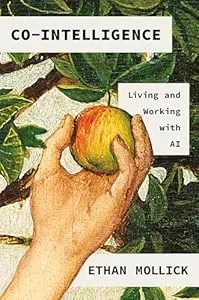
The best starting book if you're not technical: a Wharton professor explains how to work WITH AI — when to delegate, when to supervise, when to keep i

DeepMind co-founder on the dilemma of containing technologies that do not want to be contained.
As an Amazon Associate, Zendoric earns from qualifying purchases; the price does not change for you. · all our recommended books →
🔗 Related on Zendoric
- Anthropic's 'machinery of consciousness' claim is interpretability, not proof of a mind · 2026-07-11
- Claude for Teachers: why Anthropic is giving its AI to teachers before selling it to anyone else · 2026-07-15
- Free Claude for a year for teachers: the race for the classroom starts in the teacher's pocket · 2026-07-16