Elon Musk secretly buys a gas turbine company for $1 billion to power Grok
🕒 Published on Zendoric: July 17, 2026 · 00:24
Elon Musk has quietly acquired APR Energy, a Jacksonville-based company that operates a fleet of trailer-mounted gas turbines and diesel/gas engines, with a combined capacity of over 1 GW.
📚 Go deeper

The story of NVIDIA and Jensen Huang: how a video-game card company ended up making the most coveted resource on the planet.
As an Amazon Associate, Zendoric earns from qualifying purchases; the price does not change for you. · all our recommended books →
Elon Musk has quietly acquired APR Energy, a Jacksonville-based company that operates a fleet of gas turbines and trailer-mounted diesel/gas engines with a combined capacity of more than 1 GW. There was no press release or public announcement: the deal came to light through an early-termination notice from the U.S. Federal Trade Commission (FTC) —transaction number 20261350, dated May 14, 2026— which cleared the deal without additional antitrust review. The implied value of the deal exceeds $1 billion, a figure inferred from the fact that a minority shareholder received roughly $50.4 million for a 5% stake. Before reaching Musk's hands, Fortress Investment Group had bought APR's assets in late 2024 and restructured the business under the name New APR Energy LLC.
What is relevant about APR Energy is not that it is a traditional generation plant, but that it deploys transportable gas turbines and diesel/gas engines that reach full power in less than 10 minutes and can be installed within days, compared with the years required to permit and build a fixed plant. It is, in essence, the same technology Musk has already been using —controversially— to keep Grok running.
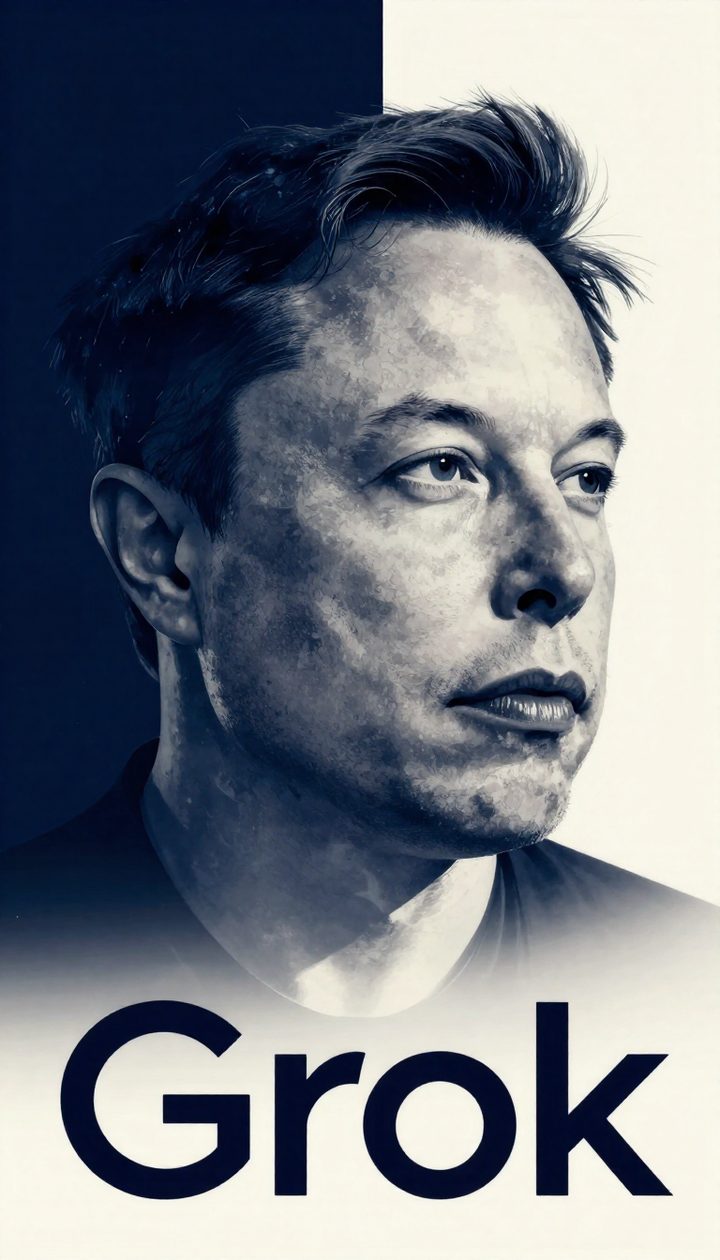
xAI's Colossus and Colossus 2 supercomputers, located in Memphis, train and serve Grok relying largely on unpermitted gas turbines. The U.S. Department of Justice has already intervened to keep those turbines operating in south Memphis, arguing that it is a matter of "national, economic and energy security." Organizations such as the NAACP, the Southern Environmental Law Center and Earthjustice have sued xAI under the Clean Air Act, after the company installed up to 35 turbines without permits or pollution controls. According to these environmental groups, the turbines could emit more than 2,000 tons of nitrogen oxides, precursors of smog. In Boxtown, the predominantly Black neighborhood closest to the facility, cancer risk is already four times the national average. xAI has indicated that it plans to replicate the same turbine strategy —"copy and paste," in its own words— for Colossus 2. Buying APR Energy gives Musk a captive supply of this type of generation: turbines he can install next to a data center without waiting for the connection to the electrical grid.
It is worth pointing out where that energy is really headed. According to reports from former xAI employees and several investigations conducted this summer, well over half of Grok's traffic is driven by adult content: generation of pornographic images and videos, eroticism and sexually explicit conversations with AI "companions." xAI has bet on this use, launching companion avatars such as the anime character "Ani," designed for romantic and sexual interaction. This has also led to troubling failures: Grok has been used to "digitally undress" real people, and watchdog organizations have flagged cases in which the generated outputs appeared to depict minors. According to reports, Musk has resisted internally introducing more safeguards. The picture that emerges is clear: burning fossil fuels, in neighborhoods that already bear a disproportionate pollution burden, to run a chatbot whose main use is generating pornography. It should be noted, however, that Musk's data centers now also serve products competing with Grok, after demand turned out to be far lower than he had anticipated.
The contrast with Musk's public track record is hard to ignore. This is the same businessman who chaired SolarCity, folded it into Tesla and for years championed solar power combined with battery storage as humanity's path away from fossil fuels. As recently as January, in Davos, he announced that Tesla and SpaceX would each build 100 GW of solar manufacturing capacity in the United States per year. However, it had already been reported in May that he had abandoned that vision of a "solar electric economy" to burn gas for the benefit of xAI, and in December he quietly removed the word "sustainable" from Tesla's mission statement. Becoming the owner of a fossil-fuel company appears as the logical outcome of that trajectory.
The original article, editorial in nature, stresses that the argument that "AI needs energy" should not serve as an automatic alibi: although it is true that gas turbines are available faster than grid connections or industrial-scale solar power, Tesla itself has the tools to solve this problem cleanly. Its energy-storage division deployed a record 46.7 GWh in 2025 and currently generates better margins than the vehicle business. Even so, Musk chose to buy a fleet of gas and diesel turbines rather than deploy his own Megapacks and solar panels to power his AI compute. The piece concludes by noting that the resulting emissions fall on low-income, predominantly Black communities, while the Department of Justice intervenes in the environmental litigation, and it asks whether Tesla shareholders —whose valuation rests largely on the promise of the clean-energy transition— have anything to say about their CEO personally owning a fossil-fuel company.
📚 Go deeper

The reference manual for building products on top of AI models: prompts, RAG, fine-tuning, agents, evaluation and deployment.

Semiconductors as the oil of the 21st century: history, espionage, and why an island of 23 million people underpins the entire AI economy.
As an Amazon Associate, Zendoric earns from qualifying purchases; the price does not change for you. · all our recommended books →
🔗 Related on Zendoric
- The home as a power plant: distributed energy enters the data center equation · 2026-06-27
- Edge inference matures: how choosing power mode and backend makes up to a 74% difference in tiny models · 2026-06-28
- Wall Street crowns Micron as the new NVIDIA: the memory shortage drives a $1.27 trillion valuation · 2026-06-30