The home as a power plant: distributed energy enters the data center equation
🕒 Published on Zendoric: June 27, 2026 · 09:00
Tesla, Sunrun and Renew Home appear linked to an idea that makes structural sense: turning thousands of homes into a flexible energy source to feed the growing demand of AI data centers. It is the logical direction of a sector that can no longer ignore its energy bill.
The available information is scant —barely the headline linking Tesla, Sunrun and Renew Home to the bet on using homes to power artificial intelligence data centers—, so the commentary operates on the terrain of the trend rather than the detail. But even with that broad stroke, the proposal fits one of the industry's most serious tensions: AI consumes energy at a pace that forces a rethink of where every watt comes from.
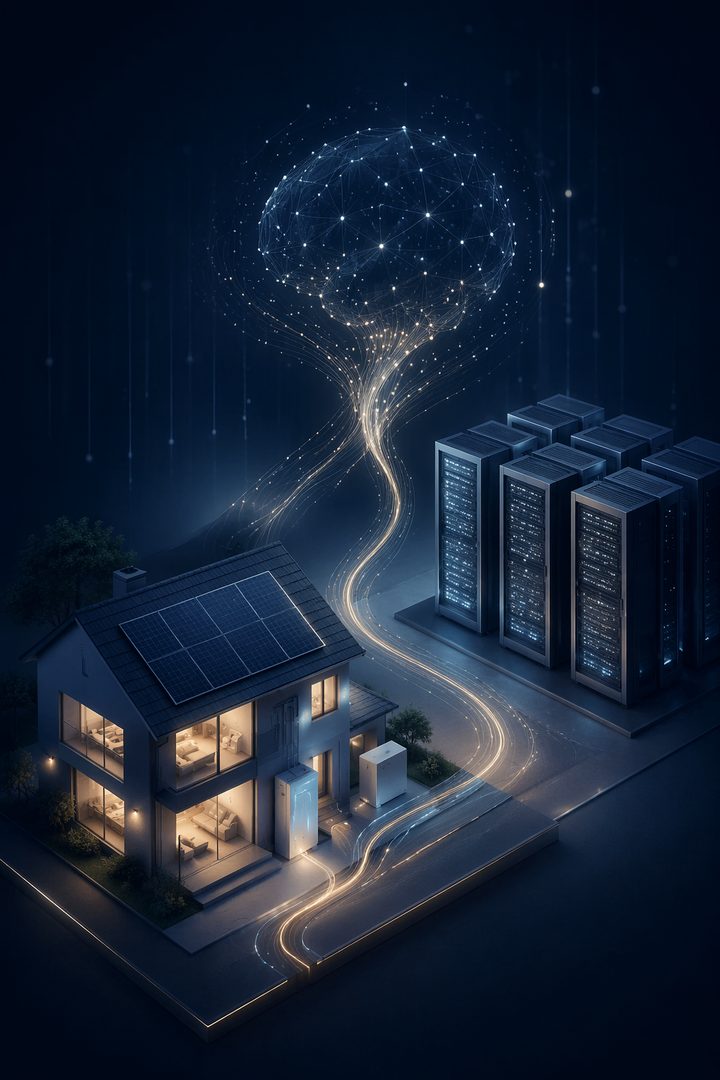
The logic is appealing for its elegance. Instead of conceiving supply solely as large centralized plants, the combination of solar panels, home batteries and smart demand management turns thousands of homes into a flexible grid. When compute demand tightens, that distributed capacity can ease the pressure on the grid; when there is a surplus, it stores it. It is the principle of so-called virtual power plants applied to a new and voracious customer.
That three companies with complementary profiles —battery and vehicle manufacturing, residential solar installation and home energy management— appear in the same sentence suggests that the problem is beginning to be tackled in an integrated way, not as separate pieces. AI infrastructure and the energy transition cease to be parallel conversations and look each other in the face.
The important part is missing: how the value is shared with households, what reliability guarantees are offered to the data centers and at what scale this is viable. Without those answers there is no verdict. But the direction deserves attention: powering AI with clean, distributed energy is, on paper, one of the most sensible ways out of a bottleneck that is only going to grow.