AI cameras to detect weapons in schools: a useful patch that doesn't solve the underlying question
🕒 Published on Zendoric: July 17, 2026 · 00:24
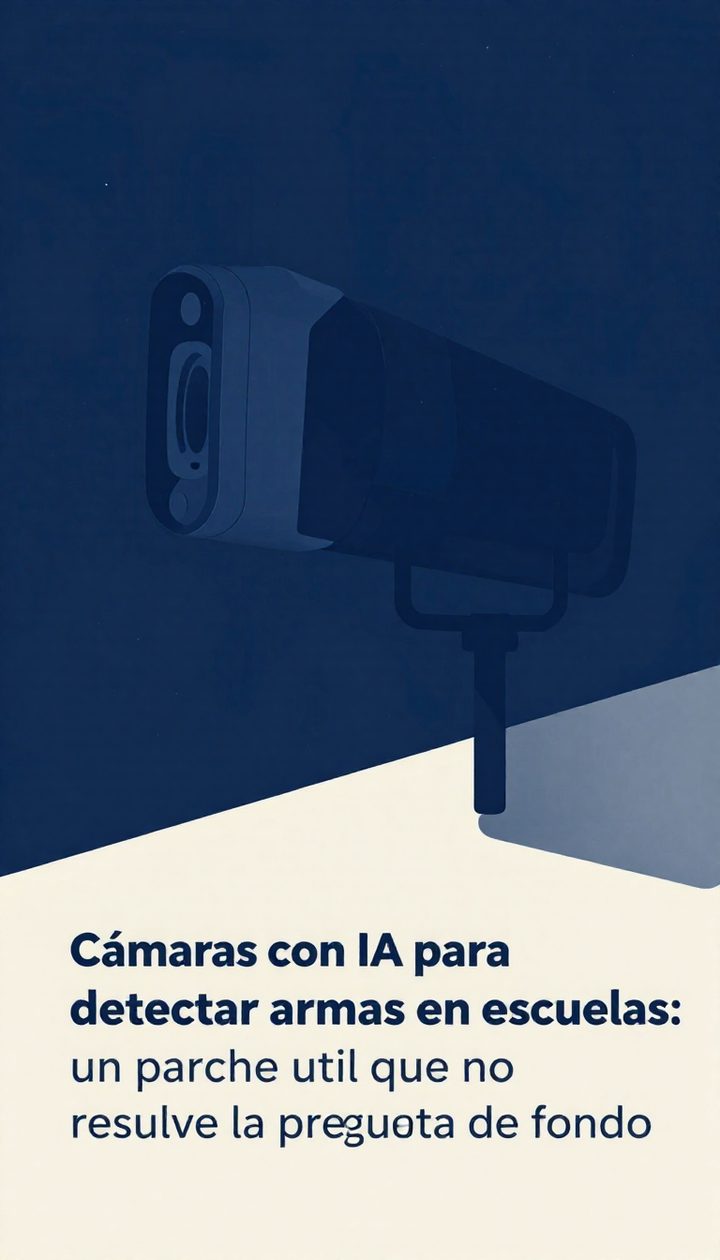
A Kansas school district is adding artificial intelligence to its cameras to detect firearms in seconds and alert police. It's a real, measurable improvement in reaction time, but also a symptom: the technology arrives before the solution to the problem that made it necessary.
📚 Go deeper

The story of NVIDIA and Jensen Huang: how a video-game card company ended up making the most coveted resource on the planet.
As an Amazon Associate, Zendoric earns from qualifying purchases; the price does not change for you. · all our recommended books →
By FOX4KC · July 16, 2026.
The Bonner Springs-Edwardsville school district (USD 204), on the outskirts of Kansas City, has deployed ZeroEyes, an AI-based weapons detection platform that runs on top of the security cameras already installed in its facilities. The system does not replace video surveillance: it reinterprets it. When the model identifies a firearm in the image, it sends the alert to a ZeroEyes operations center that runs 24/7 and is staffed by U.S. military and law enforcement veterans. If they confirm the threat is real, they dispatch to local police an alert with a visual description, weapon type and last known location, within seconds of detection. Funding came through the Kansas Safe and Secure Firearm Detection Grant Program, a state program designed precisely to fund this kind of technology in educational facilities.
Technically, this is computer vision applied to a very concrete and well-bounded problem: recognizing the silhouette of a firearm in a video stream and reducing the time between the appearance of the threat and the response of the authorities. It is not a language model or anything resembling a generalist system; it is image classification with a human in the loop before escalating the alert, which is precisely what separates a reasonable security system from one that is dangerous through excess autonomy. ZeroEyes is a vendor already present in other districts and settings across the United States, so Bonner Springs is not an isolated experiment but the extension of an infrastructure that is being normalized rapidly within the U.S. education system.
The honest short-term reading has two sides. The first is that these kinds of systems work and save reaction time, which is the variable that matters most in an active shooting: seconds that today depend on a teacher or a guard seeing something and reporting it in time may tomorrow depend on a camera that never gets distracted. The second side, which should not be dressed up, is that no district adopts cameras that detect weapons for pleasure: it does so because the United States still has not resolved the root of the problem —access to firearms— and shifts the burden of that inaction onto technology and schools. Adding AI to the cameras does not reduce the number of weapons in circulation; it manages their consequences better. It is an important difference that the marketing of these systems rarely underlines, and one that families and education leaders should keep in mind before assuming that algorithmic surveillance solves what policy has not.
There is also a governance issue that transcends this specific case: the more school cameras are connected to automated detection systems, the more biometric and behavioral data on minors passes through private third-party infrastructures, with their own retention, access and error protocols. A well-managed false positive costs a few minutes of confusion; a poorly managed one can unnecessarily escalate a situation involving minors. The states that fund these programs —Kansas among them— should demand the same transparency about error rates and verification protocols as they demand about the hardware itself.
That said, and in line with what we have been arguing about AI applied to physical and digital security, the key is not whether the technology is good or bad in the abstract, but whether its deployment comes accompanied by real human oversight —here there is, with a verification center operated by people before police are notified— and public performance metrics. In general, these kinds of bounded AI applications, with a human validating before acting, are the type of use case where the short term already delivers tangible value without waiting for superintelligence: it does not cure diseases or generate abundance, but it does illustrate how specialized AI, well governed, can reduce concrete harm today. The challenge in the coming years will be to ensure that the adoption of these tools does not replace the underlying debate about why American schools need to shield themselves against firearms in the first place.
📚 Go deeper
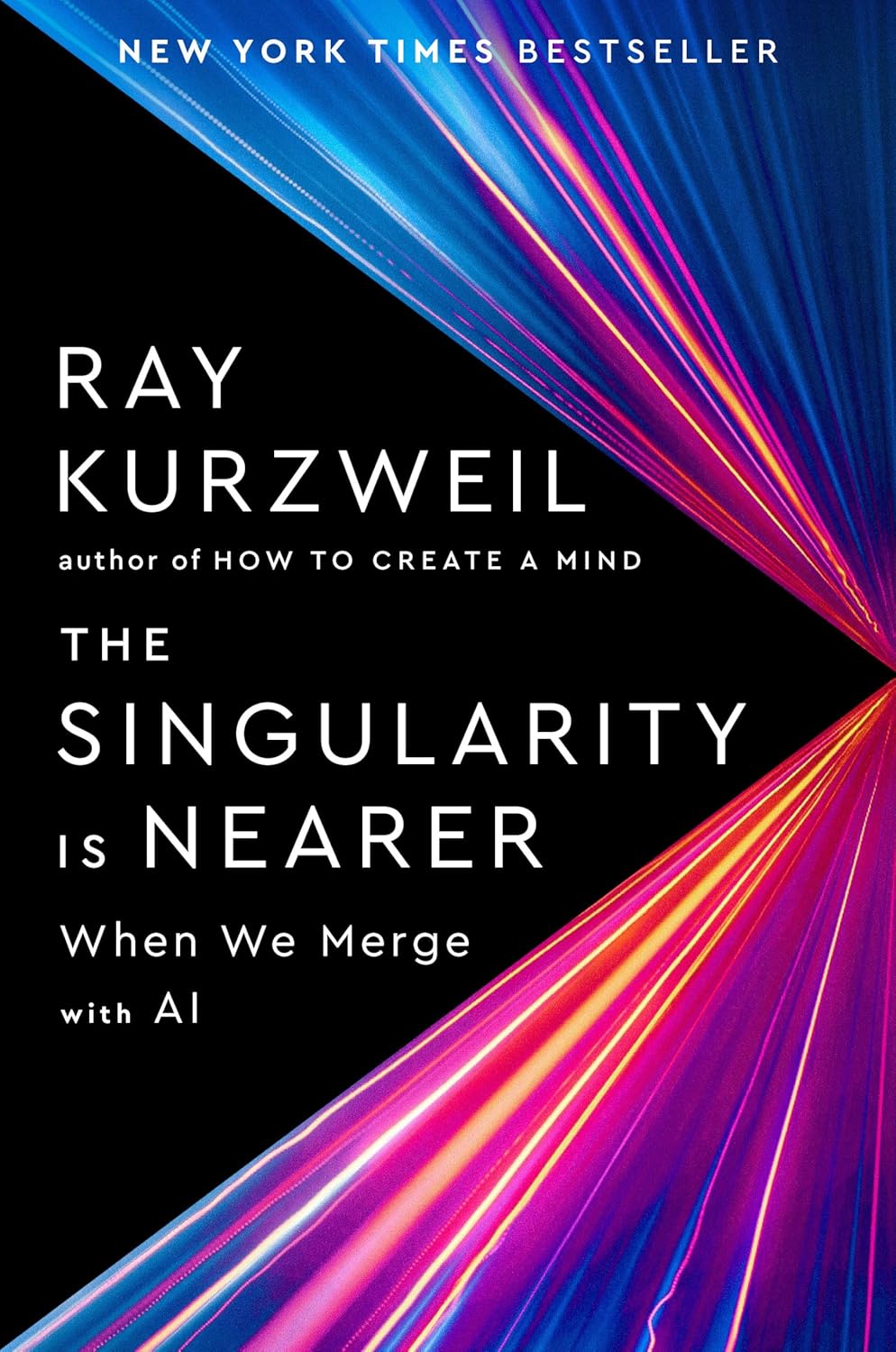
Twenty years after "The Singularity Is Near", Kurzweil revisits his predictions and keeps the date: human-AI merger around 2045.

AI as the latest chapter in the history of information networks, from gossip to the printing press to the algorithm.
As an Amazon Associate, Zendoric earns from qualifying purchases; the price does not change for you. · all our recommended books →
🔗 Related on Zendoric
- «Get the Flock out of here»: the town council meeting as a thermometer of AI surveillance · 2026-06-27
- Teaching AI by law: Mexico wants algorithmic ethics in the classroom before the chaos · 2026-07-13
- Rock Hill puts its house in order before the school year: why revising AI policy is now a matter of school governance · 2026-06-24