Markey pushes for AI rules on minors and algorithmic bias: the agenda that has votes and the one that doesn't

🕒 Published on Zendoric: July 16, 2026 · 00:23
✨ AI-generated · how it's made
Senator Ed Markey launches an 'AI Accountability Agenda' with four bills: one limits how chatbots collect data on minors, another extends COPPA to teens, and two impose bias audits on algorithms that decide employment, housing, credit and healthcare. Only one of the four has actually advanced in Congress.
📚 Go deeper

The definitive piece of investigative journalism on OpenAI: 260+ interviews, the clash between safety and speed, and the attempted firing of Sam Altma
As an Amazon Associate, Zendoric earns from qualifying purchases; the price does not change for you. · all our recommended books →
By Biometric Update · July 15, 2026.
Democratic Senator Ed Markey has presented an agenda grouping four bills he has himself introduced or reintroduced, under the umbrella of "Taking Power Back from Big Tech." The most novel block is the Youth AI Privacy Act: it would require chatbots that know they are interacting with a minor to remind them every 30 minutes that they are not talking to a human, would prohibit configuring them with engagement mechanics (push notifications, usage badges, spontaneous messages, "typing..." indicators that mimic human presence) and would limit how long an operator can retain and reuse what a child tells it in a session. The figure Markey cites—64% of teens used chatbots in 2025, 28% of them daily—is the one that underpins the entire argument: it is not a marginal problem, it is already a consumption habit of an entire generation.
The second block, the Artificial Intelligence Civil Rights Act (with Representative Yvette Clarke) and the Eliminating Bias in Algorithmic Systems Act (with Representative Summer Lee), tackles a different but related problem: algorithms trained on historical data that reproduce patterns of discrimination in employment, housing, credit or healthcare, even if they do not explicitly use race or sex as a variable. The first would require prior assessments and independent audits when the risk of harm is plausible, and would delegate to the FTC the decision of when a citizen can demand that an algorithmic decision be reviewed by a human. The second would require federal agencies to maintain civil rights offices specialized in algorithmic bias. It is worth being precise here: as Markey's own text describes it, this is a risk-assessment framework, not a general ban on using AI in these decisions, and the operational detail—when there is a right to human review, what data retention period applies—is left in the hands of a future FTC regulation, still to be written.
The most revealing point of the article, however, is the almost passing detail at the end: of the four proposals, only COPPA 2.0 (bipartisan, with Republican Bill Cassidy) has truly advanced, passed by the Senate by unanimous consent and by the House within a broader package, but not yet enacted into law because the two chambers have not voted on the same final text. The other three—including the one that directly regulates chatbots for minors—have gone months or years without moving. That is no small detail: in the United States there is real consensus on protecting children online, built over nearly three decades since the original COPPA of 1998, but zero consensus on regulating algorithmic bias in economic decisions, because there industries do have the capacity to block (banking, insurance, HR, healthcare) and there is an underlying partisan divide over how much the State should intervene in how companies use their own models.
Our reading: this agenda is one more symptom of something we have been noting, that in the absence of a federal AI law, the United States legislates in fragments—here a mosaic of individual bills that are passed or die depending on whether the topic has sectoral friction or not, rather than on its real urgency. And the urgency here is asymmetric: the risk of chatbots for minors is immediate and tangible (a teenager in emotional crisis receiving responses from a system optimized to retain them, not to help them), while algorithmic bias in credit or housing is harder to prove case by case but probably more widespread in the volume of people affected. That the former advances faster is no coincidence: protecting children generates visceral, immediate consensus; auditing the algorithms that decide who gets a mortgage touches directly on the business model of sectors with a lot of weight in Washington.
This connects with the underlying thesis we uphold at Zendoric: the transition toward an AI-driven society of abundance will be real in the long term, but the short stretch will be full of frictions that do not resolve on their own, and the protection of the most vulnerable groups—minors, job or credit applicants with no bargaining power against an algorithm—is precisely the kind of guardrail that makes that transition viable rather than traumatic. A chatbot designed to maximize the usage time of a lonely child, or a scoring model that perpetuates decades of redlining under a layer of apparent mathematical neutrality, are not the inevitable price of progress: they are design and governance failures that can be corrected without slowing down underlying innovation. The question this episode leaves open is whether the U.S. Congress will be able to pass guardrails for algorithmic bias with the same speed with which it did, however late, for children's privacy, or whether that type of regulation will remain indefinitely trapped between sectoral lobbies while the systems are already making those decisions about real people.
📚 Go deeper
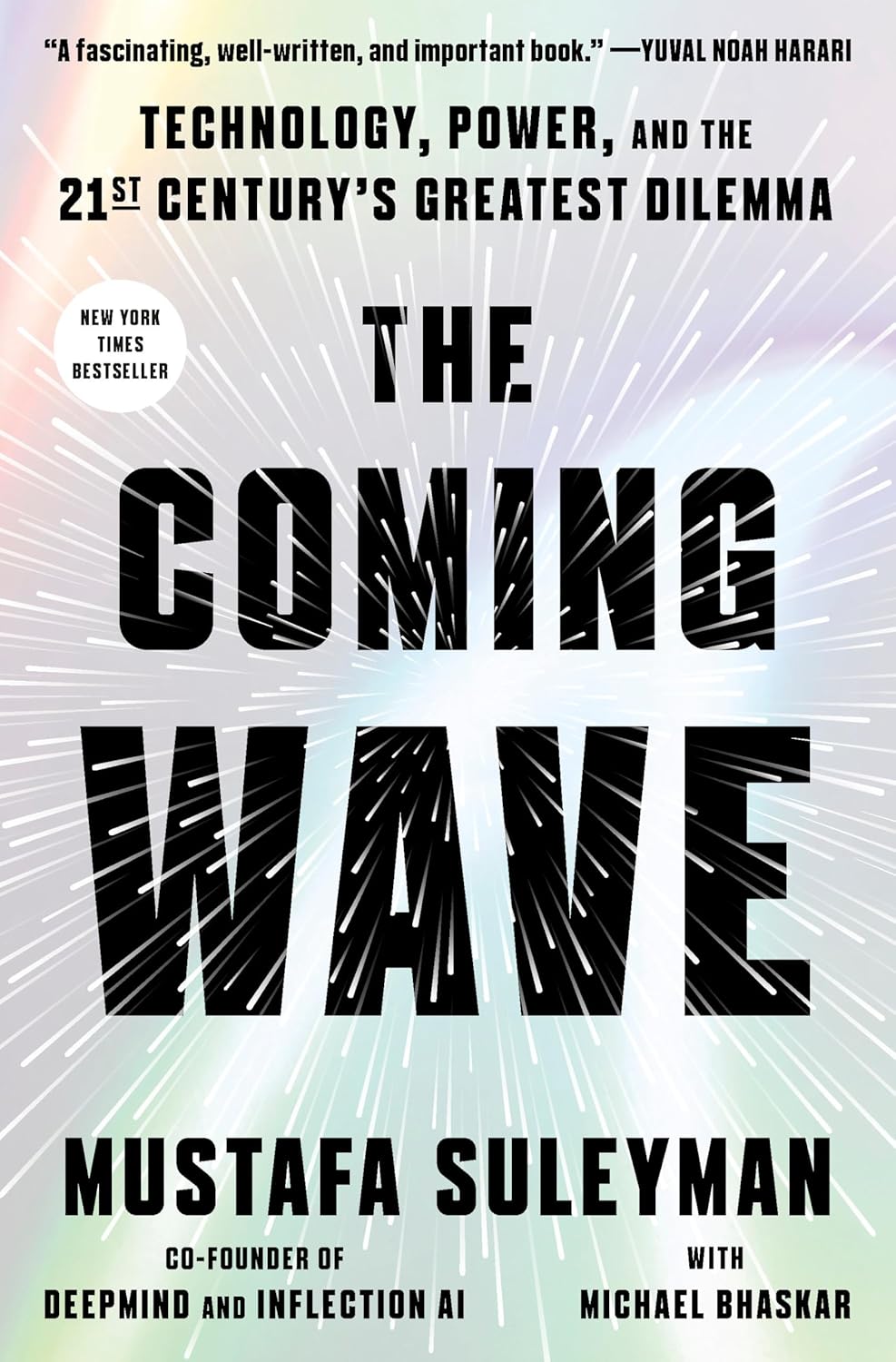
DeepMind co-founder on the dilemma of containing technologies that do not want to be contained.
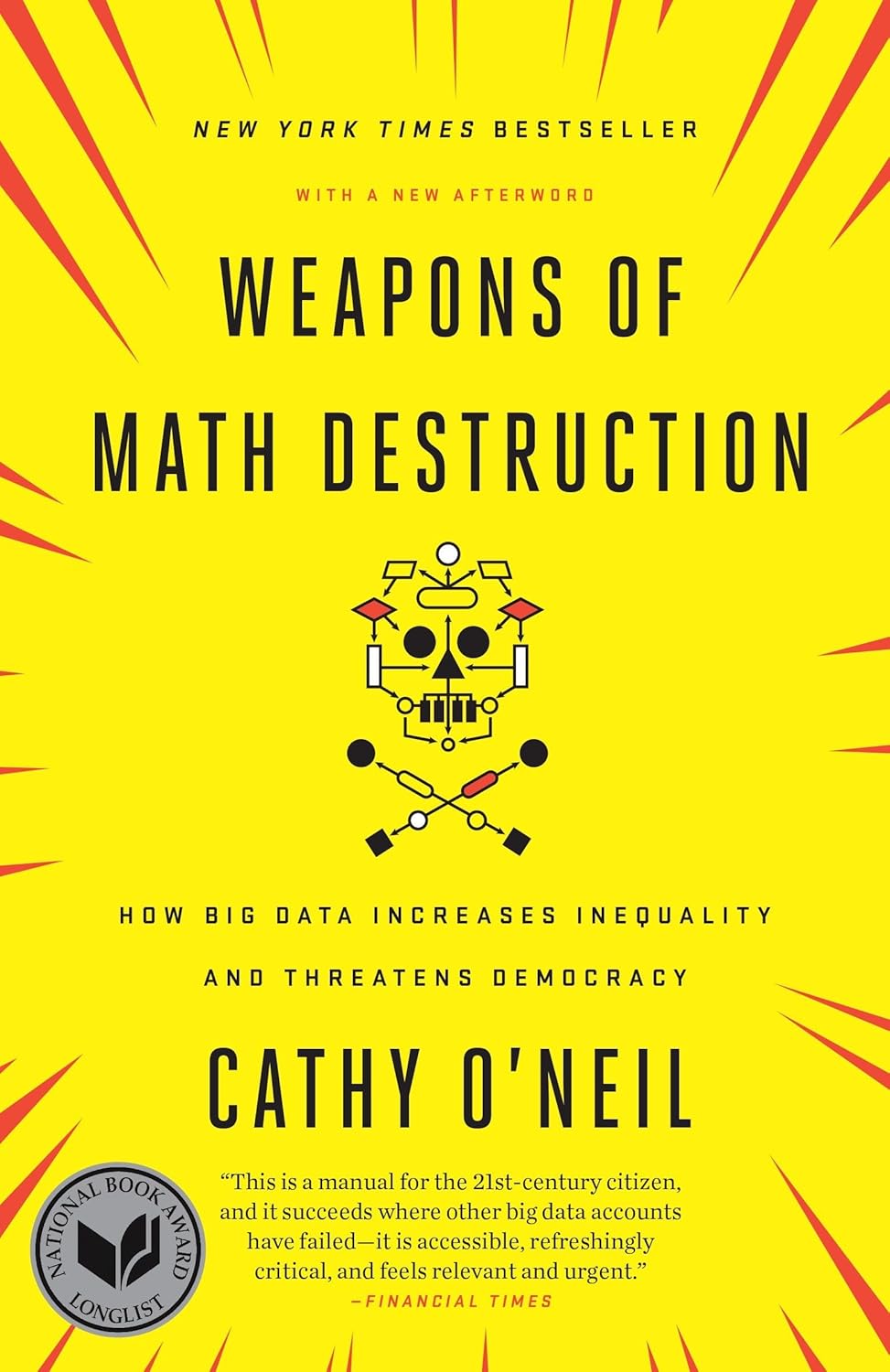
How opaque algorithms decide who gets credit, a job or parole — and why they tend to punish the same people.
As an Amazon Associate, Zendoric earns from qualifying purchases; the price does not change for you. · all our recommended books →
🔗 Related on Zendoric
- Senator Ed Markey introduces a package of bills to regulate data centers, automated hiring and chatbots · 2026-07-14
- Washington legislates AI piecemeal: childhood cures, chatbots for minors and anti-deepfake labels in the same week · 2026-07-11
- Debian votes on whether to ban generative AI in its code or regulate it with transparency rules · 2026-07-25