Senator Ed Markey introduces a package of bills to regulate data centers, automated hiring and chatbots

🕒 Published on Zendoric: July 14, 2026 · 00:03
Massachusetts Democratic Senator Ed Markey has introduced what he calls an "AI accountability agenda," a set of about a dozen bills aimed at curbing the harmful effects of artificial intelligence in the United States.
📚 Go deeper
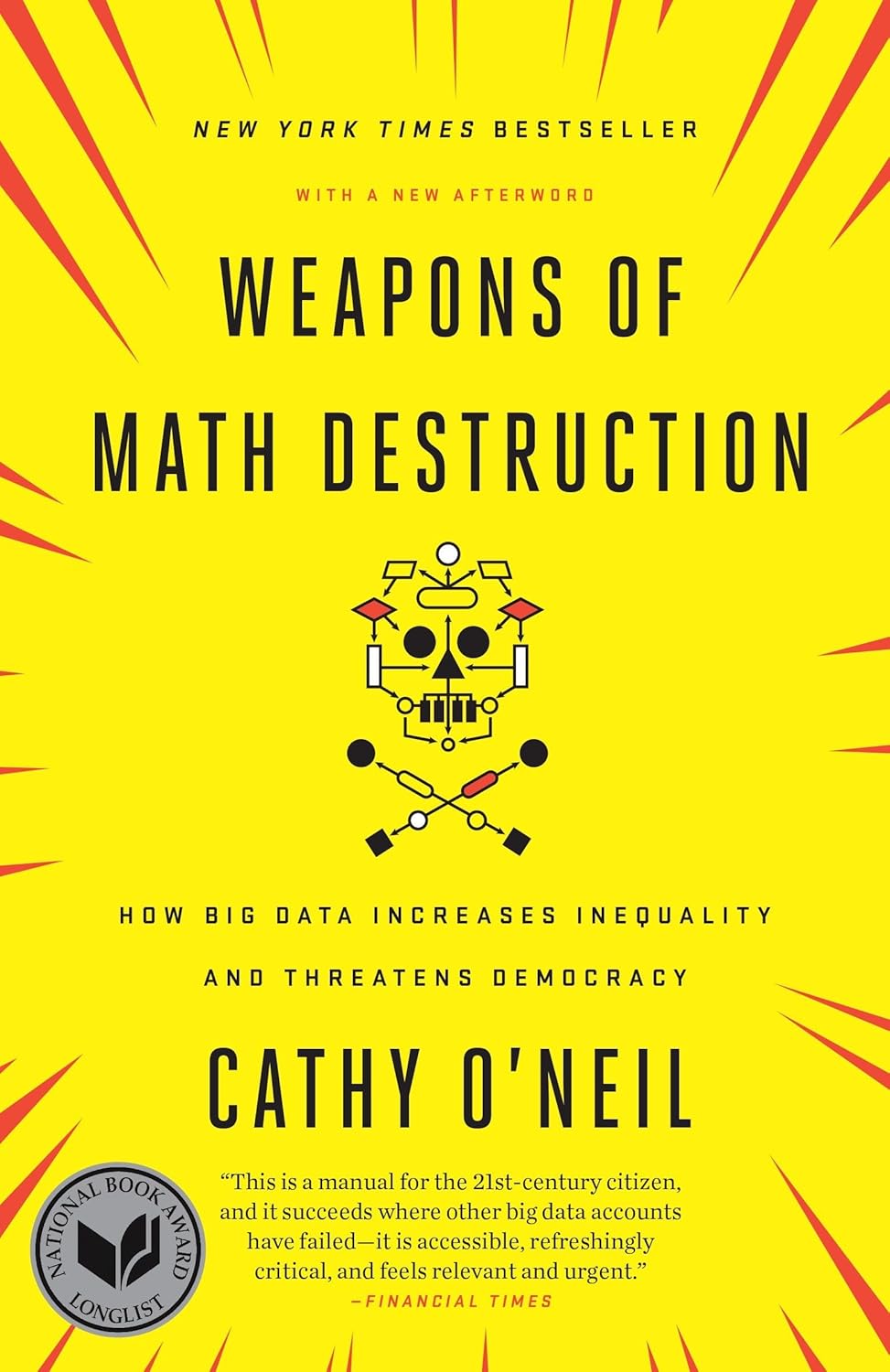
How opaque algorithms decide who gets credit, a job or parole — and why they tend to punish the same people.
As an Amazon Associate, Zendoric earns from qualifying purchases; the price does not change for you. · all our recommended books →
Democratic Senator Ed Markey of Massachusetts has introduced what he calls an "AI accountability agenda," a set of nearly a dozen bills aimed at curbing the harmful effects of artificial intelligence in the United States. As he explains in the interview granted to The Guardian, his concern spans practically every front of the current AI rollout: the environmental cost of data centers that consume enormous amounts of energy and water, intrusive workplace surveillance, bias in discriminatory algorithms, the replacement of human judgment with automated decisions, and rising economic inequality stemming from the fact that those who benefit most from AI concentrate extraordinary gains.
The centerpiece of the agenda, which Markey plans to introduce in the coming weeks, is a bill that would require companies that own or develop data centers to obtain prior certification from the Federal Communications Commission (FCC) attesting that the facility "will not harm the public interest," even before construction begins. According to the preliminary draft shared with the newspaper, the FCC would assess the potential impact on air and water quality, noise levels, energy costs, the reliability of the electrical grid, the local ecosystem and wildlife, and the area's economy and employment. To do so, the agency would have to consult with federal, state and local bodies, including the Environmental Protection Agency (EPA) and zoning boards. Markey sums up the motivation bluntly: "We have to make sure these data centers don't become pollution bombs."
Markey argues that regulation must be federal and not depend on a patchwork of state laws: "All Americans are entitled to these safeguards... it shouldn't be limited only by the geographic boundaries of each state," he said. He also stressed that a fragmented approach "would leave too many people exposed" and that the government must act quickly on regulation, despite there having been little federal movement in this area since the launch of ChatGPT in 2022. The senator, who is seeking a third full term in the Senate, is optimistic about the long-term outlook: "Ultimately, there will be national solutions that are written into law," he assured.
The agenda puts a human face on the problems it seeks to tackle, citing specific cases featured in the coverage: parents who attribute the suicide of their 14-year-old son to a process of sexual manipulation by a chatbot; a resident of a rural town in Georgia who can no longer drink the tap water in her home after construction of a nearby data center began; a woman who sued over an allegedly discriminatory algorithm that denied her housing; and a veteran nurse who felt moral distress at having to follow the instructions of an AI model over her own judgment.
Beyond the data center bill, Markey's legislative package includes other initiatives: a law that would bar employers from relying primarily on automated systems for hiring, firing or promotion decisions; another that would require stricter safeguards from AI chatbot companies to prevent minors from developing emotional dependence on them; and a third that would require AI developers to conduct independent, detailed audits of possible bias and discrimination before releasing algorithms that make important decisions.
Other proposals in his package call for every federal agency that uses, funds or oversees AI systems to have a civil rights office dedicated to combating bias and discrimination; for healthcare facilities to create human-override options against AI decisions; for protection of workers who disagree with the recommendations of these systems; and for companies to report in a standardized manner on the energy and environmental effects of their data centers.
In the area of child protection, one of his proposals has already gained legislative traction: in March, the Senate passed the Children and Teens' Online Privacy Protection Act, which would ban advertising directed at minors, make it easier for families to delete a minor's personal data and set strict limits on the collection of minors' personal information.
The senator is also pushing a proposal to restrict the growing use of surveillance technology in the workplace, and another that would ban productivity quotas that, he says, push staff beyond their physical limits and cause injuries. Markey links this interest to his direct conversations with workers about the intensity with which their workdays are monitored, and to his own family history: his father worked in a factory before the Occupational Safety and Health Administration was created, and suffered a workplace accident in which he lost a finger, after which his boss asked him to return to work soon. Markey has cited this episode at public events as an example of how hard-won labor protections have failed to keep pace with technological advances.
Taken together, Markey's agenda represents one of the broadest legislative attempts in the U.S. Congress to bring various aspects of the AI rollout under regulatory oversight —from the physical infrastructure of data centers to its use in hiring, healthcare and the protection of minors— in a context in which, as the article itself acknowledges, federal regulatory activity on AI has so far been very limited.
📚 Go deeper

The definitive piece of investigative journalism on OpenAI: 260+ interviews, the clash between safety and speed, and the attempted firing of Sam Altma

AI as an extractive industry: the lithium, the energy, the underpaid data-labeling work and the bodies behind the cloud.
As an Amazon Associate, Zendoric earns from qualifying purchases; the price does not change for you. · all our recommended books →
🔗 Related on Zendoric
- Illinois passes the strictest AI safety law in the US, with mandatory audits · 2026-07-08
- Rock Hill takes on AI, social media and enrollment in one package: school governance gets professional · 2026-06-24
- AI dominates the health debate at Aspen Ideas: when elite forums set the real agenda · 2026-06-30