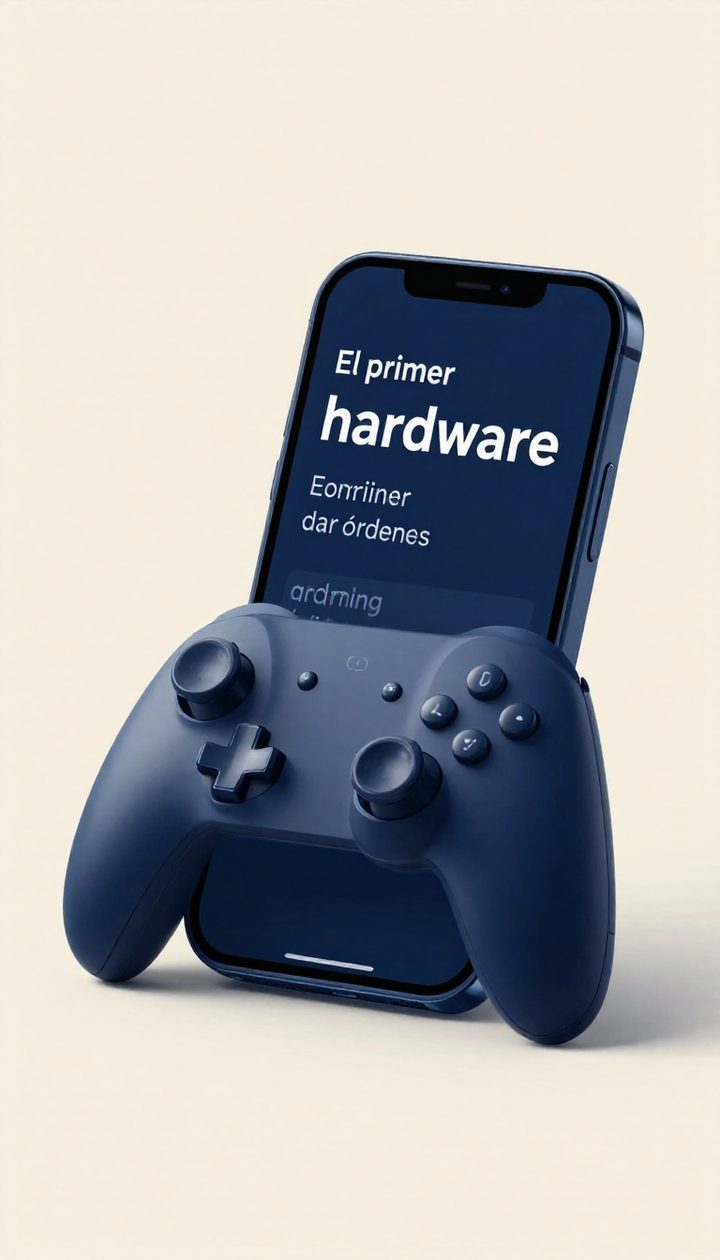
OpenAI's first hardware isn't a phone: it's a controller for giving orders to coding agents
🕒 Published on Zendoric: July 16, 2026 · 00:23
✨ AI-generated · how it's made
OpenAI debuts its first in-house hardware: a $230 macropad, made with Work Louder, designed to pilot Codex with a joystick, a dial and status lights. A small gesture that foreshadows a big shift: programming stops being writing and becomes supervising.
📚 Go deeper
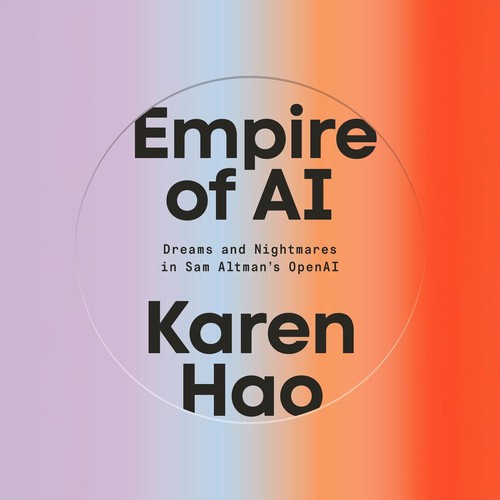
The definitive piece of investigative journalism on OpenAI: 260+ interviews, the clash between safety and speed, and the attempted firing of Sam Altma
As an Amazon Associate, Zendoric earns from qualifying purchases; the price does not change for you. · all our recommended books →
By Gizmodo · July 15, 2026.
OpenAI has launched its first hardware product, and it is neither the companion speaker nor the mobile device rumored for months: it is a $230 macropad called Codex Micro (kbd-1.0-codex-micro), made together with Work Louder, a firm specializing in programmable keyboards. The device has 13 mechanical switches, a touch sensor, a rotary dial and a joystick, comes in a clicky or silent version, and includes 32 keycaps with Codex iconography to customize shortcuts. Six illuminated keys change color depending on the agent's status—green for an unread message, blue for 'thinking,' orange when it needs approval or has a question, red for an error—the joystick launches workflows such as debugging or refactoring, and the dial adjusts how much the model 'reasons' before acting.
The launch comes alongside two other pieces of news that are worth reading together. On one hand, Bloomberg reported, citing an unidentified source, that OpenAI's long-awaited consumer device could be a screenless speaker capable of moving on its own, conceived as a 'humanoid' AI companion that controls the home and converses through ChatGPT; it is expected to be announced before the end of the year and to launch in 2027, developed with io Products, the company of former Apple chief designer Jony Ive that OpenAI bought for $6.5 billion. On the other, Apple has sued OpenAI, io Products and two former Apple employees before a federal court in California, accusing them—according to the lawsuit, with no court ruling yet—of taking trade secrets related to manufacturing processes and products still in development. That accusation should be treated as what it is today: an allegation in an open lawsuit, not a proven fact.
What's interesting about the Codex Micro is not the gadget itself—a niche macropad for developers is not going to move OpenAI's financial needle—but what it reveals about how the very act of programming is changing. When the relevant interface stops being the code editor and becomes a panel with status lights, a 'reasoning level' dial and a joystick to launch tasks, what is being implicitly acknowledged is that the developer's job no longer consists of typing lines, but of supervising, approving and course-correcting several agents working in parallel. It is the same transition we have been noting in the tech sector: those who know how to orchestrate AI and govern its output win, while those who only executed routine tasks lose. A physical controller dedicated to managing the status of software 'workers' is, in a way, the first command interface for a workforce of agents, and it probably won't be the last: other labs and peripheral makers can be expected to replicate the idea with their own coding assistants.
There is also a more prosaic business reading. A physical accessory, even a niche one, serves a loyalty function: it ties the developer to Codex in a tangible way, on their desk, in front of their hands, in a way a software subscription never quite achieves. At a time when OpenAI competes with Anthropic, Google and the open Chinese frontier to capture engineering workflows—the terrain where agentic AI truly generates revenue—any gesture that raises the cost of switching tools matters, however small it may seem.
At the same time, Apple's lawsuit is a reminder that OpenAI's race toward consumer hardware is not a mere technological whim: it involves industrial secrets, former employees and years of design work accumulated in Cupertino, and any legal stumble could delay the true product on which the company's prestige rides, Ive's device. Our reading is that this macropad, modest in appearance, is actually the clearest symptom so far of where work with AI is heading in the short term: it does not disappear, it becomes the supervision of agents with traffic-light indicators. It is an uncomfortable phase—it demands new skills and renders others obsolete almost overnight—but it fits the underlying thesis we uphold: the more routine the agents absorb, the more human time is freed for judgment, design and relationships, which is exactly the kind of work that ultimately produces the abundance these technologies promise in the long term.
📚 Go deeper

DeepMind co-founder on the dilemma of containing technologies that do not want to be contained.

How opaque algorithms decide who gets credit, a job or parole — and why they tend to punish the same people.
As an Amazon Associate, Zendoric earns from qualifying purchases; the price does not change for you. · all our recommended books →
🔗 Related on Zendoric
- With 'Jalapeño,' OpenAI stops being just a silicon customer and becomes the architect of its own infrastructure · 2026-06-26
- OpenAI is reportedly preparing its first device: a screenless speaker that can move · 2026-07-16
- ChatGPT turns on ads in Europe: the free tier stops being a demo and becomes an ad-supported product · 2026-08-31