With 'Jalapeño,' OpenAI stops being just a silicon customer and becomes the architect of its own infrastructure
🕒 Published on Zendoric: June 26, 2026 · 09:00
OpenAI and Broadcom have unveiled Jalapeño, the first AI chip jointly designed by the two companies. Beyond the lighthearted name, the move confirms a bet on vertical integration that will reshape the balance of power in AI hardware over the coming years.
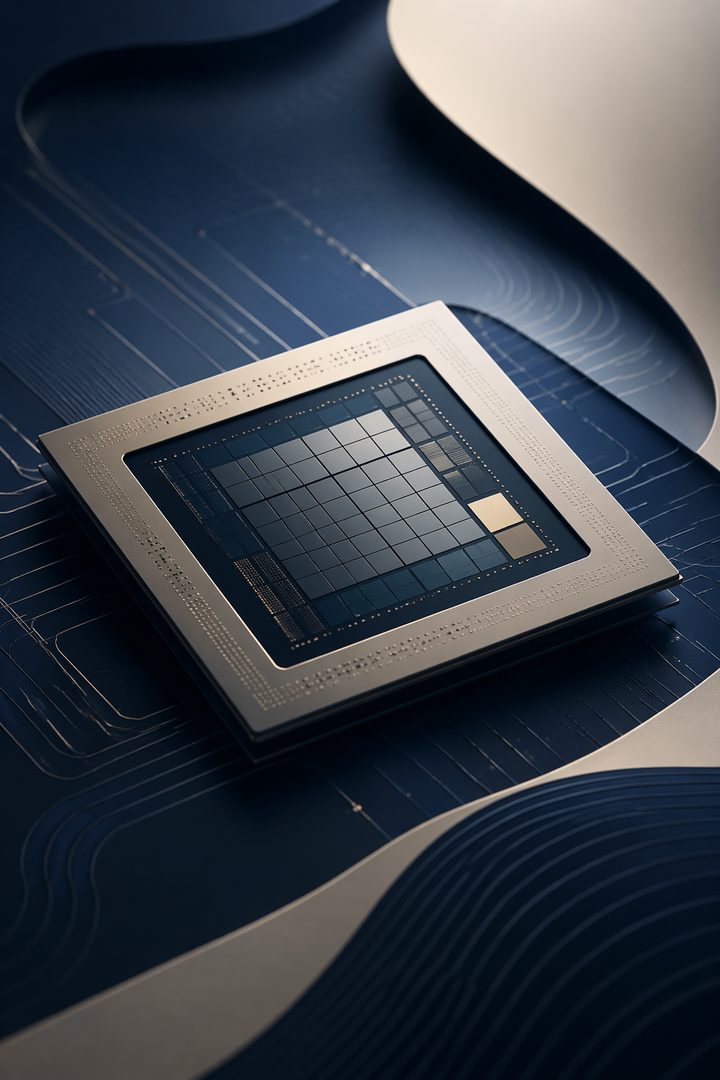
On June 24, 2026, OpenAI and Broadcom unveiled Jalapeño, officially named the 'Intelligence Processor' and described by both companies as the first accelerator in a broader joint platform. What is truly significant is not the chip itself, but what it represents: OpenAI's first foray into designing its own silicon, a frontier it had until now left in the hands of outside suppliers.
Technically, Jalapeño is an ASIC, an application-specific integrated circuit geared toward inference—that is, serving the models to millions of users through ChatGPT and other products. Compared with Nvidia's general-purpose GPUs, an ASIC sacrifices flexibility in exchange for efficiency and cost on a specific task. It is a coherent decision: when a company knows exactly what workload it will run at scale, specializing the hardware makes complete economic sense.
There is one detail worth dwelling on. According to Greg Brockman, OpenAI's president, the company's own models surprisingly accelerated a design that was completed in just nine months. It is the image of AI helping to build the hardware that will run it tomorrow, a feedback loop that, without resorting to grandiose narratives, does point to one of the sector's most interesting dynamics.
It is worth tempering expectations on the timeline. Broadcom's own CEO, Hock Tan, placed a prototype at the end of 2026, production scaling in 2027 and full performance in the first half of 2028. The announcement is therefore mostly symbolic: the massive operational impact will arrive in about two years. The delivery of the first physical unit to OpenAI on the same day as the presentation does, however, underscore that the project has reached real maturity.
The backdrop is a demand for compute that the protagonists describe as literally insatiable. Brockman admits that OpenAI cannot obtain compute as fast as it needs, and Tan speaks of a pressure that extends with equal force through 2028. It is no surprise, then, that OpenAI has diversified in parallel with deals involving chips from AWS, AMD and the startup Cerebras. Jalapeño does not replace those suppliers; it broadens an increasingly diverse range.
The strategic reading is clear: OpenAI wants to control the full stack, from software to hardware, a vertical-integration philosophy reminiscent of Apple and, more recently, of Google's and Amazon's own chips. For Broadcom, which according to the article's figures has accumulated a notable stock-market gain since 2022, the deal cements its role as the silent partner of the AI boom. If this bet turns advanced compute into something more efficient and accessible, as both companies declare they intend, the ultimate beneficiary should be whoever uses these tools, not just whoever builds them.