How to clean up your AI harness before your delivery fails

🕒 Published on Zendoric: July 16, 2026 · 00:23
✨ AI-generated · how it's made
Nate opens with a confession that will sound familiar to anyone who has spent time iterating with an AI assistant: every time the model got something wrong, he added one more rule.
📚 Go deeper

The definitive piece of investigative journalism on OpenAI: 260+ interviews, the clash between safety and speed, and the attempted firing of Sam Altma
As an Amazon Associate, Zendoric earns from qualifying purchases; the price does not change for you. · all our recommended books →
By Nate · July 15, 2026.
Nate opens with a confession that will sound familiar to anyone who has spent time iterating with an AI assistant: every time the model got something wrong, he added one more rule. Use his sources, write in his voice, check the length, read this file first, don't make that mistake again. Each rule, on its own, solved a real problem. But over time, without his noticing, the set of instructions (what he calls the 'harness') had grown enormous and out of control.
The figure that stopped him cold: one of the usual writing paths in his local system loaded 18,384 words of instructions before it even reached the platform-specific guide he was actually writing for. He never wrote those 18,384 words in one sitting; they piled up, correction by correction, until they became a system he could no longer visualize.
Nate defines a 'harness' as everything that wraps around the model and that the user (or the product) can configure: custom instructions, project files, saved prompts, memory, skills, tools, permissions, examples and checks. It is what shapes the response before you even write the next prompt. It does not include, he clarifies, the hidden internal systems of Anthropic or OpenAI that no user can inspect.
His central argument is that almost no one decides to build a harness deliberately: it is built by accidental accumulation. We see the last rule we added, but we do not see the whole system that all the rules together have become.
To solve it, Nate has created two skills that make that hidden configuration visible: a version for Claude, which maps everything Claude can end up accessing, and a version for Codex, which maps the local instructions, skills, tools, permissions and checks available in that environment. Both are called 'Clean My AI Harness' (Claude edition and Codex edition). Each one, as he describes it, flags what it was able to inspect, what fell outside its reach, which parts are still useful and protect the work, and which parts would be worth combining, delaying, testing, reinforcing or retiring outright. The proposal includes a guide and two runnable skills: they point to the user's Claude project or Codex workspace, generate a plain-language report on what is determining the model's behavior and what is weighing it down, and any change requires explicit approval before it is applied.
The most striking finding he shares is an experiment of his own: he gave a model about 5,000 additional words of instructions, all of them high quality. The result was that the model 'thought better' and scored higher in the analysis phases, but failed the final delivery in two out of every three runs. By contrast, a compact, brief version of the same instructions passed all three runs. That is the evidence he uses to support his thesis: more instructions do not equal a better result, and can in fact degrade precisely the part that matters most, the delivery.
He also raises a question that connects with the experience of many advanced users: why a freshly updated model, in theory more capable, can feel worse than starting a new conversation from scratch. His explanation is that the chat box hides the internal machinery; when the model improves, the accumulated rules do not improve with it, and the user notices the drag without being able to identify its source.
The content also includes six rules for keeping a harness healthy, applicable both to a single Claude project and to a full Codex workspace, though the email does not spell out what those six rules are beyond mentioning them. Nate closes the proposal by noting that anyone who uses the skill and the guide will be able to point them at their own configuration and get a map, a cleanup plan and a kind of 'receipt' documenting the process. He specifies that the full content—the in-depth analysis, the guide and access to his Slack community—is reserved for paying subscribers.
📚 Go deeper
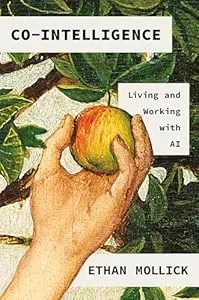
The best starting book if you're not technical: a Wharton professor explains how to work WITH AI — when to delegate, when to supervise, when to keep i
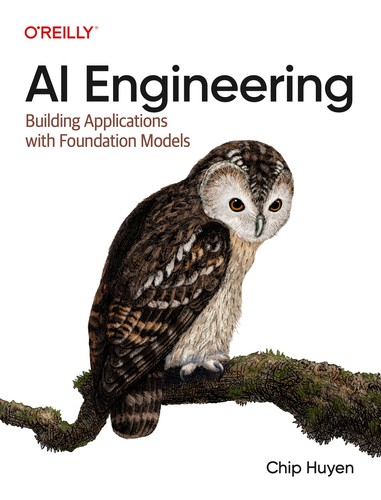
The reference manual for building products on top of AI models: prompts, RAG, fine-tuning, agents, evaluation and deployment.
As an Amazon Associate, Zendoric earns from qualifying purchases; the price does not change for you. · all our recommended books →
🔗 Related on Zendoric
- The AI agent doesn't fail because of the model, it fails because of the data: 57% of companies have already seen it · 2026-07-11
- The UN wants an ID card for AI agents: the ITU turns trust into critical infrastructure · 2026-07-12
- Why AI agents fail with confidence: it's not the model or the context, it's data engineering · 2026-07-24