The AI agent doesn't fail because of the model, it fails because of the data: 57% of companies have already seen it

🕒 Published on Zendoric: July 11, 2026 · 00:27
A survey of 101 companies reveals that 57% have seen an AI agent answer with complete confidence and be wrong, almost always due to a poorly managed business definition, not a model failure. The solution the sector is pursuing, a governed context layer, is in production at only one in four companies.
📚 Go deeper
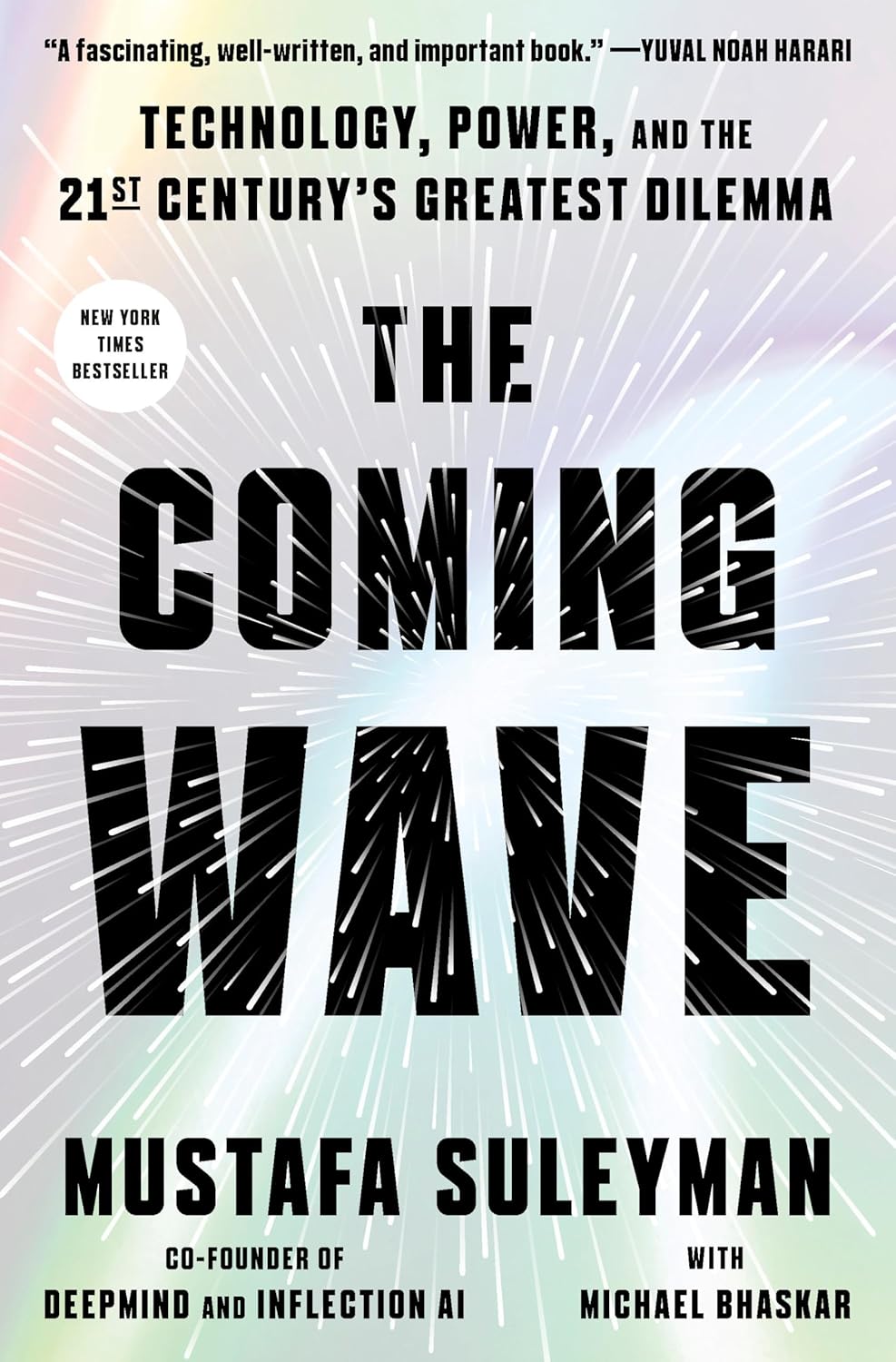
DeepMind co-founder on the dilemma of containing technologies that do not want to be contained.
As an Amazon Associate, Zendoric earns from qualifying purchases; the price does not change for you. · all our recommended books →
We'll send you a confirmation email (double opt-in). Privacy.
By VentureBeat · July 10, 2026. A VB Pulse survey of 101 companies with more than 100 employees, published this week, puts a number to a problem that until now was anecdotal: 57% have, in the last six months, traced an AI agent response that sounded confident and was wrong back to a poorly defined business data point or a document the retrieval system never found. Some 31% say it has happened to them more than once. The model didn't get it wrong; the context it received did.
The cause the study points to is almost boring in how predictable it is: 38% of companies still rely on document retrieval (RAG) as the default method for giving business context to their agents, nearly double the next option. And when choosing that retrieval system, companies prioritize ease of ingestion and operational simplicity over accuracy. The accuracy problem, logically, doesn't show up until the system is already in production and someone spots the error downstream.
The response taking shape in the sector is what is starting to be called the agentic context layer: a shared, governed model of what business data really means, built once and queried by every agent instead of reinvented by each one. Adoption, according to the survey, is halfway there: 25% already have one in production, 34% are building one and 41% haven't started. The most revealing figure is another one: among those who are already building or managing that layer, 78% admit to having suffered a confident, wrong answer; among those with no plan at all, only 20%. In other words, investment in data governance comes after the incident, not before. Companies are learning the expensive way.
The vendor market, meanwhile, is not agreeing on how to solve it, and that too is a data point. DataHub treats its metadata catalog as a living source that updates with analysts' actual behavior. Microsoft, with Fabric IQ, builds a business ontology that any agent can query via MCP, not just its own. Couchbase is betting on bringing the agent's memory into the operational database. Pinecone, with Nexus, precompiles the structure before the agent needs it. Snowflake splits the problem into two layers, one managed by the customer and another inferred by the platform; Oracle does exactly the opposite and fuses vectors, graphs and relational data into a single transactional engine so there's nothing to synchronize. Google and AWS, for their part, extract context automatically from query logs. Several different architectures for the same problem are proof that no one yet has the canonical answer.
The analysts consulted agree on the diagnosis though not on the solution. Michael Ni, of Constellation Research, sums it up without nuance: whoever controls context at runtime will control the decision layer of enterprise AI; and he warns that vector memory is not business meaning, business meaning is not governance, and governance is not execution. Kevin Petrie, of BARC, points to a very specific gap: most of these platforms concentrate on structured tables and leave out the hardest context, the kind that lives in documents and unstructured content, which is what a company actually operates with day to day. And Steven Dickens, of HyperFRAME Research, describes data teams' experience with a phrase that captures the moment well: fragmentation fatigue, managing a vector store, a graph database and a relational system just to get one agent working.
Our reading is that this is exactly the same pattern we've been observing on other fronts of the industry: AI's bottleneck shifts, time and again, from the model to the infrastructure surrounding it. First it was compute and the cost of inference; now it's the governance of the data that feeds the agent. The war for enterprise AI is being fought in the plumbing—who controls context, who defines what each metric means, who decides which document is the truth—and not over who has the model with the most parameters. It's one more confirmation that the competitive advantage in this phase of agentic AI comes not from raw intelligence, but from the quality of the operational foundations it runs on.
In the short term, this is an uncomfortable and expensive problem. 57% of companies plan to switch or add a context or retrieval provider in the next twelve months, and that intention is brutally concentrated among those who have already been burned: 81% among those who have suffered the failure more than once, versus only 32% among those who have never seen it. That means much of the sector is going to make major purchasing decisions this year about a product category with no reference architecture, with several large vendors pushing mutually incompatible approaches. The risk of buying redundant tools, or of getting locked into a vendor before the standard settles, is real, and the companies that haven't yet suffered the problem—the 41% that haven't even started—run the risk of discovering it the most expensive way possible: in production, in front of a customer or a regulator.
In the long term, however, this kind of friction is exactly the step that has to be taken for AI agents to stop being an impressive demo and become dependable operational infrastructure. An agent that doesn't hallucinate because the context it queries is governed and consistent is the necessary condition for genuinely delegating business tasks to it, freeing people from constant manual checking and from the low-value work of reconciling definitions across systems. It's not a flashy layer or a spectacular product announcement, it's the kind of boring data-governance work that rarely makes headlines but that determines whether the next generation of agents is reliable at scale. If the sector solves this plumbing problem well, the promise of an AI that frees up human time for the work that truly matters stops being aspirational and starts being, simply, engineering done right.
📚 Go deeper

The only novel on the list, by a Nobel laureate: an artificial friend observes humans with a blend of lucidity and innocence no essay achieves.

An MIT computer scientist connects AI, quantum physics and video games to take an uncomfortable question seriously: what if we live in a simulation? M
As an Amazon Associate, Zendoric earns from qualifying purchases; the price does not change for you. · all our recommended books →
🔗 Related on Zendoric
Sources & references
Get the analysis by email · free
One email a day analysing the AI essentials. Free, no spam, unsubscribe anytime.
We'll send you a confirmation email (double opt-in). Privacy.