Customer service is the lab for AI-driven layoffs: cheap work falls first, complex work holds out

🕒 Published on Zendoric: July 16, 2026 · 00:23
Forrester estimates that AI will reshape customer-service employment over the next two to five years, but very unevenly: the lowest-paid retail and hospitality jobs fall first, while banking, manufacturing and utilities hold out. Governments from China to California are beginning, timidly, to set limits.
📚 Go deeper
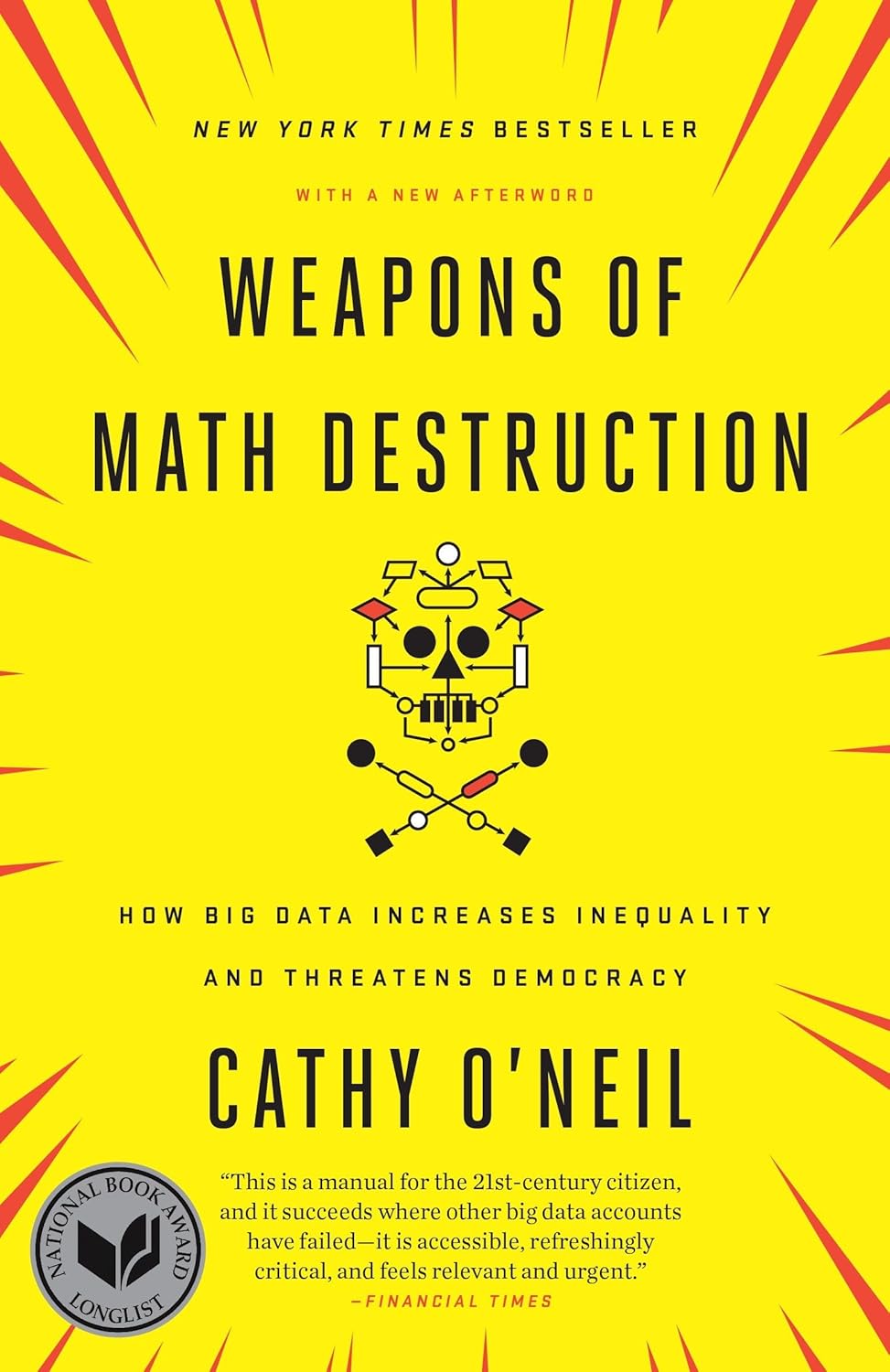
How opaque algorithms decide who gets credit, a job or parole — and why they tend to punish the same people.
As an Amazon Associate, Zendoric earns from qualifying purchases; the price does not change for you. · all our recommended books →
By TechTarget · July 15, 2026.
A Forrester Research report published on July 1, "The Quantitative Employment Impact Of AI On Customer Service Jobs," puts figures and nuance to something we at Zendoric have been flagging for months: AI does not destroy jobs uniformly, it reorders them according to the complexity of the work and the margin each sector can afford to pay for a human. According to analyst Kate Leggett, co-author of the study, over the next two to five years AI will eliminate customer service positions while creating, in smaller numbers, specialized roles to supervise, update and manage the AI agents themselves. The distribution of that loss is not random: retail, hospitality and food service—sectors with massive contact centers, low wages and repetitive queries of the "where's my order?" type—lose more jobs than utilities, manufacturing, construction, banking or insurance, where cases are more complex, the agent's knowledge is more specialized and salaries are higher. Salesforce already illustrated this in 2025 with the layoff of 4,000 customer support employees, one of the few mass cuts attributable to AI that can be pointed to with a specific name and figure so far.
The report also identifies a problem that rarely makes the headlines about automation: if AI takes over the entry-level tasks—the ones that traditionally served to train a novice employee—how will the next generation of senior agents be trained? Leggett proposes a "pods" model: small teams of a couple of agents, a lead and an AI specialist, where entry-level staff learn alongside veterans instead of starting out by resolving simple tickets. It is a reasonable answer to a structural problem that automation unintentionally creates: if no one does the easy work anymore, no one learns to do the hard work. It is also worth keeping in mind that Forrester itself qualifies that not all contact centers will "agentify" at the same pace: many lack the clean data or the ready processes for it, so a good deal of entry-level employment will keep existing, even if by operational inertia rather than strategic decision.
On the regulatory front, the article confirms something we already noted about the gap between the pace of technology and that of governance: Chinese courts have begun to limit companies' ability to invoke AI as grounds for dismissal; the EU AI Act has hinted at future restrictions; New York requires—though no company has yet done so—notification when AI causes layoffs; California is studying a law of 60 days' notice for "technological displacement," and Governor Newsom signed an executive order in May to explore compensation and support for workers displaced by the "AI transition." There is even exploration of whether federal labor law (the NLRA) can give unions bargaining tools against these layoffs. None of this is yet a real safety net: they are, as the article itself aptly describes, alpha-stage tests. Regulation arrives, as almost always, after the fait accompli.
The other relevant data point comes from the Genesys "2026 State of Customer Experience Report," a survey of 5,800 consumers across 20 countries and 1,500 customer experience leaders conducted in March and April: only 24% of those leaders believe their organizations are minimizing the effort they demand of their customers, and 84% of consumers consider a service "bad" if the bot needs more than three attempts to solve the problem. Some 85% say they have cut their spending or abandoned a brand over poor service, and 95% expect not to have to repeat to a human what they already told a bot. These are figures that should frighten executives who slash headcount abruptly more than the employees who fear losing their jobs: customer patience with mediocre AI is virtually nil, and the loss of revenue from a poor rollout can quickly exceed the salary savings that motivated the cut.
Our read: this confirms, with concrete data for the first time in a highly visible sector, the thesis we have been holding on employment and AI: administrative, low-judgment work falls first, and what requires expert judgment, genuine empathy or handling complex cases holds up, even gains value. Customer service is perhaps the sector where this pattern can be measured most clearly, because the line between "repeatable task" and "task that requires judgment" is very clear: a chatbot can handle a size exchange, but it cannot (yet, and probably for a long time) defuse the frustration of a customer furious over a just-discovered product defect while the company decides its returns policy on the fly. In the short term, this means a hard and uneven transition, with the lowest-paid workers—those with the least margin to absorb the blow—being the first to be exposed, while regulation arrives late and in fragmented fashion country by country. But the underlying pattern points to where we believe this is headed in the long run: AI absorbs the mechanical and frees up human capacity for the tasks that truly require judgment, relationship and presence, gradually pushing human work toward what matters most to us to do. The real challenge is not whether that will happen, but whether society will build the bridges of training, protection and transition in time—like the "pods" and learning models Forrester proposes—so that that transition does not, along the way, come at the expense of those who can least afford it.
📚 Go deeper
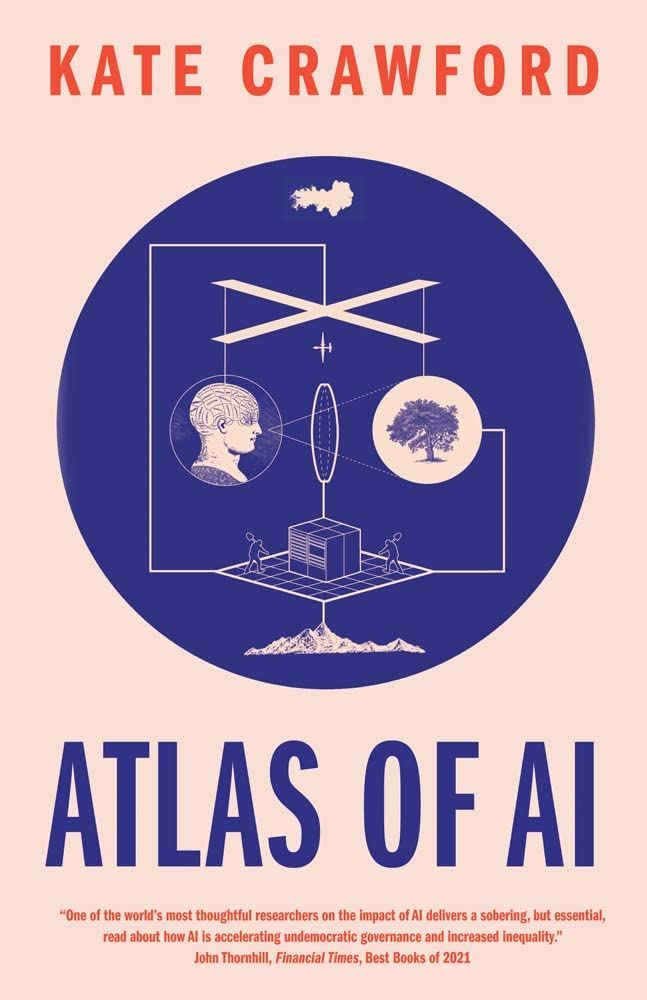
AI as an extractive industry: the lithium, the energy, the underpaid data-labeling work and the bodies behind the cloud.

The best starting book if you're not technical: a Wharton professor explains how to work WITH AI — when to delegate, when to supervise, when to keep i
As an Amazon Associate, Zendoric earns from qualifying purchases; the price does not change for you. · all our recommended books →
🔗 Related on Zendoric
- With 'Jalapeño,' OpenAI stops being just a silicon customer and becomes the architect of its own infrastructure · 2026-06-26
- Of 'open weights' and unbeatable prices: how Chinese AI is advancing across the Global South while the West debates · 2026-06-26
- California swaps speculation for data: its AI job tracker finds no automation layoffs · 2026-06-27