Microsoft isn't selling a better model: it's selling anxiety over its customers' AI spending

🕒 Published on Zendoric: July 16, 2026 · 00:23
✨ AI-generated · how it's made
Bloomberg reveals that Microsoft is training its sales force to attack OpenAI and Anthropic not on capability but on cost and security, while replacing advanced models with cheaper in-house alternatives. The case of Unilever, which would save $300 million by switching models, sums up where corporate AI negotiations are heading.
📚 Go deeper
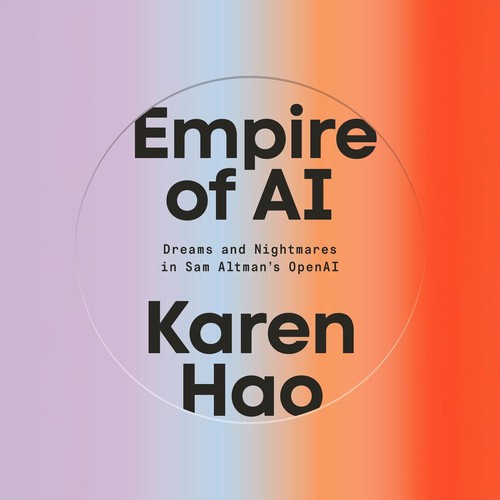
The definitive piece of investigative journalism on OpenAI: 260+ interviews, the clash between safety and speed, and the attempted firing of Sam Altma
As an Amazon Associate, Zendoric earns from qualifying purchases; the price does not change for you. · all our recommended books →
By PYMNTS (via Bloomberg News) · July 15, 2026.
Bloomberg reports, based on internal documents, that Microsoft has launched an explicit commercial offensive against OpenAI and Anthropic ahead of its fiscal year 2027. Executive vice president Jay Parikh instructed sales teams to repeat one message: rivals "sell loose pieces," Microsoft sells "a complete system" for tuning, deploying and monitoring AI for enterprises. Vice president Jacob Andreou, according to the report, presented internal comparisons in which Copilot outperforms Claude within the Office suite on speed, accuracy and security integrations. It is worth stressing: that comparison was designed and presented by Microsoft itself to its sales force, not an independent benchmark, so it should be read as a sales pitch, not a neutral measurement.
The second pillar of the strategy is cost. Satya Nadella reportedly noted that the ability to monitor AI spending and turn to cheaper models will be customers' main concern this year. The example the report cites is specific: Unilever replaced an advanced model with a cheaper Microsoft version and projects savings of 300 million dollars. Microsoft, moreover, is already replacing OpenAI and Anthropic models with cheaper in-house alternatives in some of its own internal products. The offensive comes at a moment of real pressure: Microsoft's stock is down 20% for the year, amid investor doubts about whether the new AI tools will cannibalize traditional software and about the weight of data center capex.
There is a tension the report itself does not fully resolve and that deserves context: Microsoft is at once OpenAI's largest investor and, according to this, is arming its sales force against OpenAI in the corporate arena. It is not contradictory if the business is understood correctly: Microsoft is not competing to have the best frontier model, it is competing to control the layer of distribution, integration and billing on which those models run, whether its own or others'. It is the same logic we already pointed to when analyzing the rapprochement between Google and Microsoft against OpenAI and Anthropic: the war has shifted from "who has the smartest model" to "who controls the enterprise plumbing" —cost management, data governance, security and the application lifecycle. As sector context, this turn toward savings and the substitution of models for cheaper versions is consistent with a broader trend: the commoditization of the AI application layer, where the underlying model starts to be treated as an interchangeable component within a platform, not as the final product.
Our read is that this move confirms, rather than contradicts, the underlying thesis: in the short term competition will be fought with the procurement department's wallet, not just with benchmarks, and that is good for the enterprise buyer but uncomfortable for the frontier labs, which see their capability advantage diluted if the customer prioritizes marginal cost per token over the marginal quality of the response. It is legitimate pressure —no company wants to overspend on an oversized model for routine tasks— but also a perverse incentive if it ends up pushing organizations to use the cheapest model available on the platform they are already locked into, rather than the one best suited to the task. Therein lies the real risk of this strategy: not that Microsoft competes on price, which is healthy, but that the vertical integration of the "complete system" becomes a form of lock-in that reduces, over the long term, real competitive pressure on quality.
That said, the savings narrative also fits the underlying thread we champion at Zendoric: the cheaper and more accessible general-purpose artificial intelligence becomes, the closer we are to the abundance that can free up resources today trapped in licenses and compute costs. The problem is not that AI is getting cheaper —that is exactly what we need for it to reach more companies and people—, but who controls the tap of that abundance and under what conditions. Microsoft is betting on being that tap. Anthropic and OpenAI, meanwhile, will have to prove with verifiable data, not a rival's internal comparisons, that their superior capability justifies the extra price. That dispute, more boring than the race for superintelligence but far more immediate, is the one that will really decide which provider wins the corporate market in 2027.
📚 Go deeper

DeepMind co-founder on the dilemma of containing technologies that do not want to be contained.

The reference manual for building products on top of AI models: prompts, RAG, fine-tuning, agents, evaluation and deployment.
As an Amazon Associate, Zendoric earns from qualifying purchases; the price does not change for you. · all our recommended books →
🔗 Related on Zendoric
- Microsoft trains its salespeople to unseat Claude and ChatGPT: the integrated vertical declares war on its own partners · 2026-07-17
- ESET joins the agentic AI standards foundation: the war is now over the rules, not just the model · 2026-07-04
- Microsoft Swapping OpenAI and Anthropic for In-House Models Is the Real Story Behind the 'Partnership' · 2026-07-08