Microsoft trains its salespeople to unseat Claude and ChatGPT: the integrated vertical declares war on its own partners

🕒 Published on Zendoric: July 17, 2026 · 00:24
Microsoft is instructing its sales force to compare OpenAI's and Anthropic's models unfavorably against its own, while replacing both with its in-house MAI AI in Excel and Outlook. The irony is obvious: it's attacking those who until recently were its strategic suppliers.
📚 Go deeper
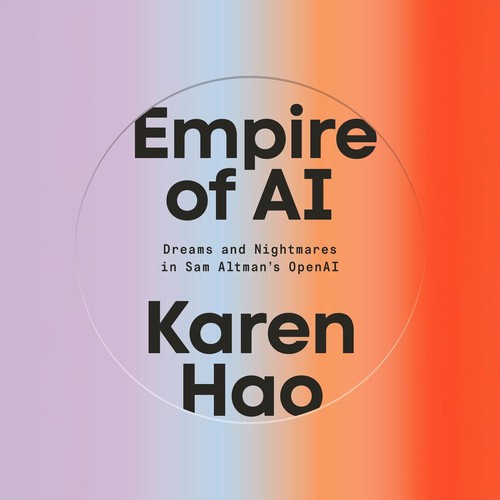
The definitive piece of investigative journalism on OpenAI: 260+ interviews, the clash between safety and speed, and the attempted firing of Sam Altma
As an Amazon Associate, Zendoric earns from qualifying purchases; the price does not change for you. · all our recommended books →
By The American Bazaar (via Bloomberg and TechCrunch) · July 16, 2026.
In an internal meeting on Tuesday, senior Microsoft executives —executive vice president Jay Parikh and the head of Copilot, Jacob Andreou— instructed their sales teams to position the company's products as superior to those of OpenAI, Google and Anthropic. Parikh's message was surgical: "everyone else sells loose parts, we sell the complete end-to-end system." Andreou, according to the reconstruction of the meeting, went further and directly compared Copilot with Claude inside the Office applications, calling Anthropic's model "slower, less accurate and lacking the appropriate security integrations." It is worth underscoring that this assessment is that of an executive selling his own product in a sales meeting, not an independent benchmark, and it should be read as such.
The maneuver is not merely rhetorical. Microsoft is already replacing its former AI partners with its own MAI models in high-volume applications: according to sources cited by TechCrunch, tens of thousands of weekly prompts in Excel and Outlook are now resolved with in-house technology. Mustafa Suleyman, Microsoft's AI chief, had already acknowledged in June that the company is seeking to reduce its spending on Anthropic by relying on more of its own models. In other words: this is not an isolated sales outburst, but the visible tip of a supplier-substitution strategy that has been underway for months.
The context that makes sense of all this is the end of exclusivity between Microsoft and OpenAI, agreed in April: OpenAI ceased to be exclusively tied to Microsoft and was free to sell to whomever it wanted, including Redmond's direct competitors. That change of rules explains why Microsoft, which built its AI empire on privileged access to GPT, now needs a narrative of self-sufficiency: if it no longer holds the contractual lock, its only competitive defense is to prove that its own stack —model, cloud, applications and security integration— is better than the sum of others' parts. And there is an additional, more prosaic reason: the article notes that Microsoft is dragging a year of lackluster stock valuation, with investors questioning the return on its massive AI infrastructure spending. Selling internally the "complete end-to-end system" narrative serves a double function: it convinces enterprise customers and reassures Wall Street.
Our read is that this episode confirms a thesis we have been holding about where competition in AI is shifting: it is no longer waged solely in the lab, but at the distribution layer. Whoever controls Office, Azure and the contractual relationship with the enterprise customer can afford to use a model objectively behind in quality —independent indexes still place Anthropic and OpenAI ahead in real capability— and still gain share, because the enterprise purchasing decision rarely rests on the best model, but on the provider that already bills, integrates and provides support. It is an uncomfortable lesson for the pure AI labs: building the best model is not enough if the end customer buys the platform, not the engine.
For Anthropic in particular, this puts its business model to the test, one we have previously described as that of a very high-margin vertical infrastructure supported by a few large API customers. Losing volume within Microsoft —one of its largest enterprise distribution channels— is exactly the kind of risk concentration that model cannot afford in the long term, and it explains why the company needs to diversify distribution channels beyond the cloud giants. At the same time, one should not overreact: replacing a frontier model with an in-house one on massive, low-margin tasks (autocomplete in Excel, summarizing in Outlook) is consistent with cutting costs on volume, not necessarily with displacing Claude from the uses where judgment and precision matter most and where Microsoft itself implicitly acknowledges that its internal model still does not measure up.
In the long term, this fight over distribution does not change the underlying horizon: the more players —Microsoft with MAI, OpenAI, Anthropic, and the open Chinese frontier that keeps closing the gap— compete to offer cheaper and more integrated AI capability, the faster the scenario of computational abundance that underpins our thesis approaches. The short term, however, is pure friction: a war of commercial narratives, falling margins for everyone and a lesson that in this industry, controlling the last mile to the customer can weigh as much as controlling the model itself.
📚 Go deeper

The reference manual for building products on top of AI models: prompts, RAG, fine-tuning, agents, evaluation and deployment.
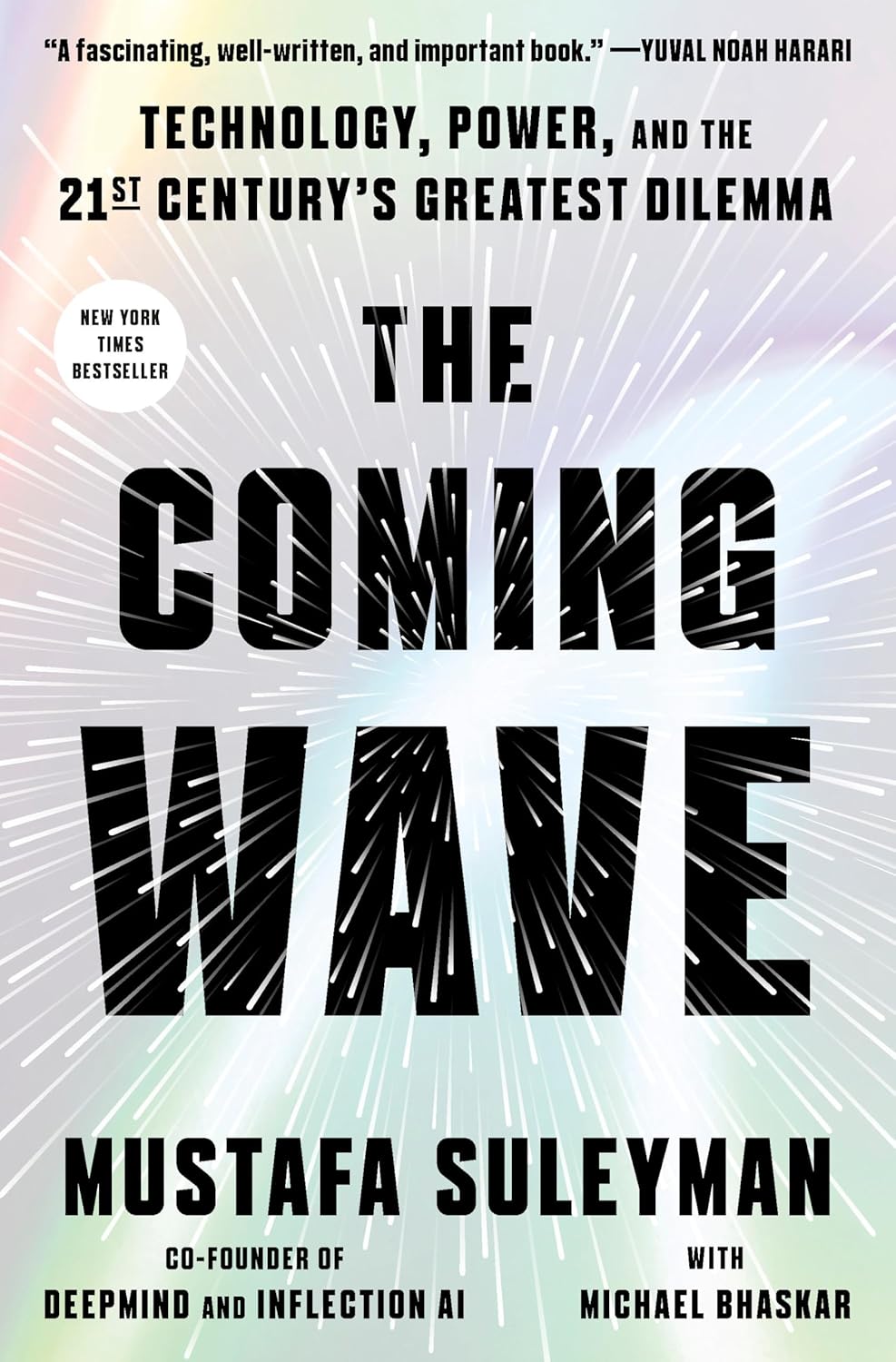
DeepMind co-founder on the dilemma of containing technologies that do not want to be contained.
As an Amazon Associate, Zendoric earns from qualifying purchases; the price does not change for you. · all our recommended books →
🔗 Related on Zendoric
- Microsoft isn't selling a better model: it's selling anxiety over its customers' AI spending · 2026-07-16
- Microsoft Turns on Its Own Suppliers: When the Platform Becomes the Rival · 2026-07-17
- Microsoft Swapping OpenAI and Anthropic for In-House Models Is the Real Story Behind the 'Partnership' · 2026-07-08